Buyers serving shared lunch tables
A 2-litre bottle can be poured into eight 250ml glasses, a serving count listed for several bottles by ASDA Groceries. Plan for the cups actually used and the number of people likely to choose cola during service.


A 2-litre bottle suits a shared lunch service when the canteen expects to pour around eight 250ml glasses; ASDA Groceries lists eight servings for several of the bottles discussed here. Choose regular cola if its sugar content fits the intended offer, a no-sugar variant when sugar per glass is the deciding factor, or an explicitly caffeine-free variant when caffeine avoidance also matters. Check sweeteners and the delivered bottle’s label rather than assuming these properties apply across a brand.
The format works for a canteen planning shared servings, provided the bottle size and chosen cola variant both suit the lunch offer.
A 2-litre bottle can be poured into eight 250ml glasses, a serving count listed for several bottles by ASDA Groceries. Plan for the cups actually used and the number of people likely to choose cola during service.
No-sugar variants offer a different choice from regular cola, but the reviewed options contain sweeteners. Compare the nutrition panel at the glass size served and check the ingredients against the canteen’s intended offer.
A no-sugar label alone does not establish that a cola is caffeine-free. The Pepsi Max No Caffeine No Sugar and Coca-Cola Zero Sugar Zero Caffeine bottles listed by ASDA Groceries are specifically identified as no-caffeine variants.
Work out the likely number of glasses, then choose the sugar and caffeine options that fit the drinks you intend to serve. Keep the delivered bottle’s information accessible when drinks are poured for customers.
| Priority | What to check | Your needs |
|---|---|---|
| Sugar per glass | Compare sugars at the same serving size. ASDA Groceries lists 27g sugars per 250ml glass for Coca-Cola Original Taste 2L; check the nutrition panel of any no-sugar variant separately, along with its sweeteners. | I’m choosing whether the lunch offer needs regular cola, a no-sugar option, or both. |
| Caffeine | Look for an explicit no-caffeine variant and check the current ingredients. The Pepsi Max No Sugar and Sainsbury’s Cola Zero listings include caffeine; the reviewed Pepsi Max No Caffeine No Sugar and Coca-Cola Zero Sugar Zero Caffeine products are labelled otherwise. | Some people may want cola without caffeine, so I need to identify that bottle clearly at service. |
| Serving plan | Allow eight 250ml glasses from 2 litres when planning portions. Check cup size and expected demand; a larger pour changes the number of glasses. | Will the group use enough of an opened bottle during lunch, and are the cups sized for the planned servings? |
| Ingredient information | Keep information for the exact bottle being poured accessible to staff. Food Standards Agency guidance says retail and catering food businesses must provide allergen information for prepacked and non-prepacked food and drink. | If we pour drinks into cups, staff need current ingredient and allergen information rather than relying on an older product list. |
Bottle size does not tell you how much sugar a served glass contains. ASDA Groceries lists 27g sugars per 250ml glass for Coca-Cola Original Taste, while its Coca-Cola Zero Sugar Zero Caffeine listing identifies a no-sugar product.
Compare the nutrition panels at the portion size you intend to pour, and check for sweeteners where they matter to the offer.
The reviewed Pepsi Max No Sugar and Sainsbury’s Cola Zero products list caffeine. Serving either as a caffeine-free choice would misidentify the drink.
Choose a separately labelled no-caffeine variant when required, and keep it distinct during storage and service.
Ingredients may change between the product information used for ordering and the bottles delivered. Food Standards Agency guidance requires retail and catering food businesses to provide allergen information for non-prepacked as well as prepacked drinks.
Keep the delivered bottle’s label available to staff, or update a controlled ingredient and allergen record whenever the product changes.
Brand names cover different formulations. Choose by the particular 2-litre bottle’s label, not by an assumption that every variant in a range has the same ingredients.
The reviewed 2-litre bottles include Original Taste and Zero Sugar Zero Caffeine.
The reviewed range includes regular Pepsi, Pepsi Max No Sugar and Pepsi Max No Caffeine No Sugar.
Asda Classic Cola is a retailer-brand 2-litre option alongside the branded bottles in ASDA Groceries’ listings.
Sainsbury’s Cola Zero 2L is a retailer-brand no-sugar cola option.
Tesco Classic Cola comes in a 2-litre bottle.
These multipacks offer 2-litre bottles for a canteen planning several shared lunch services. Check the pack quantity against storage space and expected demand, and use the delivered labels to distinguish the drinks served.
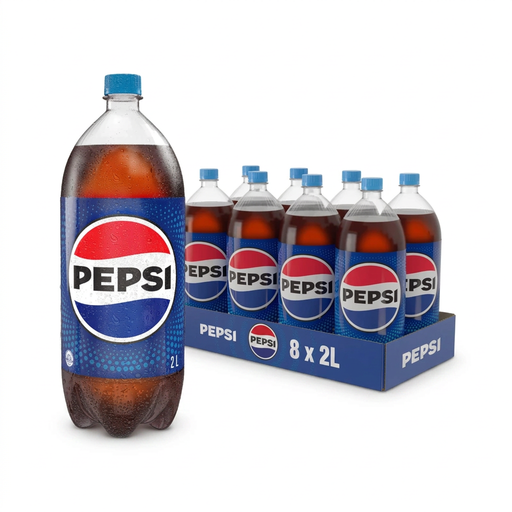 No image available
For a canteen planning to serve regular cola across several lunches, this pack contains eight 2L bottles. Check the delivered label for sugar, sweeteners, caffeine and ingredient information, and allow space for the full pack.
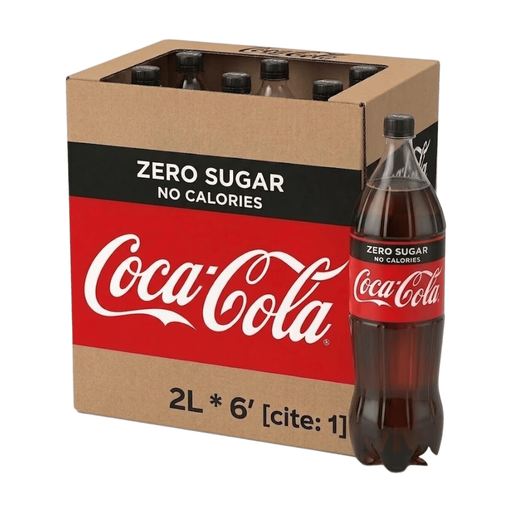 No image available
For a canteen adding a no-sugar cola, this pack contains six 2L bottles. Do not treat Zero Sugar as a caffeine-free label; check caffeine and sweeteners on the delivered bottle before deciding how to identify it at service.
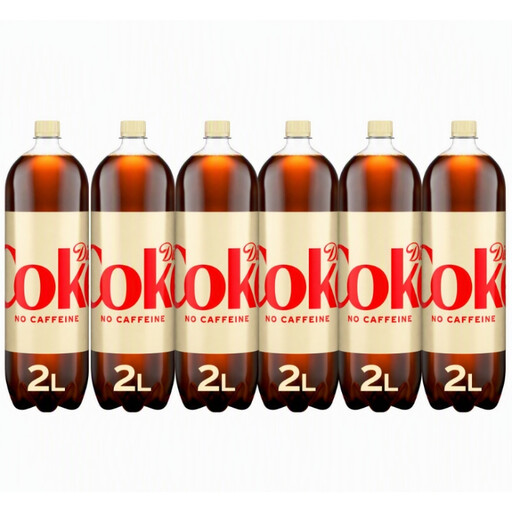 No image available
For a canteen considering a six-bottle pack of 2L Diet Coke, check the delivered label before planning the drinks offer. Caffeine information for this product conflicts despite the Caffeine Free name, so do not rely on that name alone when serving people avoiding caffeine.
A 2-litre bottle provides eight 250ml glasses, the serving count stated for several reviewed bottles by ASDA Groceries. Larger pours or spills will reduce the number of full glasses served.
No. The reviewed Pepsi Max No Sugar and Sainsbury’s Cola Zero products list caffeine. If the canteen needs a caffeine-free cola, select an explicitly labelled no-caffeine variant and check the delivered bottle.
Food Standards Agency guidance says retail and catering food businesses must provide allergen information for prepacked and non-prepacked food and drink. For a drink poured from a bottle, make the current information for that exact product accessible to staff.
Use the label on the delivered bottle to check ingredients, including sweeteners and caffeine. Keep it available, or maintain an up-to-date record for the product actually being poured, because formulations can change.