Choose regular cola if that is the taste your household wants and its sugar content suits the occasion. If reducing sugar matters more, compare zero-sugar options; if someone also needs to avoid caffeine, choose one explicitly labelled caffeine-free. Check the current pack for sugars per serving, caffeine, sweeteners and the number of servings you will use.
Who is choosing the cola?
Households comparing sugar content
If cola is part of a weekend breakfast, compare the ‘of which sugars’ figure for the amount you intend to serve. The NHS identifies sugary fizzy drinks as a source of free sugars and suggests sugar-free or diet drinks as alternatives.
People avoiding or keeping track of caffeine
A zero-sugar label does not tell you whether a cola contains caffeine. Look for an explicitly caffeine-free variant and check its ingredients when caffeine avoidance matters.
Hosts serving several people
Individual cans give guests a defined serving, while a large bottle lets you pour different amounts. Consider fridge space and the bottle’s instructions for storage after opening before choosing a format.
What should you check before buying?
Start with sugar and caffeine, then check ingredients and choose a pack that fits the number of people drinking it.
| Priority |
What to check |
Your needs |
| Sugar |
Compare ‘of which sugars’ per 100ml and for the serving you plan to pour. Coca-Cola Original Taste lists 10.6g sugars per 100ml, according to Coca-Cola; PepsiCo lists 0g per 100ml for Pepsi Max. |
I want to know how much sugar each breakfast serving contains, rather than choosing by the regular or diet name alone. |
| Caffeine |
Check the exact variant name and ingredients. PepsiCo lists caffeine in Pepsi Max but not in the ingredients for Pepsi Max Caffeine-Free; both are listed as zero sugar. |
Someone at breakfast needs to avoid caffeine, so a zero-sugar claim on its own is not enough. |
| Sweeteners |
Read the ingredients and any phenylalanine statement on the current pack. Recipes differ: Pepsi Max lists aspartame and acesulfame K, while Sainsbury’s lists acesulfame K and sucralose in its Diet Cola. |
Before I serve a different cola, I want to check which sweeteners it contains and whether the pack carries a statement relevant to the drinker. |
| Pack format |
Compare the number and size of servings, then check the unit price when shopping. For a large bottle, follow that product’s instructions for refrigeration and use after opening. |
For guests, I may prefer individual cans; for pouring at the table, I need a bottle size we are likely to use. |
Common buying mistakes
-
Assuming zero sugar means no caffeine
PepsiCo lists caffeine in Pepsi Max despite listing 0g sugars per 100ml. Choosing by the sugar claim alone will not meet a caffeine-avoidance need.
Look for an explicitly caffeine-free variant and check the ingredients of that exact product.
-
Overlooking sugar in the intended serving
Coca-Cola Original Taste lists 10.6g sugars per 100ml, according to Coca-Cola. The amount poured matters as well as the per-100ml figure.
Compare the ‘of which sugars’ line for equal volumes, then consider how much each person is likely to drink.
-
Treating diet and own-label recipes as identical
Sweeteners and caffeine vary between products: Sainsbury’s Diet Cola contains caffeine, acesulfame K and sucralose, while Pepsi Max Caffeine-Free lists different sweeteners.
Check the current ingredients and nutrition panel when changing product or retailer.
-
Choosing a large pack by its headline price
A 2L bottle and a multipack of cans provide different serving formats. A bottle also needs to be stored and used according to its instructions once opened.
Compare unit prices at the time of purchase and choose a format that fits your guests and storage space.
An opened bottle that is not used promptly may leave some of the drink unused.
Brand and own-label references
Coca-Cola
Its Original Taste and Zero Sugar products offer a direct regular-versus-zero-sugar comparison.
- Coca-Cola lists 10.6g sugars per 100ml for Original Taste.
- The Coca-Cola Zero Sugar multipack featured below contains caffeine; check the exact variant if caffeine avoidance matters.
Pepsi
Pepsi Max and Pepsi Max Caffeine-Free distinguish between zero sugar with caffeine and zero sugar without it.
- PepsiCo lists 0g sugars for both variants.
- The variants differ in caffeine, and their sweetener ingredients and phenylalanine statements should be checked on the pack.
Tesco
Tesco Classic Cola provides an own-label regular option in a 2L bottle.
- Tesco lists 11.0g sugars per 250ml serving for Classic Cola.
- Classic Cola contains caffeine, sugar and sweeteners; read the current label rather than assuming another own-label variant has the same recipe.
Sainsbury’s
Sainsbury’s Diet Cola is an own-label diet option sold in a 2L format.
- Its product information identifies acesulfame K and sucralose in the ingredients.
- Sainsbury’s Diet Cola also contains caffeine, so ‘diet’ does not make it a caffeine-free choice.
Cola options on Joybuy
These packs cover regular cola, zero-sugar cola with caffeine and a caffeine-free zero-sugar option. Compare their serving formats alongside the ingredients that matter to your household.
 No image available
Pepsi Max Caffeine Free, 24 × 330ml
A caffeine-free Pepsi Max variant for guests who want cola without caffeine. The pack contains 24 individual 330ml cans. PepsiCo identifies this variant as zero sugar; check the current ingredients and phenylalanine statement if sweeteners matter to the drinker.
View on Joybuy
 No image available
Pepsi Max, 24 × 330ml
This pack provides individual 330ml cans for a shared breakfast. PepsiCo lists Pepsi Max as containing 0g sugars per 100ml, but its ingredients include caffeine; check the pack if caffeine or its sweeteners matter to a guest.
View on Joybuy
 No image available
Coca-Cola Zero Sugar, 24 × 330ml
The 24 individual cans offer defined 330ml servings. Joybuy lists 0g sugars per can for this pack and includes caffeine in its ingredients, so choose a different variant if caffeine avoidance is essential. Check the current sweeteners and phenylalanine statement before serving.
View on Joybuy
 No image available
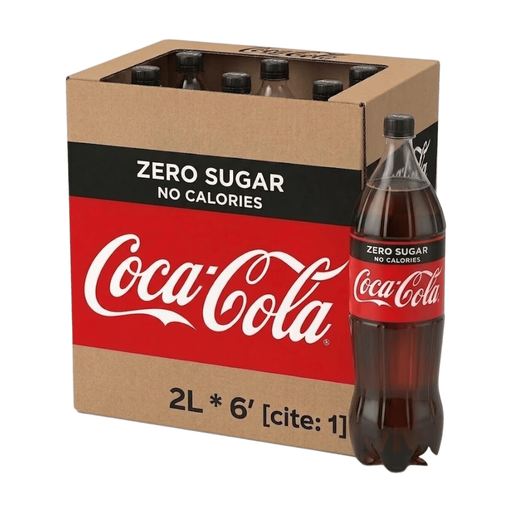
Coca-Cola Zero Sugar, 6 × 2L
Six 2L bottles allow you to pour servings for a group rather than open individual cans. This Zero Sugar variant contains caffeine and sweeteners, including aspartame. Check its pack warnings and the instructions for storing each bottle after opening.
View on Joybuy
 No image available
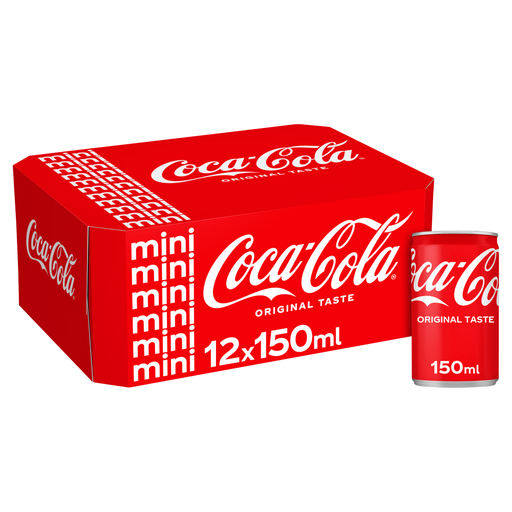
Coca-Cola Original Taste, 12 × 150ml
The 150ml cans provide smaller individual servings of regular cola. Coca-Cola lists 10.6g sugars per 100ml for Original Taste, and its ingredients include caffeine. Compare the sugar in a can with the servings you are considering if reducing sugar is a priority.
View on Joybuy
Questions about breakfast cola
Is regular cola the same choice as zero-sugar cola for breakfast?
No: their sugar contents differ. Coca-Cola lists 10.6g sugars per 100ml for Original Taste, while PepsiCo lists 0g per 100ml for Pepsi Max. If you are trying to reduce free sugars, compare the amount in the serving you intend to drink; the NHS identifies sugary fizzy drinks as a source of free sugars.
Does zero-sugar cola always have no caffeine?
No. Pepsi Max lists 0g sugars per 100ml but contains caffeine, according to PepsiCo. When caffeine avoidance matters, look for an explicitly caffeine-free variant and check its ingredients.
Why does a cola pack mention phenylalanine?
Some colas containing aspartame carry a source-of-phenylalanine statement. Pepsi Max and Pepsi Max Caffeine-Free are examples; read the current ingredients and statement on the exact pack if phenylalanine is relevant to the drinker.
How should I choose between cans and a large bottle?
Choose by the servings you expect to pour and how you will store the drink. Cans give each guest a defined volume; a bottle allows different serving sizes but needs to be used according to its after-opening instructions. Compare unit prices when shopping rather than judging value by pack size alone.


