For one train meal, start with a single-serve can or bottle rather than a large shared bottle. Then choose separately between regular and zero-sugar cola, and check caffeine too: zero sugar does not mean caffeine-free. If sweeteners or a phenylalanine statement matter to you, read the label of the exact variant before packing it.
Who is choosing cola for the journey?
The useful distinction is not simply which brand you recognise, but which portion and labelled ingredients fit the drink you want with your food.
Travellers packing one meal
If you are taking a sandwich or snack for one journey, an individual can gives you a defined portion without opening a multi-serving bottle. The cited Pepsi and Coca-Cola ranges include 330ml cans, although some are sold in multipacks.
People choosing zero-sugar cola
A zero-sugar label addresses sugar, not necessarily caffeine or sweeteners. Check the ingredients of the particular cola you intend to take, especially when comparing variants within the same range.
People avoiding caffeine
Look for a variant explicitly labelled caffeine-free rather than relying on “diet” or “zero sugar”. The cited caffeine-free, zero-sugar examples also use sweeteners and carry a source-of-phenylalanine statement.
What should you check before choosing?
Choose the portion for the journey, then compare sugar, caffeine and ingredients on the exact variant. Similar-looking cola cans can answer those questions differently.
| Priority | What to check | Your needs |
|---|
| Portion and pack |
Compare net quantity per can or bottle with the number of drinks in the pack. ASDA lists eight suggested 250ml servings for its 2L Cola Zero bottle and advises refrigerating it after opening and consuming it within three days. |
For one meal, I would rather carry one defined portion than open a bottle intended for several servings. |
| Sugar |
Read sugars per serving and per 100ml, keeping serving sizes comparable. Pepsi UK lists 15g sugars per 330ml regular Pepsi can and 0g per 330ml Pepsi MAX can; Joybuy lists 35g per 330ml for its cited Coca-Cola Original Taste 24-can product. |
I want to know what is in the can I will actually drink, whether I choose regular cola or a zero-sugar variant. |
| Caffeine |
Check for an explicit caffeine-free label and read the ingredients. Pepsi UK identifies caffeine in Pepsi MAX but labels Pepsi MAX No Caffeine as caffeine-free; Coca-Cola GB also identifies a Zero Sugar Zero Caffeine variant. |
If I am avoiding caffeine, a zero-sugar claim alone is not enough to make the choice. |
| Sweeteners and statements |
Read the ingredients and any source-of-phenylalanine statement on the exact pack. The cited zero-sugar Pepsi and Coca-Cola variants use sweeteners, including the cited caffeine-free variants. |
Before choosing a zero-sugar cola, I want to check whether its particular sweeteners or label statements matter to me. |
What is easy to overlook?
-
Assuming zero sugar means no caffeine
The cited Pepsi MAX and Coca-Cola Zero Sugar products contain caffeine, so a zero-sugar choice may not suit someone avoiding it.
Look for “caffeine-free” on the specific variant and check its ingredients as well as the front of the pack.
-
Opening a large bottle for one meal
ASDA Cola Zero comes in a pressurised 2L bottle with eight suggested servings. Once opened, ASDA says to refrigerate it and consume it within three days, which takes more planning than carrying one can.
For one traveller, compare individual cans or bottles first; consider the larger bottle when you are sharing it or can manage what remains.
-
Stopping at the zero-sugar claim
The cited zero-sugar Pepsi and Coca-Cola variants use sweeteners and carry a source-of-phenylalanine statement. Their ingredient details still matter even when the sugar figure is zero.
Check the ingredients and statement on the exact pack if you need to identify particular sweeteners or account for phenylalanine.
Which ranges illustrate the options?
These ranges show why the variant name and label matter more than the brand name alone; a range can include regular, zero-sugar and caffeine-free colas.
Coca-Cola
The cited Coca-Cola GB range includes Original Taste and Zero Sugar Zero Caffeine, while a retailer listing identifies a caffeinated Coca-Cola Zero Sugar variant.
- Coca-Cola GB lists 34mg caffeine for a 330ml Coke can and identifies Zero Sugar Zero Caffeine as a caffeine-free option.
- The cited Coca-Cola Zero Sugar variant contains caffeine; check the full variant name when caffeine is the deciding factor.
Pepsi
The cited Pepsi UK range provides regular Pepsi, zero-sugar Pepsi MAX and zero-sugar Pepsi MAX No Caffeine.
- Pepsi UK lists 15g sugars per 330ml regular Pepsi can and 0g sugars per 330ml for the cited Pepsi MAX variants.
- Pepsi MAX contains caffeine. Choose the explicitly named No Caffeine variant if you need to avoid it, and check the sweetener and phenylalanine information.
ASDA
ASDA Cola Zero is a retailer own-label example in a 2L bottle, a different pack format from an individual journey can.
- ASDA lists less than 0.5g sugars per 100ml and eight suggested 250ml servings for this bottle.
- The product contains caffeine. ASDA says to refrigerate it after opening and consume it within three days.
Tesco
Tesco’s cited cola category listing includes zero-sugar and caffeine-free variants from several ranges, as well as Tesco Xero Cola.
- The listing includes Diet Coke No Caffeine and Pepsi MAX No Caffeine alongside other zero-sugar colas, making the variant names useful for comparison.
- A category listing does not tell you what will be stocked at the shop you plan to use; check the particular product and pack before relying on it for your journey.
Joybuy cola options for a train meal
These multipacks contain individual 330ml cans that can be packed for one meal. They cover regular cola, diet cola and a specifically named caffeine-free variant; compare the exact can label before choosing.
 No image available
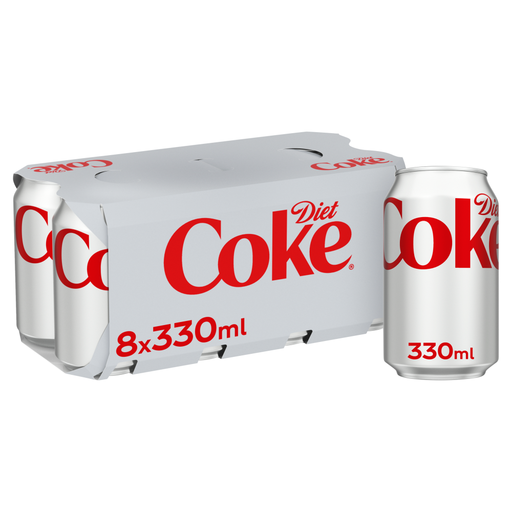
Diet Coke 8 x 330ml
The eight-pack contains individual 330ml cans, so you can take one with a train meal. Check the can’s sugar, caffeine, sweetener and phenylalanine information against your needs.
View on Joybuy
 No image available
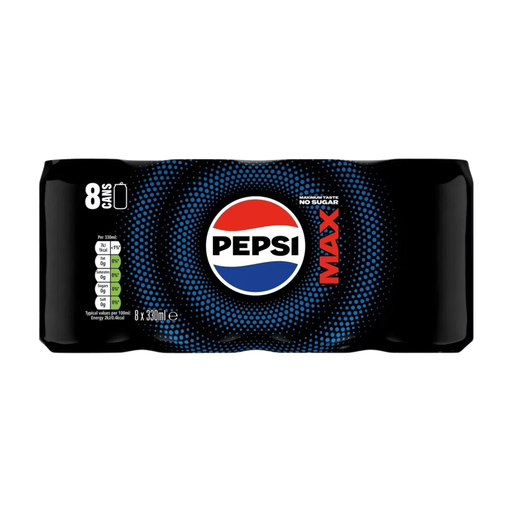
Pepsi MAX No Sugar 8 x 330ml
One 330ml can provides a defined portion for a train meal. The Joybuy product information lists 0g sugars and 1 kcal per can; it also identifies caffeine and sweeteners, so this is not the caffeine-free variant.
View on Joybuy
 No image available
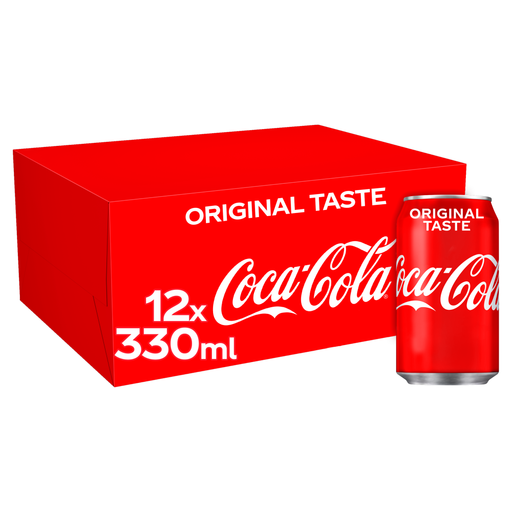
Coke Regular 12 x 330ml
The 12-pack provides individual 330ml cans for someone choosing regular cola with food. Check the sugar figure per can and the caffeine information on this pack rather than using figures from a different pack listing.
View on Joybuy
 No image available
Diet Coke No Caffeine 24 x 330ml
The named No Caffeine variant addresses a caffeine-avoidance preference, and its 330ml cans can be taken individually for a meal. This is a 24-can multipack; check the can’s sugar, sweetener and phenylalanine information too.
View on Joybuy
 No image available
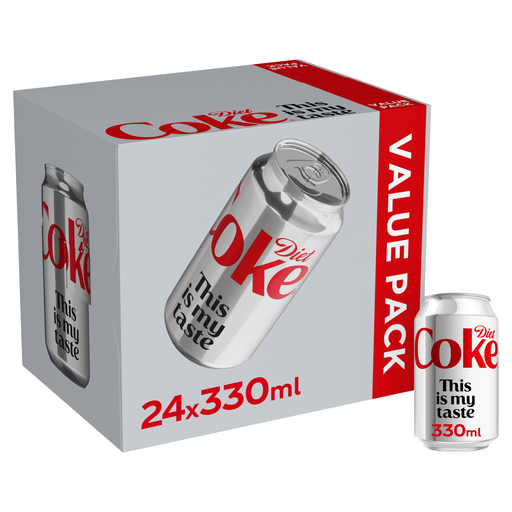
Diet Coke 24 x 330ml
This larger multipack still lets you take one 330ml can with a train meal. It is not the separately named No Caffeine variant; check the exact can label for caffeine, sugars, sweeteners and the phenylalanine statement.
View on Joybuy
Frequently asked questions
What cola format is practical with one train meal?
An individual can or bottle gives you a defined portion without opening a shared container. The cited Pepsi and Coca-Cola examples include 330ml cans; by contrast, ASDA’s 2L Cola Zero bottle has eight suggested servings and needs refrigerating after opening.
Does zero-sugar cola contain caffeine?
It can. The cited Pepsi MAX and Coca-Cola Zero Sugar products contain caffeine, whereas Pepsi MAX No Caffeine and Coca-Cola Zero Sugar Zero Caffeine are explicitly identified as caffeine-free. Check the exact variant rather than assuming all zero-sugar colas are alike.
What if I want neither sugar nor caffeine in my cola?
Look for a variant explicitly labelled both zero sugar and caffeine-free, such as the cited Pepsi MAX No Caffeine or Coca-Cola Zero Sugar Zero Caffeine. Check its ingredients as well: the cited variants use sweeteners and carry a source-of-phenylalanine statement.
How do regular and zero-sugar cola labels differ?
Compare the same serving size on the exact products. Pepsi UK lists 15g sugars and 61 kcal per 330ml regular Pepsi can, against 0g sugars and 1 kcal per 330ml Pepsi MAX can. That sugar difference does not tell you whether either variant is caffeine-free, so check caffeine separately.


