Organic-first coffee drinkers
If the coffee must be organic, an explicitly labelled organic ground coffee gives you a home-preparation route. Allow time to make and chill it rather than assuming a bottled cold brew has the same status.


If organic status is essential, choose coffee explicitly labelled organic and prepare your chilled drink at home: Waitrose lists Löfbergs organic ground coffee, while the Tesco concentrate and M&S latte discussed here do not state an organic claim in their product listings. If convenience matters more, compare the concentrate and latte by preparation, ingredients and serving size. Neither should be treated as a complete post-workout meal.
If the coffee must be organic, an explicitly labelled organic ground coffee gives you a home-preparation route. Allow time to make and chill it rather than assuming a bottled cold brew has the same status.
An unsweetened concentrate can be mixed for a chilled drink. Check its organic claim separately: Tesco's listed Rainforest Alliance certification does not establish that its concentrate is organic.
A milk-based cold brew avoids preparation, but its ingredients and nutrition differ from black coffee. Compare the label with the food and drinks you plan to have after exercise.
Decide whether organic status is a requirement before choosing a format. Then compare what the drink contains, how you will prepare it and how it fits alongside food after exercise.
Choose it when: An organic claim matters more to you than having a drink ready immediately; Waitrose lists Löfbergs Organic 100% Arabica Ground Coffee.
Trade-off: It is ground coffee, not a ready-to-drink cold brew, so making a chilled drink takes preparation and time.
Choose it when: You want a chilled black-coffee base that you can dilute yourself; Tesco instructs shoppers to mix its concentrate with cold water.
Trade-off: Tesco's listing does not state an organic claim, and its prepared 200ml glass lists 0g protein.
Choose it when: You prefer a chilled, milk-based coffee without mixing or brewing; M&S sells a 250ml Classic Latte Cold Brew Coffee.
Trade-off: The M&S latte contains milk and sugar, and its listing does not state that it is organic.
| Priority | What to check | Your needs |
|---|---|---|
| Organic status | Look for an explicit organic claim and certification information on the current pack. UK organic-labelling guidance from the Department for Environment, Food & Rural Affairs sets requirements for the product, its ingredients and certified suppliers; another certification is not a substitute. | I want the coffee I buy to meet my organic requirement, even if that means making a chilled drink from ground coffee. |
| Food alongside coffee | Read protein and carbohydrate information on the basis stated by the label, whether per 100g or per serving. The American College of Sports Medicine discusses protein and carbohydrate as part of sports nutrition; coffee alone does not establish what a particular meal provides. | After exercise, I want to consider the coffee alongside my food and other drinks, rather than count on it as the whole meal. |
| Sugar and milk | Compare sugars on the same label basis and read the ingredients for milk. Tesco lists 0g sugars per prepared 200ml glass of its concentrate; M&S lists 3.8g sugars per 100g of its Classic Latte, which contains semi-skimmed milk. | I may prefer an unsweetened black coffee, or I may want a milk-based latte; I need to check which drink I am actually buying. |
| Caffeine | Check caffeine per serving where it is declared, the amount you intend to drink and any other caffeine-containing drinks or supplements you use. Do not infer a caffeine quantity from the words “cold brew” or “extra-strong”. | If I also use a pre-workout product or drink other coffee, I want to account for those sources together. |
| Preparation and storage | Check whether the product needs brewing, dilution or no preparation. Follow its own storage instructions; Tesco says to refrigerate its concentrate after opening and consume it within four weeks. | For a drink straight after training, I would rather know in advance whether it needs mixing, chilling or preparation at home. |
Tesco identifies its cold-brew concentrate as Rainforest Alliance Certified, but that does not establish an organic claim under the separate UK organic-labelling rules.
If organic status is essential, check the current product label for an explicit organic claim and certification information.
Tesco lists 0g protein per prepared 200ml glass of its concentrate. The American College of Sports Medicine discusses adequate protein and carbohydrate in the wider context of sports nutrition.
Choose your post-workout food and drinks according to your circumstances, then decide whether you also want coffee.
Coffee is not necessarily the only caffeine source in a day; supplements and other drinks can contribute too.
Check a product's caffeine declaration where available and consider everything you consume, particularly if you use a pre-workout supplement.
M&S lists semi-skimmed milk and sugar in its Classic Latte, while Tesco's concentrate is described as unsweetened. The serving and storage instructions also differ.
Read the ingredients, nutrition basis and storage directions for the exact drink before choosing between them.
These product and retailer examples show different ways to buy coffee for a chilled drink; a brand's inclusion does not establish that every product it sells is organic.
Tesco sells an unsweetened cold-brew concentrate for shoppers who want to dilute a black-coffee base.
M&S's Classic Latte Cold Brew Coffee is a ready-to-drink, milk-based option.
Waitrose lists Löfbergs Organic 100% Arabica Ground Coffee for home preparation.
Waitrose lists organic ground coffees, including a decaffeinated option, for people who prepare coffee at home.
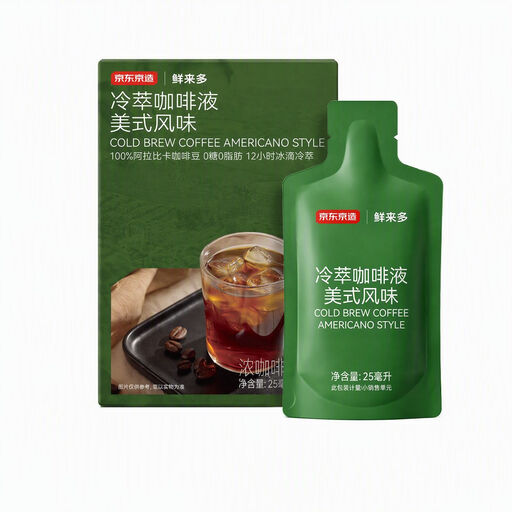
This Joybuy option is a portioned coffee for mixing into a chilled drink after exercise. If organic status is a requirement, check the current pack's organic claim and certification information before choosing it.
 No image available
The individual pouches offer a coffee you can mix with cold water after exercise. The product is sold as cold brew, but its description also calls it instant soluble coffee, so check whether that preparation style is what you want. Its title states zero sugar and zero fat; check the current label for the nutrition basis, caffeine per serving and any organic claim. Have it alongside food and other drinks as appropriate rather than relying on coffee as a complete recovery meal.
Look for an explicit organic claim and certification information on the specific product. UK guidance from the Department for Environment, Food & Rural Affairs says qualifying food products must have at least 95% organic agricultural ingredients, and the product and suppliers must be certified by an approved organic control body.
No. Rainforest Alliance certification does not itself establish the separate organic claim governed by UK organic-labelling rules. If organic status matters to you, check that the coffee explicitly carries an organic claim and relevant certification information.
Cold brew on its own does not establish that your post-workout food and drink needs are met. Tesco's prepared concentrate lists 0g protein per 200ml glass, while the American College of Sports Medicine discusses protein and carbohydrate as part of sports nutrition. Consider the coffee alongside what else you eat and drink.
Check caffeine per serving where it is declared and include other drinks and supplements in your daily total. UK government guidance citing the European Food Safety Authority refers to up to 200mg in a single dose and 400mg a day for the general healthy adult population, excluding pregnant women. The NHS advises no more than 200mg a day during pregnancy; do not estimate an individual coffee's caffeine content from its name.
Follow the instructions for the exact product. Tesco says to refrigerate its cold-brew concentrate after opening and consume it within four weeks; do not assume another concentrate has the same directions.