Who is each format for?
The useful distinction is whether you need a measured caffeine amount, a drink that is ready to carry, or an ingredient list that excludes milk.
People tracking caffeine before training
A caffeine figure in milligrams for the serving you intend to drink makes it easier to account for coffee alongside other caffeine sources. Coffee Friend UK lists 40.5 mg per 100 ml for Sandows cold brew; check the current pack before using that figure for your serving.
Shoppers avoiding added sugar, but not necessarily all sugars
A milk-based coffee may meet a no-added-sugar preference while still containing naturally occurring sugars or sweeteners. Waitrose & Partners lists Emmi Caffè Latte Skinny at 4.0 g sugars per 100 ml and names cyclamate and saccharin in its ingredients.
Dairy-free or vegan cold-brew buyers
Start with the current ingredients and suitability statement rather than the words ‘iced coffee’. Tesco Groceries describes its Finest Unsweetened Cold Brew Coffee Concentrate as suitable for vegans; Coffee Friend UK describes Sandows cold brew as dairy-free.
What should you check before choosing?
Choose a format that fits how you will prepare and carry the drink, then check the sugar information and caffeine figure for the serving you actually plan to have.
Unsweetened cold-brew concentrate
Choose it when: You can mix a drink before leaving and want a concentrate such as Tesco Finest, which Tesco Groceries lists at 0 g sugars per prepared 200 ml glass.
Bear in mind: Tesco Finest requires dilution and refrigeration after opening; check the pack for caffeine information if you need to track the amount in your pour.
Plain ready-to-drink cold brew
Choose it when: You want a bottle to carry without mixing it; Coffee Friend UK lists Sandows as a dairy-free cold brew with 40.5 mg caffeine per 100 ml.
Bear in mind: Those Sandows figures come from a retailer listing, so compare them with the current bottle label before planning a serving.
No-added-sugar dairy iced coffee
Choose it when: You prefer a ready-to-drink milky coffee and do not require cold brew; Waitrose & Partners lists 80 mg caffeine per cup for Emmi Caffè Latte Skinny.
Bear in mind: Emmi contains milk, naturally occurring sugars and sweeteners, so its no-added-sugar label does not make it equivalent to plain coffee and water.
| Priority |
What to check |
Your needs |
| Caffeine per serving |
Find milligrams per serving or per 100 ml. If the figure is per 100 ml, use the volume you will actually drink; include other drinks and supplements containing caffeine. |
I want to know the caffeine amount in my planned drink, rather than treating ‘double shot’ or ‘extra-strong’ as a measurement. |
| Sugars and sweeteners |
Read the ingredients, the ‘of which sugars’ line and any sweetener declaration. Check whether nutrition is stated per 100 ml, per serving or for a prepared drink. |
A no-added-sugar claim may suit me, but I also want to know whether the coffee contains milk sugars or sweeteners. |
| Preparation and storage |
Check whether the drink needs dilution and follow its mixing directions. For concentrate, read the storage and use-after-opening instructions. |
If I am heading straight to training, I would rather carry a drink that is ready to open; if I prepare it at home, a concentrate could work. |
| Milk and cold-brew method |
Check the ingredient and suitability labels for dairy or vegan requirements. If extraction method matters, confirm that the product is cold brew rather than another chilled coffee. |
I may need a coffee-and-water drink, or I may prefer a milky iced coffee; those are not interchangeable choices. |
Which brand references help?
These examples show how product formats and labels differ; check the particular product rather than applying one drink’s details to an entire brand.
Tesco Finest
Tesco Groceries lists an unsweetened cold-brew concentrate for preparing a drink at home.
- The listing gives 0 g sugars per prepared 200 ml glass and labels the concentrate suitable for vegans.
- It needs equal volumes of concentrate and cold water; check the current pack for caffeine milligrams if you are tracking a serving.
Sandows
Coffee Friend UK lists Sandows as a ready-to-drink cold brew made with coffee and filtered water.
- The retailer lists it as dairy-free, with 0 g sugars and 40.5 mg caffeine per 100 ml.
- Use the current bottle label to confirm the retailer-listed ingredients and caffeine figure.
Starbucks
Tesco Groceries lists Starbucks Doubleshot Espresso No Added Sugar as a chilled milk-based espresso drink, not as cold brew.
- Its listed ingredients include milk, Arabica coffee and sweetener, making the milky format clear.
- If you need a caffeine amount for your serving, check the pack rather than relying on ‘Doubleshot’.
Emmi
Waitrose & Partners lists Emmi Caffè Latte Skinny as a no-added-sugar dairy iced coffee rather than a cold brew.
- The listing states 80 mg caffeine per 230 ml cup.
- It contains partly skimmed milk, 4.0 g sugars per 100 ml, and the sweeteners cyclamate and saccharin.
M&S
Marks & Spencer lists a Classic Latte Cold Brew Coffee, a milk-based cold-brew format.
- The ingredient list identifies cold-brew coffee in the latte.
- It also lists added sugar, so this particular latte does not meet a no-added-sugar requirement.
Joybuy coffee options
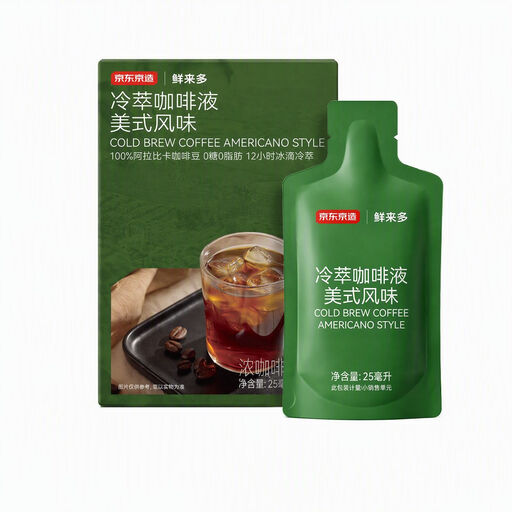
This Joybuy option is a portioned coffee liquid to prepare with water before heading out. Its name describes it as cold brew; confirm the extraction method on the current product information if cold brew specifically matters to you.
 No image available
J.ZAO Extra-Strong Americano Cold Brew Coffee Liquid, 25 ml × 10 pouches
The portioned pouches can be mixed with water before leaving for training. The product name calls the liquid cold brew and zero sugar, while its description also uses ‘instant-soluble’; confirm the extraction method and check the current ingredients and nutrition panel against your sugar requirement. For caffeine tracking, look for milligrams per pouch or prepared drink rather than relying on ‘Extra-Strong’.
Joybuy
Questions about sugar, caffeine and preparation
Does ‘no added sugar’ mean a cold coffee has no sugar?
No. A milk-based drink can contain naturally occurring sugars despite that claim. Waitrose & Partners lists Emmi Caffè Latte Skinny as no added sugar but gives 4.0 g sugars per 100 ml; check both its ingredients and the ‘of which sugars’ line.
How should I account for caffeine before a workout?
Use the milligrams in your intended serving and include other caffeine sources, such as tea, energy drinks or pre-workout supplements. The European Food Safety Authority states that, for adults in the general population other than pregnant women, single doses up to 200 mg and daily intake from all sources up to 400 mg do not raise safety concerns. Those figures are safety reference points, not amounts you need to consume for a workout.
Is ‘double shot’ enough to work out a drink’s caffeine amount?
No. It describes the coffee style, not the milligrams in the finished drink. Coffee Friend UK lists Sandows at 40.5 mg per 100 ml, while Waitrose & Partners lists 80 mg per cup for Emmi; use the current pack’s figure and serving size when comparing drinks.
Which of these cold coffees can suit a dairy-free preference?
Check the current label for the specific product. Tesco Finest Unsweetened Cold Brew Coffee Concentrate is labelled suitable for vegans by Tesco Groceries, and Coffee Friend UK describes Sandows cold brew as dairy-free. Emmi Caffè Latte Skinny contains milk.
How do I prepare and store cold-brew concentrate?
Follow the directions for the concentrate you buy rather than treating it as ready to drink. Tesco Groceries instructs shoppers to mix 100 ml Tesco Finest concentrate with 100 ml cold water, refrigerate the bottle after opening and consume it within four weeks.


