What should you check before choosing?
Choose the drink for an individual resident and serving occasion, then check its label and preparation instructions. Care Quality Commission guidance says residents' nutritional needs must be assessed and met.
| Priority | What to check | Your needs |
|---|
| Caffeine |
Look for an explicit decaf label or a caffeine amount per 100ml. Consider the amount actually served and its timing; M&S labels its chilled oat latte at 34.6mg caffeine per 100ml. |
I want to offer cold coffee later in the day without automatically serving a caffeinated drink. NHS Borders advises that caffeine can make people more awake and disrupt sleep. |
| Sugars and energy |
Compare total sugars and energy per serving, not just a 'no added sugar' claim. Sainsbury's lists 4.8g sugars per 250ml for Nolo's decaf oat latte; Coffee Friend UK lists 0g sugars per 100ml for Sandows black cold brew. |
If a resident's nutrition plan calls for particular food or drink choices, I need the figures for the portion being served. A sugar-free black coffee and an oat latte are not interchangeable sources of energy. |
| Ingredients and texture |
Check oat or milk ingredients and the resident's allergy information. Confirm their prescribed IDDSI fluid level: IDDSI identifies ordinary coffee as a Level 0 thin liquid. |
A resident may prefer dairy-free coffee but still need an oat-ingredient check. Anyone prescribed a modified fluid texture needs a drink that meets their swallowing plan. |
| Preparation and storage |
Check whether the product is ready to drink or requires dilution, its storage temperature and its instructions after opening. Sainsbury's says to refrigerate Nolo after opening and consume it within 24 hours. |
For a drinks round, I need a portion and pack format the team can prepare and store according to the label, without treating a large bottle as one serving. |
Brand and retailer references
These references illustrate different cold-brew formats and label checks; a retailer listing does not establish that every product from that retailer has the same ingredients or nutrition values.
Nolo
Sainsbury's lists Nolo Decaf Classic Cold Brew Oat Latte as decaffeinated and made without added sugar or sweeteners.
- A 250ml oat-latte format for a resident who wants decaf and can have oat.
- The listed drink still contains 4.8g sugars per 250ml; check the full label and individual nutrition plan.
Sandows
Coffee Friend UK lists Sandows as a black, dairy-free cold brew with 0g sugars per 100ml.
- A black-coffee format when that matches a resident's preference and assessed needs.
- It is not a decaf choice: the retailer lists 40.5mg caffeine per 100ml.
M&S
Marks & Spencer lists both a chilled oat cold-brew latte and a milk-based Classic Latte Cold Brew Coffee.
- The two formats allow an ingredient-based choice between oat and milk.
- The oat latte carries a 34.6mg caffeine per 100ml warning; the Classic Latte contains semi-skimmed milk and has 3.8g sugars per 100g.
Sainsbury's
Its Nolo listing provides label information for a decaf oat-latte option.
- The listing states the drink's total sugars and after-opening instructions.
- Those details describe Nolo, not every cold brew sold by Sainsbury's.
Waitrose
The Waitrose & Partners listing for Mr Black is for a cold-brew coffee liqueur, not a routine non-alcoholic cold coffee.
- The listed liqueur is made with vodka and is 21% ABV. Do not substitute it for a non-alcoholic drinks-menu option.
Joybuy cold brew options
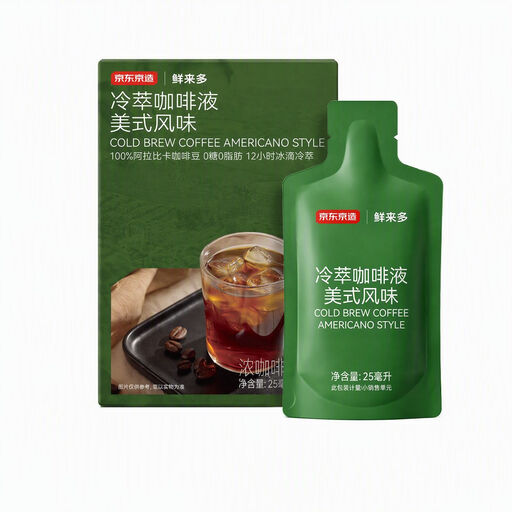
This Joybuy option is a portioned cold-brew concentrate for preparing black coffee with cold water. Assess the prepared drink against each resident's plan rather than treating it as a ready-to-serve decaf latte.
 No image available
J.ZAO Extra-Strong Americano Cold Brew Coffee Liquid, 10 × 25ml pouches
The individual pouches offer a measured way to prepare cold black coffee, but the concentrate must be diluted before serving.
The product information specifies one 25ml pouch with about 200ml cold water and states 0g sugars and 0g fat per 100ml. Check the current pack for caffeine content and reconcile its energy information before using it for a resident with a caffeine-reduction or individual nutrition plan. Also check the prepared drink against any prescribed fluid texture.
Joybuy
Questions about serving cold brew
Is decaf cold brew right for every care-home resident?
No. Decaf addresses a wish to limit caffeine, but the drink must also fit the resident's preferences, allergies, nutrition plan and prescribed fluid texture. Care Quality Commission guidance calls for nutritional needs to be assessed and met.
Does 'no added sugar' mean sugar-free?
No. Sainsbury's labels Nolo's decaf oat latte as having no added sugar or sweeteners, while listing 4.8g sugars per 250ml. Check total sugars on the nutrition panel.
Can ordinary bottled cold brew be served to someone prescribed thickened fluids?
Not without checking that it meets the resident's prescribed fluid level. IDDSI identifies ordinary coffee as a Level 0 thin liquid; follow the resident's swallowing plan and the home's approved preparation process.
What matters when serving caffeinated cold brew later in the day?
Check the caffeine concentration, the portion served and the resident's plan. NHS Borders advises that caffeinated drinks can make people more awake and disrupt sleep, so routine late-day service may not suit someone with sleep concerns.
Do all cold brews need the same storage?
No. Follow the instructions for the particular pack. For example, Sainsbury's says to refrigerate Nolo after opening and consume it within 24 hours, while other products may require refrigeration before opening.


