Coffee drinkers heading to bed soon
If reducing caffeine is the priority, look for a product explicitly labelled decaffeinated rather than assuming a cold drink contains less caffeine. The NHS says caffeine in coffee can make you feel more awake.


If you plan to sleep soon after supper, a decaffeinated instant-coffee jar is the more appropriate of these coffee formats when reducing caffeine is your priority; it is not cold brew. NHS guidance notes that caffeine can make you feel more awake. Choose cold-brew concentrate when you want to mix your own iced drink, or a chilled latte when you want a drink with no preparation, and check the specific product’s caffeine, ingredients and serving directions.
The time between supper and bed, and how much preparation you want, make a difference to the choice.
If reducing caffeine is the priority, look for a product explicitly labelled decaffeinated rather than assuming a cold drink contains less caffeine. The NHS says caffeine in coffee can make you feel more awake.
A cold-brew concentrate gives you a coffee base to dilute and combine with your choice of milk or plant drink. Follow the product’s serving directions and check its caffeine information if you will drink it late.
A ready-to-drink latte removes the mixing step. Compare the ingredients of the particular dairy or oat version, especially if milk or another allergen affects your choice.
Start with when you will drink the coffee, then decide whether you want a jar to prepare at home, a concentrate to dilute or a finished chilled drink.
Choose it when: reducing caffeine matters more than having coffee made by cold brewing.
Bear in mind: instant granules are a different format from cold-brew concentrate; prepare them according to the jar directions before chilling the drink.
Choose it when: you want to dilute a coffee base and add your own ingredients.
Bear in mind: cold brewing does not mean decaffeinated. Grind states that a 62 ml serving of its concentrate contains 101 mg of caffeine.
Choose it when: you want a single cold drink without measuring or mixing.
Bear in mind: the recipe is already set. M&S describes both its Classic Latte and oat version as containing a double shot of espresso.
| Priority | What to check | Your needs |
|---|---|---|
| Caffeine and timing | Look for an explicit decaffeinated label if reducing caffeine is the aim. For other coffees, compare any stated caffeine amount with the serving you intend to make. | I’m having coffee shortly before bed and don’t want to mistake a cold serving temperature for a decaf label. NHS guidance says caffeine can make people feel more awake. |
| Preparation and format | Check whether the product contains instant granules, concentrate, individual portions or a finished drink. Follow its preparation or dilution directions. | A jar I can prepare at home, an iced drink I can mix myself and a chilled latte I can drink straight away meet different needs. |
| Ingredients and allergens | Read the ingredients and allergen information for the exact drink. Check milk-based and plant-based versions separately rather than relying on a range name. | If I need to avoid an ingredient, I want the label for the particular product I’m buying, not an assumption that all cold coffee is black or dairy-free. |
Cold serving temperature tells you nothing about caffeine content. Grind states that its concentrate contains 101 mg of caffeine per 62 ml serving, while NHS guidance says caffeine can make you feel more awake.
If reducing caffeine before bed is the priority, choose an explicitly decaffeinated product and check the pack if you need a particular caffeine figure.
M&S describes its Classic Latte as containing semi-skimmed milk and its separate oat latte as dairy-free. Those descriptions do not replace the ingredient and allergen information for the product in hand.
Check the current label for the specific version you intend to drink, particularly if you have an allergy or intolerance.
Instant granules and cold-brew concentrate require different preparation. A decaf instant jar may suit a late home-made iced coffee, but it is not a cold-steeped concentrate.
Choose by the preparation method you actually want, then follow the jar or concentrate’s directions.
These examples illustrate product formats and label details to compare; they are separate from the Joybuy products below.
Tesco describes its Finest Unsweetened Cold Brew Coffee Concentrate, 500 ml, as extracted in cold water for several hours.
M&S describes 250 ml chilled Classic Latte and oat-latte cold-brew drinks as ready-to-drink options.
Grind describes its cold-brew concentrate as made by steeping 100% Arabica coffee in cold water.
Sainsbury’s lists iced-coffee products as well as decaffeinated instant coffees, including its Gold Roast Decaffeinated Instant Coffee Granules, 200 g.
Sandows London says it makes cold-brew coffee in its London brewery.
These options include two decaf coffee jars for home preparation and a portioned coffee liquid for mixing. The portioned liquid is not a jar; check its caffeine details and preparation method before choosing it for a late-night supper.
 No image available
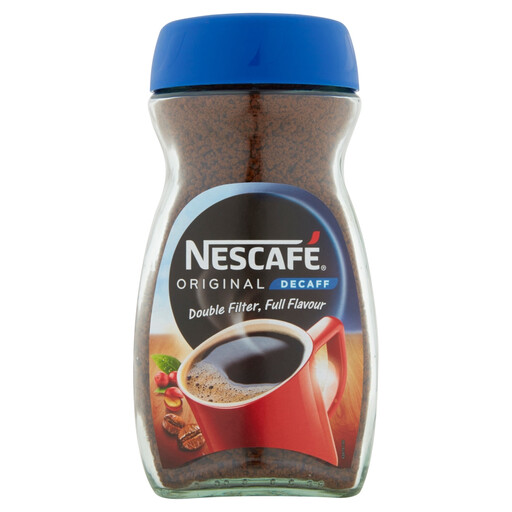
A decaf instant-coffee option for preparing a drink at home after supper, rather than a cold-brew product. Check the pack if you need to know its residual caffeine amount.
 No image available
Another decaf instant-coffee choice for a home-made drink, in a 200 g variant. It is not cold brew; check the pack if a specific residual caffeine amount matters to you.
 No image available
Individual pouches offer a portioned option for mixing a coffee drink, rather than a jar. The product wording describes it both as cold brew and as instant coffee, so check the preparation method on the pack. Check its caffeine information before choosing it for a drink close to bedtime.
Not automatically: cold brew describes how coffee is prepared, not its decaffeinated status. Grind states that its concentrate contains 101 mg of caffeine per 62 ml serving. Look for an explicit decaf label if reducing caffeine is your late-night priority.
Choose concentrate if you want to control dilution and add your own ingredients; choose a ready-to-drink latte if you want a finished chilled serving. Tesco describes its cold brew as a concentrate, while M&S describes its latte as ready to enjoy from the fridge. Check caffeine and ingredients for the particular product either way.
Yes, if you want a decaf instant-coffee drink rather than cold brew. Prepare it according to the jar directions, then cool it or serve it over ice. Sainsbury’s lists decaffeinated instant granules among its coffee products.
Read the ingredients and allergen information for the exact drink. M&S describes its Classic Latte as made with semi-skimmed milk and its separate oat latte as dairy-free; the Food Standards Agency says allergen information must be provided for prepacked food and drink.
No. A cold-brew coffee liqueur is an alcoholic product, not a direct substitute for a non-alcoholic coffee drink. Waitrose describes Tia Maria as a liqueur containing Jamaican rum, so check the product type rather than relying on the words “cold brew coffee”.