Black-coffee drinkers checking sugars
Tesco Finest concentrate lists 0 g sugars per prepared 200 ml glass but needs diluting. A Coffee Friend UK listing describes Sandows as a ready-to-drink, dairy-free black coffee with 0 g sugars per 100 ml.


For a quick desk lunch, choose a ready-to-drink black cold brew if you want no mixing, or a concentrate if you can add water and follow its storage instructions. Check the sugars figure for the serving you will drink: Tesco Finest lists 0 g per prepared 200 ml glass, while milk and oat lattes have different sugar and allergen details. Check caffeine on the current pack as well.
For a desk lunch, the useful distinction is whether you want black coffee, an oat latte or a milk coffee—and whether you can prepare a concentrate.
Tesco Finest concentrate lists 0 g sugars per prepared 200 ml glass but needs diluting. A Coffee Friend UK listing describes Sandows as a ready-to-drink, dairy-free black coffee with 0 g sugars per 100 ml.
M&S describes its Oat Latte Cold Brew Coffee as dairy-free. It also states that this product is not suitable for coeliacs or people with a wheat allergy, so those requirements need a separate check.
Emmi Caffè Latte Zero offers lactose-free milk coffee labelled no added sugar. Tesco Groceries lists 9.2 g sugars and 125 mg caffeine per 230 ml cup; it contains milk and is not a sugar-free option.
Start with the drink format and dietary requirements, then compare sugars for the amount you will drink. A concentrate’s figures and instructions may describe a different serving from a ready-to-drink pack.
| Priority | What to check | Your needs |
|---|---|---|
| Sugars | Read the sugars line alongside any unsweetened or no-added-sugar claim. Tesco Groceries lists 0 g per prepared 200 ml glass for Tesco Finest concentrate; its Emmi listing gives 9.2 g per 230 ml cup despite the no-added-sugar label. | I want to know the sugars in the serving I will drink, rather than rely on wording on the front of the pack. |
| Ingredients and allergens | Check milk, oat and wheat information separately. M&S says its dairy-free Oat Latte is not suitable for coeliacs or people with a wheat allergy; Emmi’s lactose-free coffee still contains milk. | A dairy-free or lactose-free label needs to match my particular requirement; the two terms are not interchangeable. |
| Caffeine | Look for an amount per cup or bottle, not just per 100 ml. Tesco Groceries lists 125 mg per 230 ml Emmi cup; Coffee Friend UK lists 40.5 mg per 100 ml for Sandows. | If I also drink coffee or tea later, I want to account for the caffeine in my lunch drink. |
| Preparation and storage | Check whether the coffee needs diluting and how long it keeps after opening. Tesco Finest uses 100 ml concentrate and 100 ml cold water and has a four-week refrigerated opened-life; Tesco lists seven days after opening for Grind concentrate. | With no glass or water at my desk, I would choose a ready-to-drink pack. For a concentrate, I need to be able to store and use it as instructed. |
A milk coffee can have sugars on its nutrition panel without added sugar. Tesco Groceries lists 9.2 g sugars per 230 ml cup for Emmi Caffè Latte Zero.
Compare sugars for the whole serving and check the ingredients, rather than using the front-of-pack claim alone.
M&S describes its Oat Latte Cold Brew Coffee as dairy-free but says it is not suitable for coeliacs or people with a wheat allergy.
Check the current pack for the specific ingredients and allergen information you need.
Concentrate needs preparation at the desk. Tesco Finest also requires refrigeration after opening and use within four weeks; Tesco gives Grind concentrate a seven-day opened-life.
Check that you will have water and a glass, and that you can use the carton within its stated opened-life.
An unfinished carton may go to waste if it cannot be used within that period.
Tesco Groceries lists 125 mg caffeine per Emmi cup, while Coffee Friend UK lists 40.5 mg per 100 ml for Sandows. Other drinks during the day also contribute to your caffeine intake.
Check the amount for the pack you plan to drink and consider it alongside your other caffeine-containing drinks.
These product-specific listings show how black concentrate, ready-to-drink black coffee and chilled lattes differ; the details do not describe every drink from each brand.
An unsweetened black concentrate to dilute before drinking.
Ready-to-drink cold-brew lattes with different milk ingredients.
A ready-to-drink black cold brew described as coffee and filtered water.
A chilled lactose-free milk coffee labelled no added sugar.
A black concentrate that can be mixed with water or milk.
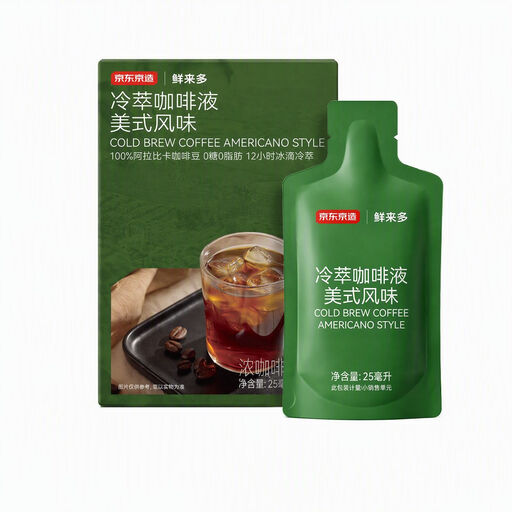
This portioned black-coffee option suits a desk where you can add water and stir; it is not a ready-to-drink bottle or a milk or oat latte.
 No image available
The individual pouches offer a portioned coffee for a desk break, provided you have water and a cup. Joybuy’s preparation instructions say to mix one pouch with about 200 ml water. Joybuy describes the product as ‘0 sugar’; check the current pack for the sugars figure for the prepared drink and for any dietary or caffeine information you need.
No. Tesco Groceries lists Emmi Caffè Latte Zero as no added sugar, but its nutrition panel gives 9.2 g sugars per 230 ml cup. Check the sugars figure for the whole pack.
Tesco Groceries lists its Finest Unsweetened Cold Brew Coffee Concentrate as suitable for vegans, with 0 g sugars per prepared 200 ml glass; you need to dilute it. For a ready-to-drink alternative, Coffee Friend UK lists Sandows black cold brew as dairy-free, with 0 g sugars per 100 ml. Check the current pack against your requirements.
Not necessarily. M&S explicitly says its dairy-free Oat Latte Cold Brew Coffee is not suitable for coeliacs or people with a wheat allergy. Check the allergen information for the particular drink rather than relying on ‘oat’ or ‘dairy-free’.
Compare the amount in the portion you will drink. Tesco Groceries lists 125 mg per 230 ml Emmi cup; Coffee Friend UK lists 40.5 mg per 100 ml for Sandows, which is about 81 mg in its 200 ml bottle. Account for other caffeine-containing drinks during the day too.
Check the ingredients and allergens against your requirements, then read sugars for the serving you will drink. Follow the pack’s storage and preparation instructions, and check any caffeine or sweetener information relevant to your choice.