Cold-brew batch organisers
You prepare cold brew for colleagues and need a coarse setting you can use again, a practical way to measure each batch and a routine that does not require everyone to learn espresso adjustments.


Choose a burr grinder with a usable medium-coarse to coarse range, then match its capacity and cleaning routine to the way colleagues will share it. A manual grinder suits smaller batches if someone is willing to do the grinding; an electric grinder can make repeated batches easier, but its exact UK electrical version and workplace upkeep need checking before use.
You prepare cold brew for colleagues and need a coarse setting you can use again, a practical way to measure each batch and a routine that does not require everyone to learn espresso adjustments.
You make cold brew, while colleagues also use espresso, filter coffee or a French press. A clearly usable range across those methods matters more than a grinder set up for one recipe alone.
You look after the coffee station and need a grinder people can clean and put away sensibly. For an electric model, you also need an appropriate workplace equipment routine.
Start with the cold-brew grind range. Then choose between manual effort and an electric shared routine according to batch size, available space and who will clean the grinder.
| Concern | What to check | Who this matters to |
|---|---|---|
| Coarse-range control | Look for cold-brew guidance or a documented coarse range for the exact model. Fellow Products recommends medium-coarse to coarse grounds as a starting point; adjust for your brewer and filter. | When I make cold brew for colleagues, I want a setting I can return to rather than guessing each time. Around 37% of consumers put repeatable coarse-range control first. |
| Shared workflow and capacity | Decide whether each person will load a dose or beans will remain in a hopper. Compare bean and grounds capacities with your batch, and check how a timer or automatic stop works. | If several people prepare batches, I want a routine they can follow without losing the agreed setting. For around 27% of consumers, that shared workflow is the primary concern. |
| Mess and maintenance | Check how to reach the burrs, brush out retained grounds and clean the exact model under its manual. Anti-static or low-retention features do not replace cleaning. | I maintain the communal counter, so grounds left behind and an awkward cleaning job matter more to me than extra brew settings. Around 18% of consumers put upkeep first. |
| Workplace fit | For an electric grinder, confirm the UK plug and rated voltage, and follow the office equipment-maintenance process. Check its footprint and whether the proposed grinding location will disturb colleagues. | Before we place a grinder in the shared kitchen, I need it to fit the space and, if electric, suit the supply and workplace routine. Around 18% of consumers make workplace fit their first concern. |
A grinder may name several brew methods without identifying a cold-brew setting. That makes it harder to establish a repeatable starting point for the office recipe.
Check the exact model’s grind guide for cold brew or a usable medium-coarse to coarse range before buying.
Specifications on a product page for another market cannot establish that the model offered to a UK office has the right electrical version. The Baratza Encore ESP page consulted for its grind guidance lists 100–120VAC.
Check the rating, plug and seller information for the exact UK listing. The Health and Safety Executive says workplace electrical equipment must be suitable for its use and maintained to prevent danger.
Accessible burrs and features intended to limit stray grounds can make a shared station easier to manage, but grounds and coffee oils still need attention.
Agree who will brush out the grinder and follow its manual for deeper cleaning. Do not use water on internal parts unless the manufacturer permits it.
A larger hopper can reduce refilling during batch preparation, but capacity does not set the correct dose or ensure colleagues use the agreed grind setting.
Compare both bean and grounds capacities with your batch, then decide whether beans will be stored in the hopper or loaded for each use.
These product lines illustrate different shared-office workflows. Check the exact model and regional version rather than treating a brand name as a guarantee of cold-brew or workplace suitability.
Fellow positions the electric Opus 2 for brewing methods from espresso through cold brew, which is relevant when colleagues share one grinder across different recipes.
Baratza documents a cold-brew range for the Encore ESP while also providing settings for espresso and other methods.
The Svart Aroma Precision combines a hopper and timer for a straightforward batch-brewing routine.
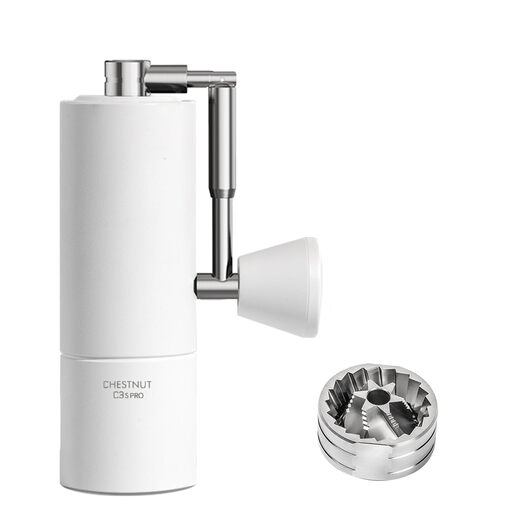
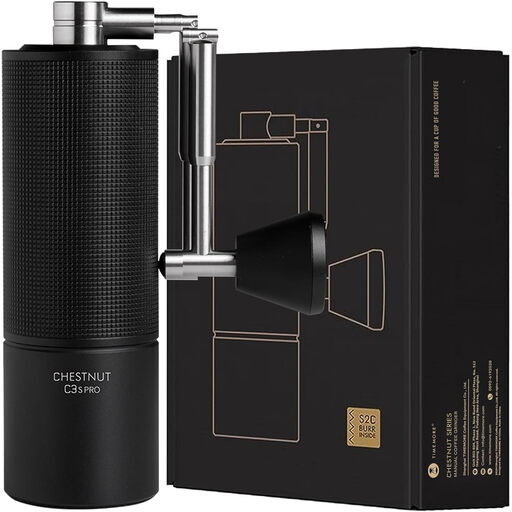
These manual burr grinders are options for an office willing to grind by hand, particularly when batches are small. Confirm that the chosen adjustment produces the medium-coarse to coarse grounds your cold-brew recipe needs; neither product title specifies a cold-brew setting.
 No image available
A manual option if colleagues are willing to grind each dose by hand; allow for more effort when preparing larger batches.
The product name specifies a stainless steel S2C conical burr, foldable handle and adjustment from espresso to French press. Check where your cold-brew recipe falls within that range.
 No image available
This manual option calls for repeated filling when the office needs more than its stated 25 g bean capacity in one batch.
The product name specifies a stainless steel conical grinder and foldable handle. Check its coarse adjustment against the office’s cold-brew recipe before choosing it.
Start with medium-coarse to coarse grounds, as Fellow Products recommends in its cold-brew guidance. Adjust after brewing to account for your coffee, brewer, filter and preferred taste; there is no universal numbered setting across grinders.
Not automatically. The Health and Safety Executive says electrical equipment must be maintained to prevent danger; its guidance does not require every portable appliance in a low-risk office to receive an annual portable appliance test. Set the maintenance approach according to the equipment and its environment.
Check that the exact grinder suits the electrical supply and intended use, and inspect its cable, plug and housing for damage. Follow the workplace’s equipment and maintenance process; the Health and Safety Executive advises that electrically powered work equipment be suitable for the way it will be used.
Follow the exact model’s manual and make someone responsible for regular brushing. Fellow Products suggests brushing out loose grounds regularly and deeper cleaning every one to three months depending on use; do not put water on internal parts unless the manufacturer expressly permits it.
Use them to investigate features, not to establish that a UK listing has the correct electrical version. For example, the Baratza Encore ESP regional page used for its grind guidance lists 100–120VAC; check the exact UK model’s rating, plug and seller warranty before buying it for the office.