Hosts mixing several drinks
A concentrate lets you vary the amount of water or milk in each drink. Measure the concentrate as well as the mixer, particularly when guests want different caffeine amounts.


Choose a cold-brew concentrate if you want to adjust the coffee-to-water or coffee-to-milk ratio for each afternoon-tea guest; measure each portion and follow its mixing directions. A ready-to-drink latte saves preparation but fixes the recipe, while a specifically labelled decaf drink suits guests avoiding a standard caffeinated cold brew. Check the exact pack for caffeine, ingredients and allergens before serving.
A concentrate lets you vary the amount of water or milk in each drink. Measure the concentrate as well as the mixer, particularly when guests want different caffeine amounts.
A chilled dairy or oat latte needs no mixing, but its milk-led recipe leaves less room to adjust the coffee flavour. Check the ingredients for each guest.
Look for an explicitly decaffeinated drink rather than assuming a standard cold brew is low in caffeine. Sainsbury’s lists Nolo Decaf Classic Cold Brew Oat Latte as one such option.
Decide whether guests need adjustable flavour or a drink you can pour straight away, then check the exact product’s caffeine and ingredients.
| Priority | What to check | Your needs |
|---|---|---|
| Adjustable flavour | Check the concentrate’s portion size and mixing directions. Grind describes a 1:1 mix with water or milk; follow the directions for the product you buy. | I’d like to vary how coffee-forward each drink tastes rather than serve everyone the same latte. |
| Caffeine | Check whether the figure is per 100ml, per pouch or per prepared drink, and measure the portion accordingly. M&S declares 34.6mg per 100ml and a high-caffeine warning for its Plant Kitchen cold-brew oat latte. | Some guests may want to limit caffeine, so I need to know what is in the drink I actually serve. |
| Ingredients and allergens | Read the current pack’s ingredient and allergen information. M&S states that its Oat Latte Cold Brew Coffee is not suitable for coeliacs or people with wheat allergy. | A dairy-free label alone does not answer every guest’s allergen question. |
| Serving effort | Check whether the drink is ready to pour or needs dilution, and follow its chilling, opening and date instructions. | I want to prepare drinks alongside the food without having to work out a mixing ratio at the table. |
A bold flavour description is not a caffeine measurement, and a concentrate’s figure cannot be applied to every finished drink.
Check the exact product’s caffeine declaration, note whether it refers to concentrate or a prepared serving, and measure before mixing.
M&S labels its Plant Kitchen cold-brew oat latte high in caffeine and says it is not suitable for coeliacs or people with soya or wheat allergy.
Keep the current pack available for ingredient and allergen checks, and offer a separately labelled decaf or non-coffee choice when needed.
A listing does not establish that a particular shop or delivery slot has the drink you want.
Check your chosen store or delivery basket before settling the menu.
A last-minute substitution can also mean changing how the drinks are mixed or served.
Sainsbury’s preparation basis for Starbucks Rich Black concentrated iced coffee uses 30ml concentrate and 150ml semi-skimmed milk. A drink made with water or a plant drink has different ingredients.
Use the concentrate’s directions, then check the label of anything you add rather than treating the stated milk recipe as your finished drink.
M&S lists ready-to-drink cold-brew lattes made with dairy or oat ingredients.
Tesco lists cold-brew concentrates, including Solo ready to go Espresso.
Waitrose lists Grind Espresso Cold Brew Concentrate in its iced-coffee range.
Sainsbury’s iced-coffee listings include concentrates and a decaffeinated cold-brew oat latte.
A Sandows London 200ml cold-brew listing describes a drink made from coffee and water.
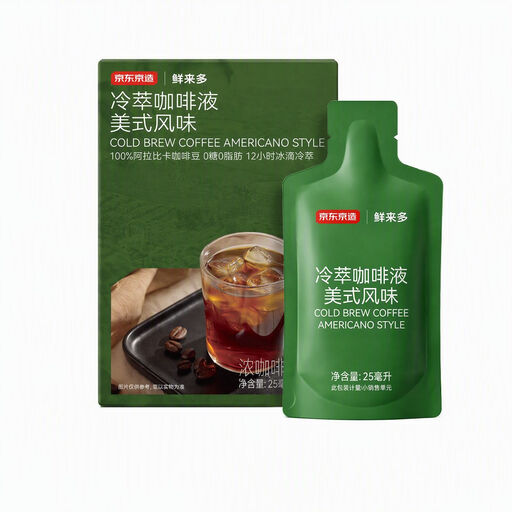
This pouch-format cold brew is an option for hosts who want to mix individual black coffees with water for afternoon tea.
 No image available
For individual drinks, the stated directions mix one 25ml pouch with about 200ml water and allow the water amount to be adjusted to taste. The pack contains ten pouches and is described as zero sugar and zero fat; “Extra-Strong” is part of its product name, not a quantified caffeine level. Check the current pack’s caffeine information before serving guests who monitor their intake, and follow the mixing directions rather than serving a pouch undiluted.
Use a measured concentrate and follow its own mixing directions, adjusting the mixer where the directions allow. Grind describes a 1:1 mix with water or milk; that ratio should not be assumed for another product.
No. M&S says its Oat Latte Cold Brew Coffee is not suitable for coeliacs or people with wheat allergy; its Plant Kitchen oat latte also carries a soya-related restriction. Read the current pack for the exact drink before serving it.
The NHS advises no more than 200mg of caffeine a day during pregnancy, counting sources beyond coffee. Check the amount and serving basis on the exact drink; M&S specifically labels its Plant Kitchen cold-brew oat latte high in caffeine and not recommended for pregnant or breast-feeding women.
Only follow an unmixed serving method if the exact product’s directions allow it. Grind describes its concentrate as diluted 1:1 with water or milk; check another concentrate’s own directions rather than relying on its name.
Check the current label for ingredients and allergens, quantity, date marking and nutrition information. UK food-labelling guidance from GOV.UK identifies these as information for pre-packed food; also follow the product’s storage and preparation directions.