Students short on fridge space
If you want to brew from grounds but share a fridge, check where the vessel will sit while coffee steeps. Hario UK lists a 600ml Mizudashi maker as a more compact option than its 1-litre version.


Choose a compact filtered cold-brew maker if you have fridge space and can prepare coffee the night before. A larger jar makes more sense when you regularly share a batch; for cold coffee during move-in without steeping or washing a brewer, consider a concentrate or a ready-to-drink option instead. Cold-brew jars use ground coffee and need preparation time—they are not jars of instant coffee.
If you want to brew from grounds but share a fridge, check where the vessel will sit while coffee steeps. Hario UK lists a 600ml Mizudashi maker as a more compact option than its 1-litre version.
A jar suits you if preparing coffee the previous evening fits your routine: Hario UK specifies at least eight hours for its Mizudashi, while Kilner’s jar recipe calls for 18–24 hours. A ready-made concentrate avoids that wait.
A larger vessel is worth considering if several people will use the coffee and there is room to refrigerate it. A Kilner set listed by a US retailer includes a 2-litre jar and filter; check the exact set details when shopping in the UK.
Decide whether you want to brew from grounds at all, then match the preparation time and vessel size to your kitchen routine.
| Priority | What to check | Your needs |
|---|---|---|
| Morning preparation | Check the method’s steeping instructions and whether the vessel must stay refrigerated. Hario UK says at least eight hours for its Mizudashi; Kilner’s jar recipe says 18–24 hours. | I can prepare a jar ahead of time, or I need cold coffee without waiting for a batch to steep. |
| Batch size | Measure your available fridge shelf space and compare the vessel’s capacity. Hario UK lists 600ml and 1-litre Mizudashi options; the cited Kilner set has a 2-litre jar. | In a shared fridge, I want a vessel that fits without making a larger batch than I expect to use. |
| Filtering and cleaning | Check whether a filter is built in or needed separately, and how the parts are cleaned. Hario describes a permanent filter; Kilner’s clip-top jar recipe uses a separate filtering step. | I would rather use one filtered brewer, or I am happy to filter coffee after steeping it in an ordinary jar. |
| Ingredients | Read the current label and decide whether you want to add your own milk or sweetener. Tesco describes its cold-brew concentrate as unsweetened; M&S lists semi-skimmed milk and sugar in its Classic Latte Cold Brew Coffee. | I want to choose what goes into the final drink, or I would prefer a latte that is ready to drink. |
| Trying cold coffee | Decide whether you need a reusable vessel now. Tesco’s concentrate is diluted with equal parts cold water; a brewing jar also calls for ground coffee, steeping and filtering. | While settling in, I may prefer to try a prepared option before finding space for a brewer. |
A brewing jar steeps ground coffee in water and requires filtering; instant coffee is a different product.
Check whether the listing is for a reusable brewer, a concentrate to dilute or a drink that is ready to consume.
A larger jar takes up more shared-fridge space while the coffee steeps. The cited options range from Hario UK’s 600ml maker to a 2-litre Kilner set listed by a US retailer.
Check the space available and how often you expect to make coffee for others before choosing a larger vessel.
Tesco describes its concentrate as unsweetened, while M&S lists semi-skimmed milk and sugar in its ready-to-drink Classic Latte.
Read the current ingredients and allergen label for the exact drink, especially if milk suitability matters to you.
Kilner’s guidance for its home-made concentrate is 2–3 days in the fridge. Tesco instructs customers to refrigerate its packaged concentrate after opening and consume it within four weeks.
Follow the storage instructions for the recipe or packaged product you actually use.
Hario UK lists Mizudashi cold-brew makers in 600ml and 1-litre sizes.
Kilner provides a cold-brew recipe using a clip-top jar; a separately listed set adds a filter and serving jars.
The cited Bodum BEAN is a larger carafe-style cold-brew maker rather than a traditional glass jar.
Tesco lists a ready-made cold-brew concentrate for buyers who do not want to steep coffee in a jar.
M&S offers a ready-to-drink chilled cold-brew latte rather than brewing equipment.
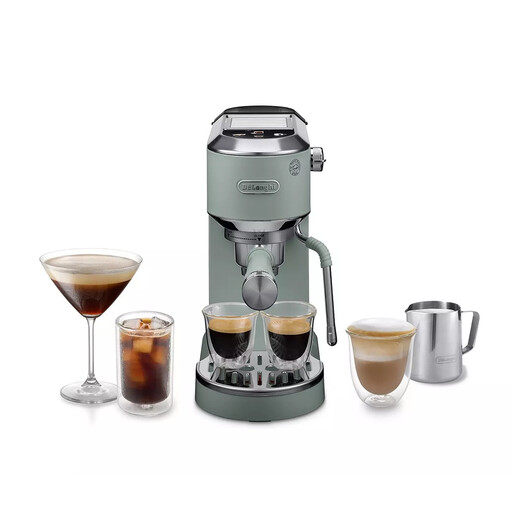
This option is a countertop espresso machine with a Cold Brew mode, not a cold-brew jar. Consider it if you want that type of machine in your student kitchen rather than a vessel for overnight steeping.
 No image available
For a countertop machine rather than a steeping jar, the Dedica Duo has a stated Cold Brew mode and a milk steam wand. If batch size matters to you, check the serving yield and which accessories come with this EC890.G variant.
Follow the method you choose: Hario UK says to refrigerate its Mizudashi for at least eight hours, while Kilner’s clip-top jar recipe calls for 18–24 hours in the fridge. Neither is an immediate morning preparation method.
Start by measuring the space available and considering how much coffee you will use. Hario UK lists a 600ml maker as well as a 1-litre option; the cited 2-litre Kilner set is more relevant when you expect to share batches and can accommodate the larger jar.
Yes. Kilner’s cold-brew recipe steeps coarse-ground coffee in a clip-top jar, then filters the coffee separately. A maker with an integrated filter changes that filtering step rather than removing the need to steep.
Use the directions for your chosen recipe or maker. Kilner says the concentrate made using its recipe can be kept in the fridge for 2–3 days; that period is not a storage rule for every cold-brew product.
Not if you only want cold coffee without making a batch from grounds. Tesco’s cold-brew concentrate is diluted with equal parts cold water, while M&S lists a ready-to-drink 250ml cold-brew latte. Check the current label for ingredients, allergens and storage directions.