For a zero-sugar, dairy-free breakfast coffee, look for a black cold brew whose nutrition panel states 0 g sugars; the Sandows listing at Coffee Friend UK gives that figure per 100 ml. An unsweetened concentrate lets you choose what to mix in, while a ready-made oat latte saves preparation; if reducing caffeine matters most, look for a decaffeinated option. Check the finished drink’s sugars and ingredients, because “no added sugar” does not mean zero sugars.
Who these options suit
Shoppers checking sugars
If you want cold coffee alongside breakfast without assuming a latte is sugar-free, compare the sugars shown for the amount you will drink. A “no added sugar” oat drink can still contain sugars, whereas a black coffee may list 0 g.
Shoppers avoiding dairy
You might prefer black coffee or a dairy-free oat latte. If you also avoid oats or other ingredients, read the full ingredient and allergen information rather than relying on the dairy-free description alone.
Shoppers reducing caffeine
A decaffeinated drink is a more relevant starting point than assuming cold brew has little caffeine. For a caffeinated bottle, check the stated amount against the volume you intend to drink.
What to check before choosing
Start with the requirement that matters most at breakfast, then check the portion you will actually drink and any ingredients you plan to add.
| Priority |
What to check |
Your needs |
| Sugars |
Read the “of which sugars” figure and its per-100 ml or per-serving basis. Coffee Friend UK lists Sandows black cold brew at 0 g sugars per 100 ml; Sainsbury’s lists 4.8 g per 250 ml for Nolo’s no-added-sugar oat latte. |
I want to know the sugars in my whole drink, not just whether sugar was added. A zero-sugar black coffee and a no-added-sugar oat latte do not meet the same requirement. |
| Dairy and oats |
Check the dairy-free claim alongside the ingredient and allergen information. Marks & Spencer describes its Plant Kitchen cold-brew oat latte as dairy-free; Sainsbury’s lists oat in the Nolo latte. |
A ready-made oat latte could work when I avoid dairy, but I need to check its ingredients if I also avoid oats. |
| Caffeine |
Compare caffeine on the stated volume basis with your planned portion. Coffee Friend UK lists Sandows at 40.5 mg per 100 ml, or 81 mg for 200 ml; Sainsbury’s describes Nolo’s oat latte as decaffeinated. |
If I am cutting back on caffeine, I would choose by the decaffeinated label or a stated caffeine amount, not by whether the drink is called cold brew. |
| Preparation |
Decide whether you want a drink ready to open or a concentrate to mix. Tesco lists a 500 ml unsweetened cold-brew concentrate; any milk, plant drink or syrup you add affects the finished drink. |
On a rushed morning, I may prefer a ready-made bottle. If choosing my own milk and sweetener matters more, I can allow time to mix a concentrate. |
Common label and preparation mistakes
-
Treating “no added sugar” as zero sugar
Those phrases describe different things. Sainsbury’s lists 4.8 g sugars in a 250 ml serving of Nolo’s no-added-sugar oat latte, while Coffee Friend UK lists 0 g per 100 ml for Sandows black cold brew.
Compare the sugars figure for the serving or bottle you expect to drink.
-
Assuming dairy-free covers every ingredient concern
An oat latte can be dairy-free and still contain oat. Sainsbury’s identifies oat in the Nolo latte’s ingredients.
If you must avoid an ingredient, check the current pack’s full ingredient and allergen information before buying.
-
Judging caffeine by the bottle name
Caffeine stated per 100 ml needs to be considered against the amount consumed. Coffee Friend UK lists Sandows at 40.5 mg per 100 ml, making a 200 ml portion 81 mg.
Use the label’s volume basis and your portion size; look for a decaffeinated product if reducing caffeine is your priority.
-
Assuming an unsweetened concentrate determines the finished drink
A concentrate is mixed before drinking. Milk, flavoured plant drinks or syrups can change the finished coffee’s sugars, ingredients and allergens.
Check the concentrate and each addition when comparing breakfast drinks.
Brand and retailer references
These examples show how particular listed drinks differ; a retailer’s inclusion here does not describe every coffee it sells.
Sandows
A ready-to-drink black cold brew made with coffee and filtered water, according to the Coffee Friend UK listing.
- The listing states that this product is dairy-free and gives 0 g sugars per 100 ml.
- It also lists 40.5 mg caffeine per 100 ml, so the amount consumed matters.
Tesco
Tesco lists a Finest Unsweetened Cold Brew Coffee Concentrate in a 500 ml format.
- A concentrate leaves the choice of mixing liquid and additions to the shopper.
- Check the current concentrate label and any additions when assessing the finished drink.
M&S
Marks & Spencer lists both a Plant Kitchen chilled cold-brew oat latte and a Classic Latte Cold Brew Coffee made with semi-skimmed milk.
- Marks & Spencer describes the Plant Kitchen oat latte as dairy-free.
- Check the pack’s sugars and ingredients before choosing either latte for a specific dietary requirement.
Sainsbury’s
Sainsbury’s lists Nolo Decaf Classic Cold Brew Oat Latte as a dairy-free, decaffeinated option.
- The Nolo listing says no sugar or sweeteners are added.
- The same listing gives 4.8 g sugars per 250 ml serving and includes oat in the ingredients.
Joybuy product options
This portioned liquid coffee is an option for mixing a weekday breakfast drink. If the cold-brew method is important to you, confirm it on the current product information before choosing.
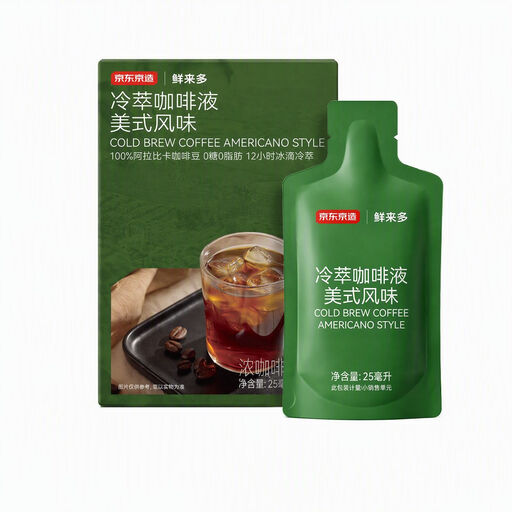 Image unavailable
J.ZAO Extra-Strong Americano Cold Brew Coffee Liquid, Dark Roast, 10 × 25 ml
The individual pouches suit a breakfast coffee you plan to mix rather than drink straight from a bottle. The title labels the liquid zero sugar and zero fat, but the product information also calls it instant soluble: confirm the brewing method if you specifically want cold brew, and check the current pack’s caffeine and energy information if those figures affect your choice.
View on Joybuy
Frequently asked questions
Does “no added sugar” mean a cold brew contains no sugars?
No. Sainsbury’s lists Nolo’s no-added-sugar decaf oat latte at 4.8 g sugars per 250 ml serving, while Coffee Friend UK lists Sandows black cold brew at 0 g per 100 ml. Compare the nutrition figure for the amount you will drink.
What can I choose if I avoid dairy?
A dairy-free black coffee or a dairy-free oat latte may suit that requirement: Coffee Friend UK describes Sandows as dairy-free, and Marks & Spencer says the same of its Plant Kitchen cold-brew oat latte. Check the current ingredients if you also need to avoid oats or another ingredient.
Is a dairy-free oat latte suitable if I avoid oats?
Not if that latte contains oat. Sainsbury’s lists oat in the ingredients of Nolo Decaf Classic Cold Brew Oat Latte; check the full ingredient and allergen information for any alternative rather than treating “dairy-free” as a broader allergen claim.
How do I compare caffeine in bottled cold brew?
Match the stated caffeine figure to your portion size. Coffee Friend UK gives Sandows as 40.5 mg per 100 ml, equivalent to 81 mg for 200 ml. If you want to reduce caffeine, look for a decaffeinated option, but do not assume “decaffeinated” means caffeine-free.
Should I choose concentrate or ready-to-drink coffee for breakfast?
Choose ready-to-drink coffee if avoiding a mixing step matters most. Choose concentrate if you want to decide what liquid or sweetener goes into the finished drink; Tesco lists an unsweetened cold-brew concentrate, but the ingredients and nutrition of what you add still matter.


