Students checking sugars
An unsweetened black coffee and a latte labelled “no added sugar” are different choices. Compare the “of which sugars” line for the drink or prepared serving you would actually have.


For a lecture lunch, choose a decaf oat latte if limiting caffeine matters most, or an unsweetened black concentrate if zero listed sugars and vegan suitability matter more than being able to drink it straight away. A lactose-free ready-to-drink latte is another option if milk is suitable for you. Check the exact pack: “no added sugar” can coexist with listed sugars, while dairy-free does not establish suitability for wheat allergy or coeliac disease.
The useful distinction is not simply whether a drink is described as a diet option, but which label detail matters to your lunch.
An unsweetened black coffee and a latte labelled “no added sugar” are different choices. Compare the “of which sugars” line for the drink or prepared serving you would actually have.
Vegan black coffee, dairy-free oat latte and lactose-free milk latte answer different requirements. Check the ingredients and allergen statement rather than treating those descriptions as interchangeable.
Look for an explicitly decaffeinated drink if caffeine is the deciding factor. A plant-based or unsweetened cold brew is not necessarily decaf; check the caffeine information on the particular pack.
Start with the requirement you cannot compromise on, then compare sugars, allergens, caffeine and the effort needed to prepare one lunch drink.
| Priority | What to check | Your needs |
|---|---|---|
| Sugars | Read “of which sugars”, not just “no added sugar”. Compare the whole can with a concentrate’s prepared serving, and account for anything you mix in. | I want to know how much sugar is listed for my actual drink. Sainsbury’s lists 4.8 g sugars in a 250 ml Nolo decaf oat latte despite its no-added-sugar claim; Tesco Groceries lists 0 g for its unsweetened concentrate. |
| Dietary compatibility | Check ingredients and product-specific allergen guidance. Lactose-free milk still contains milk; an oat drink needs its own cereal and wheat suitability check. | If I am avoiding milk, a lactose-free dairy latte does not meet that need. Tesco Groceries identifies milk in Starbucks Skinny Latte, while Marks & Spencer says its Oat Latte Cold Brew Coffee is unsuitable for people with coeliac disease or wheat allergy. |
| Caffeine | Check whether the exact product is decaffeinated and read any caffeine declaration or warning. Do not use sugar content or milk choice as a proxy. | For a later lecture, I would choose an explicitly decaf drink if limiting caffeine is my priority. Sainsbury’s describes Nolo’s oat latte as decaffeinated; Marks & Spencer lists 34.6 mg caffeine per 100 ml for a different chilled cold-brew oat latte. |
| Preparation | Check whether the drink is ready to consume or needs diluting, and what you must bring. Follow the pack’s storage directions after opening. | Between lectures, I may prefer a single-serve drink. If I can bring water and a cup or bottle, Tesco Groceries directs me to mix 100 ml of its concentrate with 100 ml of cold water. |
Other ingredients can contribute sugars to a drink with no sugar added. Sainsbury’s lists 4.8 g sugars per 250 ml can for Nolo Decaf Classic Cold Brew Oat Latte.
Use the “of which sugars” figure for the whole drink or prepared serving when comparing options.
A lactose-free milk latte still contains milk. An oat latte may have a separate cereal warning: Marks & Spencer says its Oat Latte Cold Brew Coffee is unsuitable for people with coeliac disease or wheat allergy.
Check the exact pack’s ingredients, allergen statement and suitability wording for the reason you are avoiding an ingredient.
Products differ. Marks & Spencer lists 34.6 mg caffeine per 100 ml for its Chilled Cold Brew Oat Latte and carries a high-caffeine warning; an oat base or an unsweetened label does not tell you the caffeine content.
If limiting caffeine matters for an afternoon lecture, look for a product explicitly described as decaffeinated and check its pack.
Concentrate needs preparing, and additions change the drink being compared. Tesco Groceries instructs shoppers to dilute its cold-brew concentrate with cold water.
Choose concentrate when you can prepare it; choose a ready-to-drink format when you need to take a finished drink to lunch.
A concentrate also means bringing water and something to mix it in. Milk, oat drink or syrup added afterwards changes the final ingredients and nutrition.
These examples illustrate different label and serving formats; check the particular product rather than extending one product’s details to a whole range.
Its Unsweetened Cold Brew Coffee Concentrate is a black-coffee option for shoppers willing to dilute a drink at lunch.
Its Decaf Classic Cold Brew Oat Latte combines a ready-to-drink oat format with a decaffeinated label.
Skinny Latte No Added Sugar Iced Coffee is a single-serve lactose-free milk-latte example.
Its cold-brew latte examples include oat and conventional milk formats; their labels need checking individually.
A black ready-to-drink cold brew offers a different format from a pre-mixed latte.
Waitrose & Partners lists ready-to-drink iced coffees, including Starbucks Skinny Latte, in its iced-coffee range.
Its product listings include ready-to-drink oat coffees with different caffeine and sugar information.
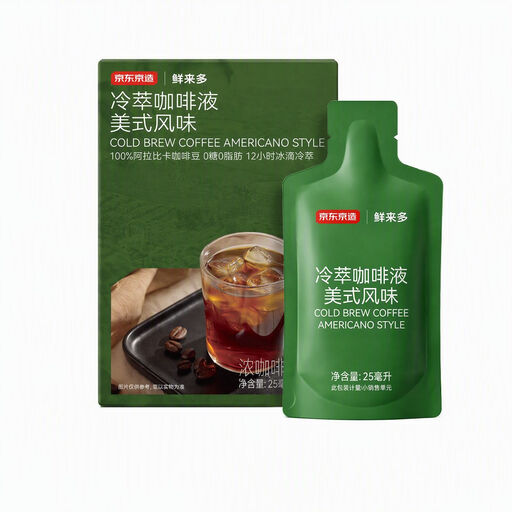
This black cold-brew pouch format is for a lecture lunch where you can add water before drinking. Compare its pack details with ready-to-drink or decaf options if either convenience or caffeine is your deciding factor.
 No image available
The individual pouches suit a lunch where you can bring water and a cup or bottle, rather than needing a drink that is ready to open.
The product directions say to mix one 25 ml pouch with about 200 ml water and stir. Its nutrition table lists 0 g sugars per 100 ml.
If caffeine is a deciding factor, check the pack’s caffeine information. Check the nutrition for the prepared drink too, particularly its energy declaration.
No. A drink can carry that claim and still list sugars in its nutrition information. Sainsbury’s lists 4.8 g sugars per 250 ml can for Nolo Decaf Classic Cold Brew Oat Latte, which is labelled no added sugar. Check “of which sugars” for the serving you plan to drink.
Not necessarily: lactose-free does not mean milk-free. Tesco Groceries lists milk in Starbucks Skinny Latte and says it is not suitable for people with a milk allergy. Check the specific pack’s allergen statement.
Do not assume so from “dairy-free”. Marks & Spencer says its Oat Latte Cold Brew Coffee is unsuitable for people with coeliac disease or wheat allergy. Check the cereal ingredients and warning on the exact product.
Choose a drink explicitly described as decaffeinated, such as Nolo Decaf Classic Cold Brew Oat Latte, rather than relying on an oat or no-added-sugar label. Check the selected pack’s caffeine information; cold-brew products differ.
Yes, if you can bring what you need to dilute it. Tesco Groceries directs shoppers to mix 100 ml of its unsweetened concentrate with 100 ml cold water. A ready-to-drink can avoids that preparation, while anything you add to concentrate becomes part of the finished drink.