What matters when choosing?
Start with the exact product’s suitability statement and the school’s policy. Then check what would be in the prepared drink and how it would be stored until lunch.
| Priority |
What to check |
Your needs |
| Suitability and caffeine |
Read the exact pack’s child-suitability statement and caffeine information. Tesco labels Grind Espresso Cold Brew Coffee Concentrate “Not suitable for children”; Coffee Friend UK lists 40.5 mg caffeine per 100 ml for its Sandows cold brew. |
I want to rule out a product carrying a warning for children, rather than assuming that “cold brew” means less caffeine. |
| Lunchtime use |
Consider when the drink would be consumed and any other caffeine consumed that day. NHS-linked Just One Norfolk says caffeine from coffee can remain in the body for hours and advises avoiding afternoon caffeine to help teenagers sleep. |
If lunch is later in the day, I want to take the timing of a caffeinated drink into account. |
| Preparation |
Identify whether the product is ready to drink, a concentrate or an instant-coffee jar. Tesco gives a 62 ml serving for Grind concentrate and a preparation of about 30 ml concentrate with 150 ml milk or water for Starbucks Caramel concentrate. |
I need to know what goes into the lunch bottle; a whole pack of concentrate is not automatically one prepared drink. |
| Ingredients and storage |
Check the current ingredient and allergen statements, nutrition information for the prepared serving, and after-opening instructions. Tesco’s milk-based example for Starbucks Caramel concentrate contains 12.3 g sugars per glass and calls for refrigeration after opening. |
When choosing a flavoured or milk-prepared drink, I want to know its prepared-serving details and whether it can be stored as the label requires. |
| School policy |
Read the school’s current packed-lunch policy, including any rules about drinks brought from home. Department for Education guidance on school food in England concerns food and drink provided in state-funded schools; it does not by itself settle an individual packed lunch. |
Before packing any coffee-style drink, including a decaffeinated one, I want to know what the pupil’s school permits. |
Relevant brand references
These examples show why the product format and exact label matter; a brand name alone does not establish suitability for a packed lunch.
Grind
Tesco lists Grind Espresso Cold Brew Coffee Concentrate as a product to mix with water or milk, not drink as an undiluted bottle.
- The listing identifies a 500 ml concentrate and gives a 62 ml serving.
- The same Tesco listing states “Not suitable for children”, excluding this product from the stated school-lunch use.
Starbucks Coffee At Home
The Caramel iced-coffee concentrate listed by Tesco is intended to be prepared with milk or water.
- Tesco gives a preparation of about 30 ml concentrate with 150 ml milk or water.
- Tesco’s prepared milk-based example contains 12.3 g sugars per glass; the concentrate requires refrigeration after opening. Its format does not establish child suitability.
Sandows
Sandows makes cold brew, including a ready-to-drink black coffee format listed by UK retailer Coffee Friend.
- The retailer lists a 200 ml bottle, distinguishing it from a concentrate that needs dilution.
- Coffee Friend lists 40.5 mg caffeine per 100 ml: 81 mg across the stated 200 ml bottle. That matters when assessing a lunchtime drink for a pupil.
M&S
M&S lists an Oat Latte Cold Brew Coffee as a prepared coffee drink rather than an instant-coffee jar.
- The listing identifies a 250 ml drink with oat ingredients and a double shot of espresso.
- M&S says this product is not suitable for people with coeliac disease or a wheat allergy. Its listing does not establish that it is suitable for a pupil’s lunch.
Sainsbury’s
Sainsbury’s lists decaffeinated instant-coffee granules, a different route from bottled cold brew or cold-brew concentrate.
- Its decaffeinated category includes Sainsbury’s Gold Roast Decaffeinated Instant Coffee Granules 200 g.
- “Decaffeinated” does not establish that an individual product is caffeine-free or suitable under a particular school’s policy; check the exact pack.
Decaffeinated coffee jars on Joybuy
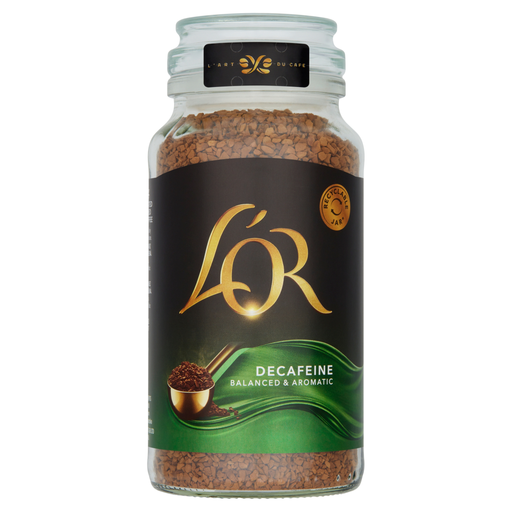
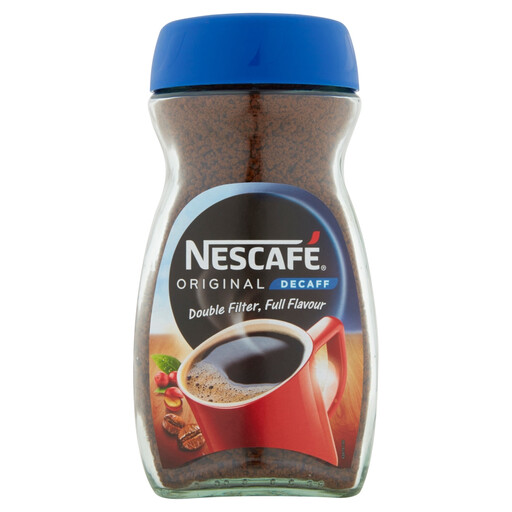
These two decaffeinated coffee jars are options to assess if a cold coffee-style drink is being considered. They are not cold brew, and their labels and the school’s policy still need checking before either is used for a packed lunch.
 No image available
L’Or Decaffeinated Coffee 150 g
This 150 g decaffeinated coffee jar is an alternative to assess when a cold coffee-style drink is requested, rather than a cold-brew product. Check the pack for caffeine information and preparation instructions, and check the school’s packed-lunch policy before making a drink for lunch.
View on Joybuy
 No image available
NESCAFÉ Decaf (New Shape) 200 g
This 200 g decaffeinated coffee jar offers another product to assess instead of cold brew. Before relying on it for a cold packed-lunch drink, check its caffeine information, how it should be prepared and the school’s packed-lunch policy.
View on Joybuy
Questions about coffee in packed lunches
Should cold brew be a routine secondary-school lunch drink?
Do not treat caffeinated cold brew as the default. Tesco’s Grind cold-brew concentrate is expressly labelled “Not suitable for children”, and NHS-linked Just One Norfolk says caffeine from coffee can remain in the body for hours; check the exact product and the school’s policy rather than assuming all cold brews are alike.
Do England’s school-food rules settle what can go in a packed lunch?
Not by themselves. Department for Education guidance describes requirements for food and drink provided in state-funded schools in England. For a drink brought from home, check the individual school’s current packed-lunch policy.
Can cold-brew concentrate go straight into a lunch bottle?
Do not treat a concentrate as ready to drink without following its label. Tesco gives a 62 ml serving for Grind concentrate mixed with water or milk; its Starbucks Caramel listing gives a preparation of about 30 ml concentrate with 150 ml milk or water. The Grind product also carries a “Not suitable for children” warning.
Does decaffeinated on a coffee jar mean caffeine-free?
Do not assume it does. Sainsbury’s lists decaffeinated instant-coffee granules, but the word on a category or jar does not establish the caffeine amount in a prepared drink. Check the exact pack, as well as the school’s policy, before considering one for lunch.
What matters if a flavoured concentrate is used at home instead?
Check the dilution, prepared-serving nutrition information, allergens and storage instructions. Tesco’s Starbucks Caramel concentrate has a prepared milk-based example containing 12.3 g sugars per glass and calls for refrigeration after opening and consumption within 14 days.


