Choose a cold-brew concentrate if you want to measure and mix each drink; Tesco lists Solo Ready to Go Espresso as a ten-serving concentrate with 159 mg of caffeine per 100 ml. Choose a ready-to-drink black coffee for a break without preparation, or a latte-style cold brew if that is the format you prefer—but do not treat words such as “double shot” as a caffeine measurement. For revision close to bedtime, bear in mind that Cambridge University Hospitals NHS Foundation Trust says caffeine can remain in the body for several hours and disrupt sleep.
Who might choose each format?
For revision breaks, the useful distinction is whether you want to mix and measure a drink or open one that is ready to drink.
Shoppers who want to measure their coffee
A concentrate lets you choose how much coffee base to pour before adding water or milk. If caffeine quantity matters, look for a labelled amount and use the concentrate volume—not just the size of the finished drink—to work out your portion.
Students taking a short break
A ready-to-drink black cold brew or single-can latte avoids mixing during a study break. Check the can or bottle size and caffeine information rather than assuming that a smaller drink contains less caffeine.
Shoppers checking milk, sugar or allergens
Black coffee, milk-based lattes and oat-based lattes have different ingredients. Grind is listed by Tesco as no sugar and vegan, while Marks & Spencer says its Oat Latte Cold Brew is not suitable for people with coeliac disease or a wheat allergy.
What should you check before buying?
Decide whether you need a measured caffeine quantity, then check the preparation format, ingredients and timing that fit your revision break.
| Priority |
What to check |
Your needs |
| Caffeine quantity |
Look for caffeine in mg per 100 ml or per serving. For a concentrate, check how much undiluted coffee goes into each drink; flavour terms alone do not give a dose. |
I want to know what I am pouring, not rely on “strong” as a measurement. Tesco lists Solo concentrate at 159 mg per 100 ml; that figure describes the concentrate, not every mixed drink. |
| Preparation |
Check whether the coffee is ready to drink or needs dilution. Tesco instructs shoppers to mix a 62 ml serving of Grind concentrate with water or milk; its Solo listing describes a 500 ml, ten-serving concentrate. |
For a brief break, I would rather open a bottle or can. If I can mix coffee across several sessions, a concentrate gives me control over how much base I use. |
| Ingredients |
Read the ingredients, nutrition panel and allergen advice. Marks & Spencer describes its Classic Latte as containing semi-skimmed milk; its dairy-free Oat Latte carries coeliac and wheat-allergy suitability warnings. |
I need to know whether my cold brew is black, milk-based or oat-based before putting it alongside my snacks. “Dairy-free” alone does not answer every allergen question. |
| Timing |
Consider the caffeine quantity in the portion you plan to drink and when you will drink it. Cambridge University Hospitals NHS Foundation Trust says caffeine can remain in the body for several hours and disrupt sleep later at night. |
If I am revising near bedtime, I do not want a stronger coffee choice to interfere with sleep before an exam. |
Common mistakes to avoid
-
Reading “strong” as a caffeine figure
“Bold”, “espresso strength” and “double shot” describe a product without establishing how many milligrams of caffeine it contains. Drinks with those descriptions cannot be put in caffeine order from the wording alone.
Compare labelled caffeine quantities on the same volume or serving basis. If you choose a concentrate, check its mixing directions as well.
-
Confusing concentrate strength with the finished drink
Tesco’s 159 mg per 100 ml figure for Solo refers to the concentrate. The caffeine in a drink depends on the amount of concentrate poured; adding water or milk changes the drink’s volume, not the caffeine already poured into it.
Measure the coffee base for each serving and check its label warnings, especially when other drinks or foods containing caffeine are part of the same day.
-
Assuming every cold brew is black coffee
A latte-style cold brew can contain milk or other ingredients. Marks & Spencer’s Classic Latte contains semi-skimmed milk, while its Oat Latte has a specific warning for people with coeliac disease or a wheat allergy.
Check the full ingredients, nutrition and allergen information for the exact variant you are buying, rather than judging it by the words “cold brew”.
-
Choosing a large concentrate without checking storage
A multi-serve bottle may need to be finished within a stated period after opening. Tesco’s product information gives seven days refrigerated for Grind and 28 days refrigerated for Solo.
Choose a pack you can use within its labelled opened-life period, and follow the storage instructions on the product you receive.
A larger bottle can go to waste if you will not finish it within its refrigerated opened-life period.
Brand and product-line references
These examples show how concentrates, black cold brews and latte-style drinks differ; check the exact product label when choosing a variant.
Solo
Tesco lists Solo Ready to Go Espresso as a black, multi-serve coffee concentrate.
- Tesco lists 159 mg caffeine per 100 ml and ten servings in a 500 ml carton.
- The caffeine figure is for the concentrate; measure the amount poured into each drink.
Grind
Tesco describes Grind Espresso Cold Brew Coffee Concentrate as a no-sugar, vegan option to mix with water or milk.
- Its preparation instructions specify 62 ml of concentrate over ice for each serving.
- “Espresso strength” is not a caffeine quantity; check the current pack if a measured dose is important.
M&S
Marks & Spencer offers Classic Latte and Oat Latte Cold Brew Coffee as ready-to-drink latte-style choices.
- Marks & Spencer describes both variants as containing a double shot of espresso; the Oat Latte is dairy-free.
- The Classic Latte contains semi-skimmed milk, and Marks & Spencer says the Oat Latte is unsuitable for people with coeliac disease or a wheat allergy. “Double shot” does not establish a caffeine-milligram comparison.
Sandows
Coffee Friend UK lists Sandows as a ready-to-drink black cold brew.
- The retailer describes it as sugar-free and dairy-free.
- Check the caffeine and serving information on the bottle if you need to plan a measured portion.
Jimmy's
Waitrose lists Jimmy's Iced Coffee Strong as a ready-to-drink milk-and-coffee alternative.
- The Waitrose description identifies Arabica coffee and semi-skimmed milk.
- The listing does not identify it as cold brew. Do not treat “Strong” as a measured caffeine comparison with cold-brew products.
Joybuy cold-brew option
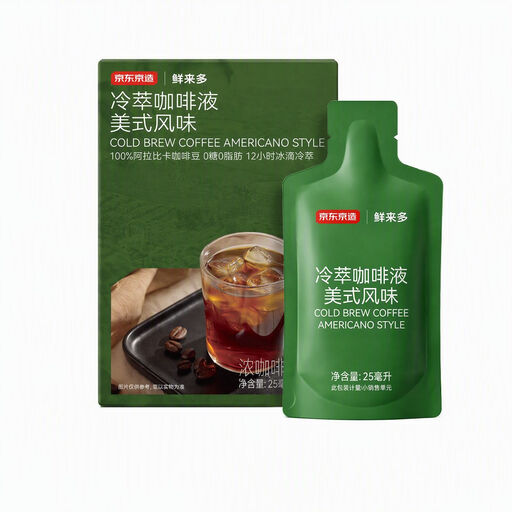
This portioned cold-brew coffee liquid is an option if you can mix a drink during a revision break rather than needing one that is ready to drink.
 No image available
J.ZAO Extra-Strong Americano Cold Brew Coffee Liquid, 10 × 25 ml pouches
For breaks when you can prepare a drink, this cold-brew coffee liquid comes in ten 25 ml pouches and is labelled zero sugar. “Extra-Strong” does not tell you the caffeine amount per pouch; check the pack’s caffeine information and mixing directions when deciding how much to use.
View on Joybuy
Cold-brew questions
Does “strong” mean a cold brew has more caffeine?
No: the word alone does not establish a caffeine quantity. Look for milligrams per 100 ml or per serving, and check whether the figure describes a concentrate or a ready-to-drink product. Tesco lists 159 mg per 100 ml for Solo concentrate; “double shot” on a latte label is not an equivalent measurement.
How do I prepare and store cold-brew concentrate?
Follow the instructions for the specific product. Tesco says to pour 62 ml of Grind concentrate over ice and mix it with water or milk; its product information says to refrigerate Grind after opening and consume it within seven days. Tesco gives Solo a refrigerated opened-life period of 28 days.
Should I choose strong cold brew for late-night revision?
Consider the timing and portion before choosing it. Cambridge University Hospitals NHS Foundation Trust says caffeine can remain in your system for several hours and disrupt sleep later at night; a more concentrated drink is not automatically the useful choice close to bedtime.
What caffeine information matters during pregnancy?
The NHS advises no more than 200 mg of caffeine a day during pregnancy. Check the caffeine in the portion you plan to drink and account for other sources of caffeine that day; a chilled coffee or diluted concentrate should not be assumed to contain a small amount.


