Households making several drinks at home
A concentrate allows each drink to be mixed with water or a preferred milk. Check the preparation instructions and whether the household will use the pack within its stated refrigerated opened-life.


For repeated preparation at home, a true cold-brew concentrate lets you add your own water or milk; a ready-to-drink latte avoids mixing but comes with a fixed recipe. A soluble-coffee iced concentrate is another quick-mix option, but it is not the same format as cold brew. Before choosing a caffeinated drink for a school-age student, check the current pack’s caffeine information and any child-suitability warning.
A concentrate allows each drink to be mixed with water or a preferred milk. Check the preparation instructions and whether the household will use the pack within its stated refrigerated opened-life.
A pour-and-mix product can simplify a morning routine when the required mixer is available. Check caffeine per serving and any age-related warning on the current pack rather than assuming an adult serving is suitable.
M&S describes its Oat Latte Cold Brew Coffee as dairy-free, but states that it is not suitable for coeliacs or people with a wheat allergy. Check the exact pack’s allergen statement.
Choose the preparation format first, then check caffeine information and whether the storage instructions fit your routine.
| Priority | What to check | Your needs |
|---|---|---|
| Preparation time | Check whether the drink is ready to open or needs mixing. M&S lists ready-to-drink cold-brew lattes; Waitrose & Partners lists Nescafé Espresso Concentrated Iced Classic as a concentrate made with soluble coffee. | On a rushed morning, I may want a drink that needs no mixing. If I have milk and ice available, a concentrate could fit the routine instead. |
| Recipe control | Check the stated dilution method and ingredients. Tesco instructs shoppers to mix 100 ml of its Finest cold-brew concentrate with 100 ml of cold water; its Grind listing says to mix a 62 ml portion with water or milk. | I would rather choose what to mix with my coffee than buy a latte with the milk and sweetness already decided. |
| Caffeine and suitability | Read the current pack for caffeine per serving and age-related warnings. Tesco’s Grind concentrate listing explicitly says it is not suitable for children. | If the drink is for a school-age student, I need to consider caffeine from other drinks and foods too, rather than treating a cold coffee as a routine school drink. |
| Storage after opening | Follow each pack’s refrigeration and consume-within instructions. Tesco lists four weeks for its Finest concentrate and seven days for Grind; Waitrose & Partners lists 14 days for Nescafé Espresso Concentrated Iced Classic. | For occasional drinks, I need a pack I can realistically finish within its stated opened-life. |
Cold-brew concentrate and soluble-coffee iced concentrate are different formats, even though both can make a cold drink.
If cold-water extraction matters to you, check the ingredients and preparation description rather than relying on the word “iced”.
Refrigerated opened-life differs between products: Tesco lists seven days for Grind concentrate and four weeks for Tesco Finest, while Waitrose & Partners lists 14 days for Nescafé Espresso Concentrated Iced Classic.
Consider how many drinks you will make, and follow the current pack’s storage instructions.
A larger pack can go unused if the household cannot finish it within its stated opened-life.
A school-morning routine does not establish that a caffeinated product is suitable for a child. Tesco’s Grind concentrate listing specifically says it is not suitable for children.
Check caffeine per serving and product warnings on the current pack, and account for other sources of caffeine rather than defaulting to an adult serving.
M&S describes its Oat Latte Cold Brew Coffee as dairy-free but says it is not suitable for coeliacs or people with a wheat allergy.
Read the allergen and suitability statement for the exact product before choosing an oat-based latte.
Tesco lists a 500 ml unsweetened cold-brew coffee concentrate for mixing with cold water.
Tesco lists Grind’s 500 ml cold-brew concentrate as coffee slow-steeped in cold water.
Waitrose & Partners lists Nescafé Espresso Concentrated Iced Classic as a 500 ml iced-coffee concentrate containing soluble coffee, not as true cold brew.
M&S lists ready-to-drink cold-brew latte options, including a 250 ml Classic Latte and an oat version.
Sandows London describes its coffee as slow-brewed with cold water and triple-filtered.
These portioned coffee liquids are options for mixing a cold drink. If you specifically want coffee extracted by cold brewing, check the current pack rather than relying on a product title.
 No image available
The individual pouches offer a measured portion to mix with hot or cold water; the product description suggests about 200 ml of water, adjustable to taste. Although the title says “Cold Brew”, the description calls the coffee instant soluble, so check the pack if extraction method matters. Check caffeine per serving before considering it for a student.
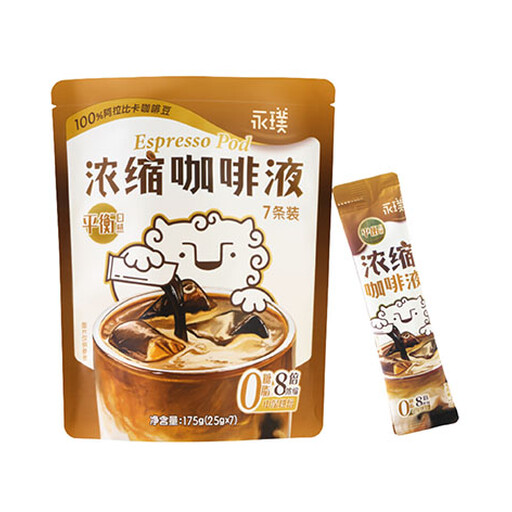 No image available
The seven portioned sticks are described with a hot- or cold-water mixing method. The description also calls the product ready to drink, so check the current pack for the intended preparation. Check caffeine per serving before considering it for a student.
No. Tesco describes Grind’s concentrate as slow-steeped in cold water, while the ingredients for Nescafé Espresso Concentrated Iced Classic listed by Waitrose & Partners identify soluble coffee. Both can be used for a cold drink, but check the extraction method if you specifically want cold brew.
Check caffeine per serving, caffeine from other sources and any warning on the exact pack; do not assume an adult portion is suitable. Tesco’s listing for Grind Espresso Cold Brew Coffee Concentrate explicitly says it is not suitable for children.
Choose according to how quickly you can use it after opening while following its storage instructions. Tesco lists four weeks for Tesco Finest cold-brew concentrate and seven days for Grind, while Waitrose & Partners lists 14 days for Nescafé Espresso Concentrated Iced Classic, which is made with soluble coffee.
Not necessarily. M&S describes its Oat Latte Cold Brew Coffee as dairy-free but states that it is not suitable for coeliacs or people with a wheat allergy. Check the current pack’s allergen statement.