Who is each format for?
The useful distinction for a school or study morning is whether the drink needs preparing, carrying or checking against a particular ingredient requirement.
People preparing drinks before a busy morning
A concentrate gives you control over how much water or milk to add, but it needs mixing. A ready-to-drink bottle removes that step. If you plan to use one bottle of concentrate across several mornings, check how it must be stored after opening.
People choosing between black coffee and a latte
Start with the drink you actually want to take: unsweetened black coffee, a milk latte or an oat-based option. Their ingredient and sugar declarations differ, so a similar-looking cold coffee need not be interchangeable.
Households checking caffeine and allergens
Read the caffeine declaration, product warnings and ingredients on the exact pack. This matters particularly when a drink is being considered for a child or someone who is caffeine-sensitive, or when milk or cereals containing gluten need checking.
What should you check before choosing?
Choose the preparation format first, then compare the label details for the person who will drink it and the way it will be used.
| Priority | What to check | Your needs |
|---|
| Preparation |
Check whether the drink is ready to drink or needs mixing. Tesco Groceries directs shoppers to mix 100 ml of its Finest concentrate with 100 ml of cold water; a retailer describes Sandows as ready to drink. |
I can mix coffee before leaving if that lets me choose the dilution and additions. If there is no time to prepare it, I would rather pack a ready-to-drink option. |
| Caffeine |
Compare caffeine using the stated serving size or per-100-ml figure, and read any suitability warning. Tesco Groceries lists an average of 59 mg per 100 ml for Hunt and Brew Huila Colombia; Waitrose lists 94 mg per prepared glass for Nescafé Espresso Concentrated Iced Vanilla. |
The drink needs to suit its intended drinker; words such as “Arabica” or “latte” do not answer that question. I will check the exact pack, especially if a child or caffeine-sensitive person might drink it. |
| Ingredients |
Compare the ingredient list and sugars on the same stated basis. Tesco Groceries lists Califia Farms’ caramel oat cold brew at 11 g sugars per 250 ml serving; Marks & Spencer lists milk and sugar in its Classic Latte Cold Brew. |
I might want an unsweetened black base so I can add my own milk or sweetness. If I choose a dairy or oat latte instead, its listed ingredients must fit the household. |
| Storage |
Read the opened-pack refrigeration and use-by instructions. Tesco Groceries states four weeks after opening for its Finest concentrate, but seven days for Grind Espresso Cold Brew Coffee Concentrate. |
Will I use an opened bottle within its stated period, and can I keep it refrigerated as instructed? |
Brand and retailer references
These examples show how formats and labels differ; check the current product and pack rather than applying one listing’s details to a whole range.
Tesco
Tesco Groceries lists cold-brew concentrates for drinks mixed at home.
- Its Finest Unsweetened Cold Brew Coffee Concentrate is listed as 100% Arabica and prepared with equal amounts of concentrate and cold water.
- It needs preparing and refrigeration after opening; check the current pack for its ingredients and instructions.
M&S
Marks & Spencer lists Classic Latte Cold Brew as a ready-to-drink milk coffee.
- The listed drink combines Arabica coffee with semi-skimmed milk.
- It contains milk and sugar, so check the current label if either affects your choice.
Waitrose
Waitrose & Partners lists both prepared iced coffees and concentrated products in its iced-coffee range.
- Its Nescafé Espresso Concentrated Iced Vanilla listing gives mixing options including milk and plant-based milk.
- Waitrose lists 94 mg caffeine per prepared glass for that vanilla product; check the intended serving and current pack warning.
Sainsbury's
Sainsbury's lists Grind Smooth Barista Blend Craft Instant Decaf as an alternative for making a cold coffee drink.
- The listed decaffeinated coffee can be mixed hot or cold.
- It is an instant coffee, not a ready-made cold brew; check the pack if caffeine content matters to you.
Sandows
UK retailer Coffee Friend describes Sandows as a ready-to-drink black cold brew.
- The retailer lists coffee and filtered water as ingredients and describes the drink as sugar-free and dairy-free.
- Coffee Friend lists 40.5 mg caffeine per 100 ml; confirm the declaration on the current pack.
Joybuy options for mixing a cold coffee
These individually portioned options suit making a cold coffee before a school or study day. Both need preparation rather than offering the convenience of a ready-to-drink bottle; the flavoured powder is an instant alternative, not an equivalent black cold brew.
 No image available
J.ZAO Extra-Strong Americano Cold Brew Coffee Liquid, 25 ml × 10
For a drink mixed before leaving, the individual pouches provide measured portions while leaving you to choose the additions. The pack contains ten 25 ml pouches and is labelled zero sugar. This is a mix-before-drinking coffee liquid, not a ready-to-drink bottle; check the current pack for caffeine per prepared serving.
View on Joybuy
 No image available
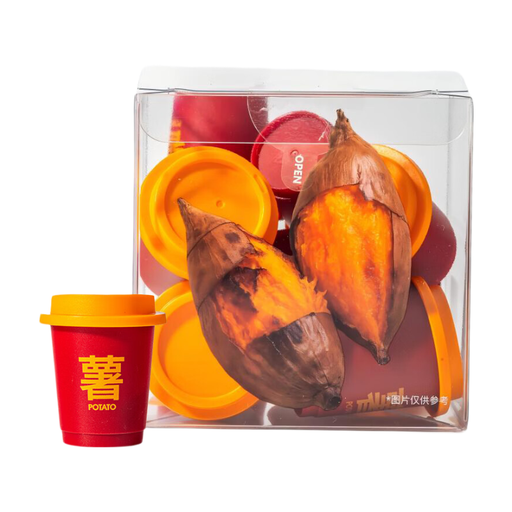
Office Fish Roasted Sweet Potato Flavored Cold Brew Freeze-Dried Coffee Powder, 18 g
This sweet-potato-flavoured powder is an option when you can mix a drink rather than carry a ready-to-drink bottle. It is a freeze-dried instant coffee, so do not treat it as equivalent to a plain, ready-made black cold brew. Check the pack’s preparation directions and caffeine declaration for the serving you intend to make.
View on Joybuy
Cold-brew questions
Should I choose concentrate or ready-to-drink cold brew for a busy morning?
Choose concentrate if you can mix the drink beforehand and want to control dilution and additions; choose ready-to-drink when avoiding preparation matters more. Tesco Groceries directs shoppers to mix its Finest concentrate with water, while UK retailer Coffee Friend describes Sandows as ready to drink.
Does “100% Arabica” tell me how much caffeine is in a serving?
No. Check the caffeine declaration and its serving basis on the exact product. Tesco Groceries lists an average of 59 mg per 100 ml for Hunt and Brew Huila Colombia, whereas Waitrose lists 94 mg per prepared glass for Nescafé Espresso Concentrated Iced Vanilla; those are different drinks and measurement bases.
Is cold brew automatically suitable for children?
No: suitability warnings depend on the product, not whether the coffee is served cold or with milk. Tesco Groceries lists Grind Espresso Cold Brew Coffee Concentrate as not suitable for children and Hunt and Brew Huila Colombia as not recommended for children. Check the warning on the exact pack.
How do I check milk and oat ingredients in a UK cold coffee?
Read the current ingredients list, including any clearly labelled allergens. GOV.UK states that UK prepacked food and drink must clearly identify ingredients from the 14 specified allergen groups; these include milk and cereals containing gluten, including oats where applicable. A dairy-free description alone does not replace an ingredient check.
How long can I keep cold-brew concentrate after opening?
Follow the period on your bottle rather than assuming all concentrates keep for the same time. Tesco Groceries states that its Finest concentrate should be refrigerated and used within four weeks after opening, while its Grind concentrate listing specifies refrigeration and use within seven days.


