Hosts planning individual drinks
Tesco lists iced-coffee packs of four 250ml drinks and four 200ml drinks. Either gives you a known number of portions without making coffee during the party; check the container type if you specifically need cans.


If cold-brew coffee in cans is essential for the birthday party, check both the brewing description and container type on the exact pack: Tesco lists four-packs of iced coffee, while M&S lists a 250ml cold-brew latte. If individually portioned drinks matter more than the brewing method, an iced-coffee multipack may suit the party instead, provided its packaging, milk allergens, storage instructions and caffeine information fit your guests’ needs.
The choice changes depending on whether ready-to-serve portions, cold-brew preparation or guests’ dietary needs come first.
Tesco lists iced-coffee packs of four 250ml drinks and four 200ml drinks. Either gives you a known number of portions without making coffee during the party; check the container type if you specifically need cans.
M&S describes its 250ml Classic Latte as cold-brew coffee. The Tesco multipacks are listed as iced coffee or espresso iced coffee, so their names alone do not establish cold-brew preparation.
The M&S cold-brew latte contains semi-skimmed milk, and Starbucks describes its Doubleshot Espresso iced coffee as containing milk. Check each drink’s label and caffeine information before offering it to guests with relevant dietary needs.
Decide whether cold-brew preparation is essential, then check the pack itself for the number of drinks, container type and serving requirements.
| Priority | What to check | Your needs |
|---|---|---|
| Brewing method | Look for an explicit cold-brew description if the method matters. M&S names its 250ml latte as cold brew; Tesco names its four-packs as iced coffee and espresso iced coffee. | I want cold brew specifically, rather than any coffee served cold. If the method is flexible, an iced-coffee pack is another option. |
| Pack size | Multiply the unit count by the stated volume. Tesco lists Nescafé Iced Coffee Caramel Latte 4 × 250ml, totalling 1 litre, and Starbucks Doubleshot Espresso Iced Coffee 4 × 200ml, totalling 800ml. | Knowing how many individual drinks I can put out helps me plan for the guest list. |
| Container | Check the product image and packaging description for cans; a multipack count and unit volume do not establish the container type. | Cans matter for how I plan to serve or transport the drinks, so I need to confirm the actual packaging before ordering. |
| Ingredients | Read the current label for milk and other relevant allergens. M&S lists semi-skimmed milk in its cold-brew latte, while Starbucks describes its Doubleshot Espresso iced coffee as containing milk. | Some guests need to avoid milk, so I cannot judge suitability from the words ‘cold brew’ or ‘iced coffee’ alone. |
| Storage and caffeine | Follow the storage directions on the exact pack and check its caffeine information. The NHS advises pregnant people not to have more than 200mg of caffeine a day. | I need space to store the drinks as directed and a non-caffeinated choice for guests who want one. |
Tesco’s listed four-packs are named iced coffee and espresso iced coffee; M&S explicitly calls its 250ml latte cold brew. Those descriptions do not establish the same brewing method.
If cold brew is part of the party brief, confirm it in the description of the product you intend to buy. Otherwise, call the alternative iced coffee.
A listing can specify four drinks and their volume without identifying the container. That matters if your serving or transport plan depends on cans.
Check the packaging description and pack image for the exact variant before ordering.
The M&S cold-brew latte lists semi-skimmed milk, and Starbucks describes milk in its Doubleshot Espresso iced coffee. Storage and caffeine details must also apply to the particular drink being served.
Read the current pack label for allergens, storage directions, date marking and caffeine information before putting drinks out for guests.
These examples help distinguish cold-brew-labelled drinks from other ready-to-drink coffees; pack formats vary by product.
M&S lists a 250ml Classic Latte Cold Brew Coffee made with semi-skimmed milk.
Tesco lists Nescafé Iced Coffee Caramel Latte 4 × 250ml and Starbucks Doubleshot Espresso Iced Coffee 4 × 200ml.
Waitrose lists ready-to-drink iced coffees, including a 250ml Jimmy's drink and a 750ml Starbucks Caffè Latte.
Sandows describes its coffee as cold brew made in London. Coffee Friend lists a pack of two 200ml Sandows cold-brew flasks.
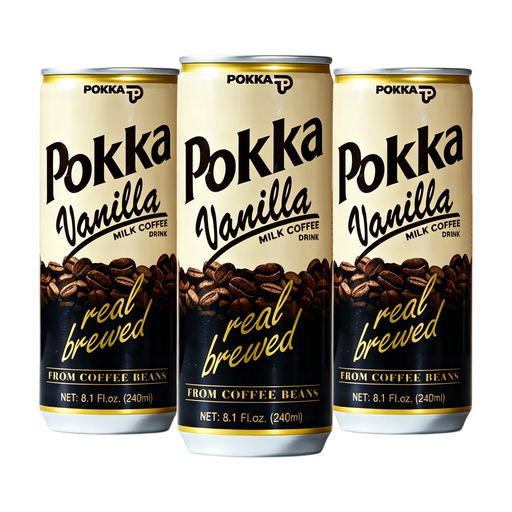
This option is a three-pack of individually portioned coffee cans for the party, rather than a cold-brew-labelled multipack.
 No image available
Three ready-to-drink cans provide individual portions for guests who want vanilla-flavoured coffee. The drink is described as brewed coffee, not cold brew, and contains milk. Check the current label for allergens, storage directions and caffeine information before serving.
Only if that specific product is described as cold brew. M&S names its 250ml latte as cold-brew coffee, while Tesco lists the four-packs discussed here as iced coffee and espresso iced coffee.
Tesco’s Nescafé 4 × 250ml pack contains 1 litre in total, and its Starbucks 4 × 200ml pack contains 800ml. If you plan to pour smaller servings, calculate the number from your intended serving size.
Check the current label of every drink you plan to serve. M&S lists semi-skimmed milk in its cold-brew latte, and Starbucks describes its Doubleshot Espresso iced coffee as containing milk; neither should be offered to someone with a milk allergy.
Check the caffeine information for the exact drink and offer a non-caffeinated alternative. The NHS advises pregnant people not to have more than 200mg of caffeine a day; the amount in a particular coffee drink needs to be checked against its own label.
Follow the storage instructions for the particular product rather than applying one rule to every multipack. Joybuy’s listing for a Starbucks Doubleshot Espresso Iced Coffee 12 × 200ml product specifies chilled storage at 2–8°C, but that does not establish the directions for other drinks.