People wanting a creamy lunch coffee
A ready-to-drink milk cold-brew latte suits a quick single-serve counter when milk is appropriate. Marks & Spencer’s Classic Latte combines coffee with semi-skimmed milk.


For a workplace lunch counter, choose a ready-to-drink milk latte when a familiar creamy coffee and quick service matter; an oat latte offers a dairy-free alternative, but its exact allergen statement still needs checking. A clearly labelled decaffeinated drink serves people avoiding caffeine. Concentrate gives a canteen control over how each drink is made, provided staff use a consistent recipe and keep ingredient information current.
Milk suitability, caffeine preference and the time available to prepare drinks point towards different cold-brew formats.
A ready-to-drink milk cold-brew latte suits a quick single-serve counter when milk is appropriate. Marks & Spencer’s Classic Latte combines coffee with semi-skimmed milk.
An oat latte provides a dairy-free route, but the exact product matters. Marks & Spencer states that its Oat Latte Cold Brew is not suitable for people with coeliac disease or a wheat allergy.
A separately identified decaffeinated drink makes the choice clear. Sainsbury’s describes the Nolo cold-brew oat latte as decaffeinated and containing no caffeine.
Choose the milk and caffeine options first, then decide whether lunch service can accommodate drinks mixed to order.
| Priority | What to check | Your needs |
|---|---|---|
| Milk and allergens | Read the current ingredients and allergen statement for each drink. Check oat products individually: Marks & Spencer says its Oat Latte Cold Brew is unsuitable for people with coeliac disease or a wheat allergy. | I need to tell a milk latte from a dairy-free option without assuming that every oat drink meets other allergen-related requirements. |
| Caffeine | Identify decaffeinated drinks explicitly and check any declared caffeine amount for the serving offered. Sainsbury’s describes the Nolo oat latte as decaffeinated and containing no caffeine. | For a later lunch or afternoon coffee, I want to recognise the decaf choice rather than guess from the flavour or colour of the drink. |
| Flavour and sweetness | Compare ingredients and nutrition per 100 g or 100 ml on the exact packs. Distinguish a classic milk latte, a flavoured oat latte and an unsweetened concentrate; “no added sugar” does not by itself describe total sugars. | A classic coffee-and-milk taste may suit me, or I may prefer a flavoured drink or one mixed without added sweetener. |
| Preparation and storage | Check whether the product is ready to drink or needs dilution. For concentrate, specify the amount of concentrate, liquid, ice and cup size; follow the product’s storage and serving instructions. | At a busy lunch counter, I may want a sealed single serve. A mixed-to-order drink gives me a choice of additions but takes preparation. |
| Menu information | Keep ingredient information for the exact drink served, including added milk or oat drink. If staff package drinks before customers select them, check the applicable prepacked-for-direct-sale labelling requirements. | I want to know what is in the finished drink, not just the coffee base. |
Marks & Spencer describes its oat cold brew as dairy-free but says it is unsuitable for people with coeliac disease or a wheat allergy.
Name the exact drink on the menu and make its current ingredients and allergen information available rather than applying a blanket suitability claim.
Changing the dilution or additions changes the drink customers receive, making the menu description less useful.
Write down the concentrate and liquid amounts, ice quantity, cup size and permitted additions, and use the same recipe across shifts.
Mixing each drink also takes staff time and serving supplies that a sealed ready-to-drink option does not require.
A retailer category page can illustrate concentrate and ready-to-drink formats without establishing what a particular canteen can order.
Confirm current stock, case quantities, shelf life and supply arrangements with the intended retailer or supplier before setting the menu.
Caffeine information differs between drinks: Sainsbury’s describes Nolo’s oat latte as decaffeinated, while its Rodd’s oat latte listing declares 41 mg caffeine per bottle.
Identify the decaffeinated choice separately and retain any declared caffeine information for the caffeinated serving offered.
These examples illustrate drink formats and ingredients; a retailer’s category range does not establish what a workplace canteen can obtain.
Marks & Spencer lists Classic Latte and Oat Latte Cold Brew drinks as distinct milk and dairy-free options.
Its iced-coffee listings include third-party decaffeinated and chilled oat cold-brew lattes, as well as other drink formats.
A Tesco iced-coffee listing includes an unsweetened cold-brew concentrate alongside other concentrates.
Its iced-coffee category lists concentrated coffee and single-serve chilled drinks from several brands.
Sandows London describes making cold-brew coffee in its London brewery.
These products suit drinks prepared at the counter: one is a portioned Americano concentrate, while the other is a sweet-potato-flavoured cold-brew coffee powder. Neither is a ready-to-drink milk, oat or decaf latte.
 No image available
The portioned liquid format suits a canteen mixing cold coffee to order rather than handing out a finished latte. The product name describes dark-roast coffee and states zero sugar and zero fat. Set a consistent recipe for the finished drink, and confirm caffeine per prepared serving before making a caffeine claim on the menu.
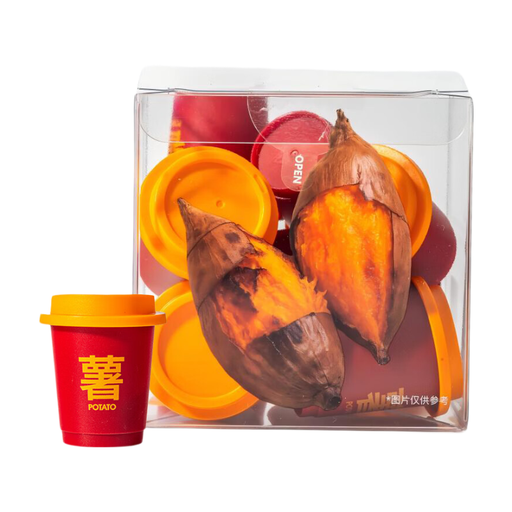 No image available
This freeze-dried black coffee powder is a made-to-order, sweet-potato-flavoured choice rather than a plain ready-to-drink latte. The pack is labelled 18 g. Check the finished recipe and any milk or oat-drink additions before describing the serving’s ingredients, and confirm caffeine per prepared serving before making a caffeine claim.
A sealed ready-to-drink product avoids mixing each serving. Marks & Spencer lists its Classic Latte and Oat Latte Cold Brew as 250 ml drinks; a concentrate instead needs a consistent dilution and serving recipe.
Not automatically. Marks & Spencer says its dairy-free Oat Latte Cold Brew is unsuitable for people with coeliac disease or a wheat allergy, so check the current label of the exact drink being served.
Label a decaffeinated option separately rather than asking customers to infer caffeine content from the drink style. Sainsbury’s describes the Nolo cold-brew oat latte as decaffeinated and containing no caffeine; check each alternative product’s own information.
Check whether the drinks fall within prepacked-for-direct-sale labelling requirements and provide the applicable ingredients and allergen information for the finished drink, including additions. The Royal Borough of Kensington and Chelsea’s food-safety guidance explains the requirements for foods packaged before selection at the place of sale.