What should you check first?
Start with the reason for buying the drink, then narrow the choice by caffeine, ingredients and the way it must be prepared.
| Priority |
What to check |
Your needs |
| Nutrition |
Read energy and protein values for the stated serving size. Consider what is added to a concentrate or pod; do not treat coffee alone as nutrition support. |
I need a drink that will not displace meals or an existing nutrition plan. If appetite is poor or weight loss is unintentional, I need advice about that concern, not just a different coffee. |
| Caffeine |
Look for an explicit decaffeinated label. For regular coffee, check caffeine per serving where stated and consider other sources of caffeine. |
When caffeine aggravates symptoms, I want to distinguish decaf from a drink that is merely served cold. NHS Tayside notes that caffeine can worsen bladder and bowel symptoms. |
| Preparation |
Confirm the exact capsule system before buying pods. Check whether a ready-to-drink product needs chilling or a concentrate needs measured dilution. |
I want a preparation routine the person or carer can manage consistently, with the right machine available if I choose capsules. |
| Ingredients |
Check the exact pack for milk, oat and other allergens. Compare sugars, fibre and protein using the same labelled serving basis. |
Milk or oat ingredients matter to my choice, and I cannot assume an oat latte provides the same protein as a dairy latte. |
| Cold-brew method |
Read how the coffee is made, not just its name. Tesco describes its concentrate as cold-water extracted; Nespresso describes a hot stage followed by cool water for Cold Brew Style Intense. |
If I specifically want cold-water-extracted coffee, an iced or cold-brew-style capsule may not meet that requirement. |
Brand and product references
These examples show how particular cold coffees and capsules differ; the details apply to the named products, not every drink from each brand.
Tesco Finest
Tesco offers a cold-water-extracted concentrate and a separate decaffeinated Accordo capsule. They answer different preparation needs.
- Tesco’s concentrate instructions mix 100ml concentrate with 100ml cold water, with milk or a milk alternative also offered as an option.
- Accordo is a decaffeinated, Nespresso-compatible coffee capsule, not the cold-brew concentrate; check machine compatibility before buying.
M&S
Classic Latte Cold Brew is a ready-to-drink, milk-containing option rather than a machine capsule.
- The M&S label lists 37kcal and 2.1g protein per 100g.
- It contains semi-skimmed milk and lists 3.8g sugars per 100g; check the pack if either affects the choice.
Sainsbury’s / Nolo
Nolo Decaf Classic Cold Brew Oat Latte is a ready-to-drink decaffeinated option for someone who does not want to use a pod machine.
- Sainsbury’s lists 65kcal and 6.8g fibre per 250ml serving.
- It contains oat and lists negligible protein per 250ml, so its fibre content should not be mistaken for a protein contribution.
Nespresso
Cold Brew Style Intense is a capsule for an iced, cold-brew-style drink using specified Vertuo machines.
- Nespresso describes a brewing process that begins hot and continues with cool water.
- It is not the same preparation method as cold-water extraction, and compatibility must be checked against the named Vertuo models.
Joybuy pod option
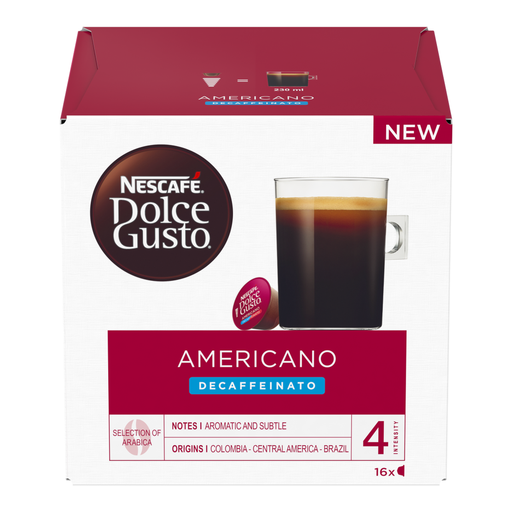
This decaffeinated pod option is for a household using a Dolce Gusto machine. If a cold drink is essential, check the intended preparation method before buying.
 No image available
Nescafe Dolce Gusto Americano Decaf, 16 capsules (128g)
A decaffeinated pod for someone who wants a coffee routine using a Dolce Gusto machine. The product is named Americano rather than cold brew; check its preparation instructions if serving it cold is important. Coffee alone should not be relied on for nutrition support.
Joybuy
Questions about cold coffee
Are cold-brew-style pods the same as cold-water-extracted coffee?
Not necessarily. Nespresso says Cold Brew Style Intense begins brewing hot before cool water is used, while Tesco describes its concentrate as cold-water extracted for several hours. Check the preparation description if the method matters to you.
Can a coffee pod help with an older person’s nutrition?
A coffee pod alone should not be used as nutrition support. If there is poor appetite, unintentional weight loss or suspected malnutrition, seek a GP assessment; the NHS says a referral to a dietitian may be appropriate. Adding a suitable milk changes the finished drink, but it does not replace individual nutrition advice.
When should I look for decaf?
Look for an explicitly decaffeinated product when the person wants to reduce caffeine or finds that it aggravates symptoms. NHS Tayside notes that caffeine can worsen bladder and bowel symptoms. Follow individual clinical advice where relevant rather than assuming every decaf drink is suitable.
How can I avoid buying the wrong capsules?
Match the named capsule system to the machine before buying. Tesco labels Accordo as Nespresso-compatible, while Nespresso lists Cold Brew Style Intense for specified Vertuo machines. Check the exact model rather than assuming all coffee pods are interchangeable.
What should I check on a milk or oat cold-coffee label?
Check the ingredients and allergens on the exact pack, then read the nutrition values alongside their serving size. M&S Classic Latte Cold Brew contains semi-skimmed milk; Sainsbury’s Nolo decaf oat latte contains oat and lists negligible protein per 250ml. The two drinks should not be treated as nutritionally interchangeable.


