
24/7 Customer Support

Free returns

Same-day & Next-day Delivery

Quality Guaranteed

Unlock Your Welcome Offers: FREE Delivery | Up to 80% OFF | Free 30-day JoyPlus trial
Download the APP
Collagen supplements are available as powders, capsules, gummies and effervescent tablets, but a higher price or attractive beauty claims do not necessarily indicate better value. For UK shoppers, the important questions are simpler: how much collagen does each serving provide, what is the source, and can you take it consistently?
Marketing can make comparison difficult. A product may highlight “high strength” collagen while offering a small serving, or promote added ingredients without clearly showing their quantities. Use the following checks to avoid paying for features that do not suit your diet or routine.
A large pouch may appear economical, but the daily serving can vary considerably. One product may recommend 5g per day, while another suggests 10g or 12g. Compare the total collagen per serving, number of servings and cost per daily portion rather than the net weight alone.
Marine collagen powder is usually derived from fish and commonly supplies Type I collagen. Bovine collagen peptides may contain Type I and Type III collagen. Neither is automatically suitable for everyone: fish allergies, dietary preferences and sourcing requirements all matter.
Marine products are not suitable for people with fish allergies and are not vegetarian or vegan, even where the capsule shell is plant-derived. Consumers following Halal or Kosher diets should look for clear certification on the product information rather than relying on general claims.
Vitamin C contributes to normal collagen formation, but added vitamin C does not make every product suitable for every person. Check the complete ingredient list, sweeteners, flavourings and allergen statement. A flavoured product may contain ingredients you prefer to avoid, while an unflavoured collagen powder may fit more easily into coffee, porridge or smoothies.
Look for clearly named ingredients such as hydrolysed collagen or collagen peptides. Hydrolysis breaks collagen into smaller peptide chains for use in a powder or capsule format. The source should be stated as bovine, marine or another specific origin.
For people seeking collagen for skin, hair and nails, Type I collagen is commonly selected. Those considering collagen for joints may prefer to compare the complete formula, serving size and intended use rather than relying solely on the collagen type.
Serving amounts in the available products range from smaller capsule portions to 20g of bovine collagen peptides. A higher quantity is not automatically necessary. Follow the product label and avoid taking several high-dose collagen supplements together unless a healthcare professional advises you to do so.
For a practical comparison, record:
Check whether the product contains fish, milk or other allergens, and whether it is gluten-free, dairy-free, sugar-free, Halal or Kosher. “Clean label” wording is less useful than reading the ingredients directly.
Powder is often convenient for people who already drink coffee or smoothies. Capsules can be easier to carry but may provide less collagen per serving. Gummies are simple to take, although they may contain sugars or sweeteners and generally provide a lower collagen amount than a full powder serving.
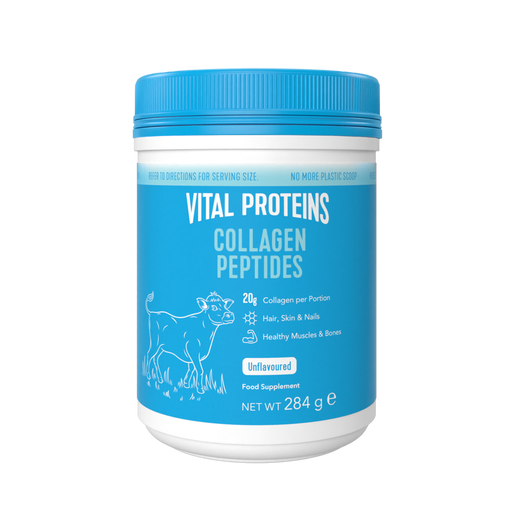
Why This Fits Their Persona: A straightforward starting point for UK adults who want an unflavoured collagen powder without committing to a larger pack.
The label states a 10g daily serving and lists bovine collagen peptides as the sole ingredient, making quantity and formula easier to compare.
Unflavoured, soluble in hot or cold drinks and listed as free from added sugars, artificial sweeteners, gluten and dairy.
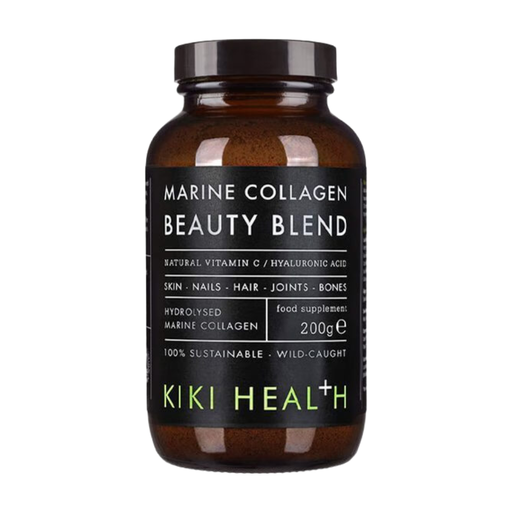
Why This Fits Their Persona: Suits shoppers who prefer marine collagen powder with a short ingredient list and an added vitamin C component.
The serving information separates 7,500mg collagen from 29.4mg vitamin C, avoiding vague combined “beauty blend” quantities.
Contains hydrolysed marine collagen, hyaluronic acid and vitamin C; free from wheat, gluten, lactose and dairy. Contains fish.
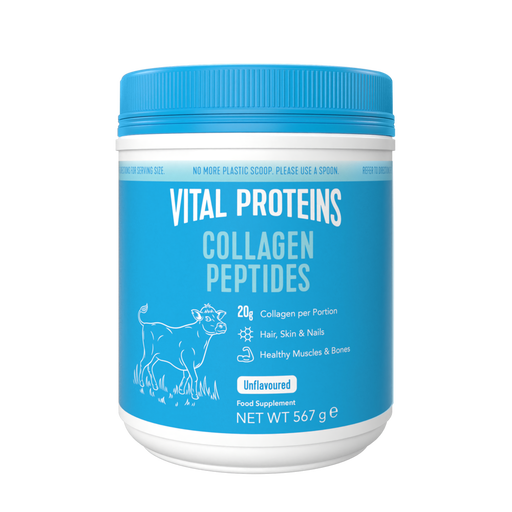
Why This Fits Their Persona: Appropriate for regular users who want a larger pouch for repeated daily preparation at home.
The stated serving provides 20g of collagen, while the single-ingredient formula avoids paying for unnecessary flavourings or fillers.
Unflavoured bovine collagen peptides that mix with cold or hot liquids; the larger 567g format is suited to ongoing use.
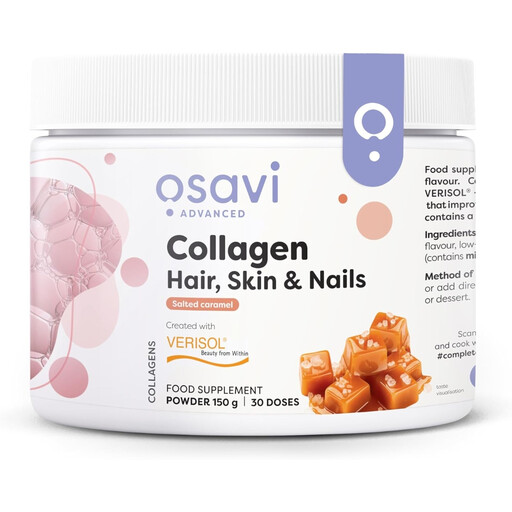
Why This Fits Their Persona: A practical choice for adults who find plain powders unappealing and want a measured serving in a flavoured drink.
The product lists 2.5g of collagen peptides per scoop and clearly identifies milk in the allergen information, despite being lactose-free.
Salted caramel flavour, stevia sweetener and stated gluten-free, sugar-free, soy-free, Kosher and Halal suitability. Contains milk.
We have compiled a complete, real-time list of products that fully satisfy these strict selection criteria and UK safety regulations.
Follow the serving instructions on the label. Most powders can be mixed into water, tea, coffee, juice or a smoothie. Use a dry measuring scoop where supplied and stir thoroughly. Store the opened container in a cool, dry place with the lid or resealable pouch closed to reduce clumping.
This depends on both pack size and serving amount. For example, a 284g pouch used at 10g per day provides approximately 28 servings, while a 567g pouch used at 20g per day provides approximately 28 servings. Always calculate from the stated daily dose rather than the container size.
Gummies may be easier to remember and carry, but they commonly contain less collagen per serving. One available gummy product provides 500mg of marine collagen for two gummies, whereas several powders provide between 7,500mg and 20,000mg per stated serving. Compare the figures, sweeteners and allergens before choosing. All collagen gummies containing fish-derived collagen should be avoided by people with fish allergies.
Food supplements should be used as part of a varied, balanced diet and healthy lifestyle. Read the product label before use, follow the recommended dose and seek medical advice if you are pregnant, breastfeeding, taking medication or managing a health condition.