Unreal Engine collision-test developers
If you run collision checks in the Unreal Engine 5 editor, compare PCs against Epic Games’ recommended 32 GB of system RAM and at least 8 GB of graphics memory rather than a gaming label alone.


Choose the PC around your development workflow, not its gaming-resolution label. For Unreal Engine 5, Epic Games recommends 32 GB of system RAM and a DirectX 12-compatible graphics card with at least 8 GB of graphics memory; Unity Technologies recommends a minimum of 8 GB RAM for Unity 6 but says larger projects need more. Allow for heavier assets and simultaneous tools where relevant, then check the PC’s placement, ventilation and cable travel across the standing desk’s full height range.
If you run collision checks in the Unreal Engine 5 editor, compare PCs against Epic Games’ recommended 32 GB of system RAM and at least 8 GB of graphics memory rather than a gaming label alone.
For lighter collision-logic projects, Unity Technologies’ Unity 6 guidance provides a lower memory starting point. Leave room for growth if scenes, builds or simultaneous applications become more demanding.
Plan where the computer, displays and cables will sit at both desk heights. For qualifying UK work use, the Health and Safety Executive’s display screen equipment guidance also makes workstation assessment relevant to employers.
Start with the engine and project workload, then check whether the complete setup fits and moves safely with the desk. A component specification is a selection starting point, not a promise about collision-test performance.
| Concern | What to check | Who this matters to |
|---|---|---|
| Unreal Engine testing | For Unreal Engine 5, compare the exact configuration with Epic Games’ 32 GB RAM, DirectX 12 graphics and 8 GB-or-more graphics-memory recommendations; check the installed driver. | If I repeatedly switch between the editor and collision tests, I need a configuration suited to that workflow rather than its gaming label. Around 36% of consumers put Unreal Engine testing first. |
| Unity prototypes | Check Unity 6 compatibility and whether RAM and storage suit the project’s size and build activity; Unity Technologies recommends at least 8 GB RAM for the Editor, with more for larger projects. | For a lighter Unity project, I want enough capacity to build and test without choosing solely for demanding visual work. Unity prototyping comes first for around 22% of consumers. |
| Assets and concurrent tools | Check system RAM, the exact GPU’s graphics memory and storage capacity against the assets and applications you intend to run together. | When collision checks run alongside larger assets or creative software, I need to judge the whole workload, not just graphics memory. Around 21% of consumers prioritise this headroom. |
| Desk fit and support | Check case placement, ventilation and cable slack at both desk heights, then read the exact PC’s warranty and support terms. | If the tower or its cables interfere with desk movement, the component list alone will not make the setup workable. Physical fit and ongoing support are the primary concern for around 21% of consumers. |
A resolution label does not establish whether the PC meets your editor’s memory, graphics or driver requirements.
Check the intended engine first. Epic Games recommends 32 GB RAM and at least 8 GB of graphics memory for Unreal Engine 5; Unity Technologies says Unity 6 memory needs increase with project complexity.
Graphics memory is relevant to visual assets, but its capacity alone does not identify a physics or scripting bottleneck.
Define or profile the workload before choosing a higher-memory GPU, and consider the CPU, system RAM, storage and drivers alongside it.
A tower or cable run that fits at one height can obstruct movement or pull on connectors when the desk rises.
Measure the intended placement, keep ventilation clear and check every cable through the desk’s full travel. Recheck monitor and input-device positions after installation.
Cover can change during a multi-year warranty. Chillblast, for example, describes parts-and-labour cover for its first three years and return-to-base labour cover for the final two.
Read the selected PC’s terms for exclusions, upgrades and collection or return arrangements before ordering.
Scan 3XS offers a configurable gaming-PC route with a choice of component platforms.
Chillblast offers prebuilt and configurable gaming PCs for buyers who want to specify a complete desktop package.
Corsair documents several configurations in its VENGEANCE a7400 prebuilt gaming-PC line.
These choices include gaming desktops for a fixed standing-desk setup and a creator laptop for a different desk arrangement. Compare each exact configuration with your engine requirements and the space available; the laptop is not a desktop-tower equivalent.
 No image available
Consider this desktop for Unreal Engine work if its exact graphics support and physical placement meet your needs. The named configuration includes a Ryzen 7 9800X3D, 32 GB DDR5 RAM, an NVIDIA GeForce RTX 5080 with 16 GB graphics memory and a 2 TB NVMe SSD.
Confirm DirectX 12 compatibility and suitable current drivers for Unreal Engine 5, and check tower clearance, ventilation and cable slack across the desk’s full travel. Confirm what peripherals you need separately.
 No image available
This desktop is a configuration to compare for editor work and projects that need substantial local storage. Its name specifies 32 GB RAM, a 2 TB SSD, an RTX 5080 and Windows 11.
Check the installed GPU’s graphics-memory capacity, DirectX 12 compatibility and driver suitability for your engine. Plan stable tower placement, ventilation and cable travel before choosing where it will sit.
 No image available
Consider this desktop when comparing configurations for Unreal Engine editor work. Its named components are an Intel Core Ultra 7 265KF, 32 GB DDR5 RAM, an NVIDIA GeForce RTX 5070 with 12 GB graphics memory and a 1 TB NVMe SSD.
Check DirectX 12 compatibility and current drivers for your intended engine, and confirm the case fits with clear ventilation and cables that remain slack as the desk moves. Confirm any separately needed peripherals.
 No image available
This desktop is worth comparing if you need 32 GB RAM for editor work and want the named 2 TB SSD capacity for local projects. The configuration also specifies an AMD Ryzen 7 5700X, an RTX 5070 and Windows 11.
Confirm the installed GPU’s graphics memory, DirectX 12 compatibility and current drivers against your engine requirements. Check that the intended placement provides stable support, ventilation and cable slack throughout desk movement.
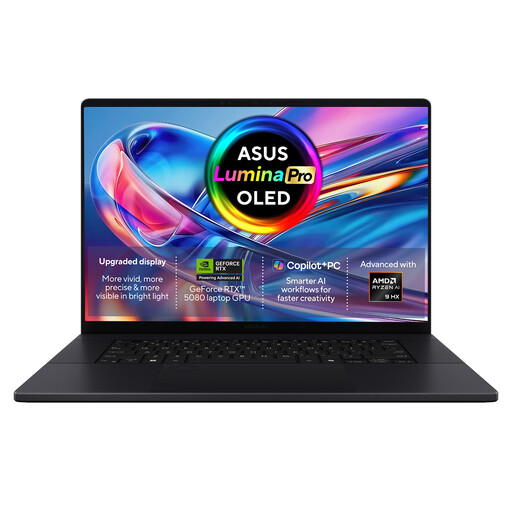 No image available
Consider this creator laptop if you prefer a laptop-based collision-testing setup to placing a tower at the desk. Its name specifies 64 GB RAM, a 2 TB SSD, an NVIDIA GeForce RTX 5080 with 16 GB graphics memory and a 16-inch 4K OLED touchscreen.
Check DirectX 12 compatibility and suitable current drivers for your engine, plus the laptop’s footprint, display connections and cable arrangement at both desk heights. Read the warranty terms for the exact configuration.
Epic Games recommends 32 GB RAM for Unreal Engine 5, while Unity Technologies recommends a minimum of 8 GB for the Unity 6 Editor and says larger, more complex projects need more. Choose against your engine, project size and concurrent tools rather than treating either figure as a guarantee of performance.
Graphics-memory capacity alone does not establish faster collision-physics performance. Identify whether your limiting workload is physics, rendering or asset handling before paying for more GPU capacity; also check the CPU, system RAM and the exact graphics card’s compatibility.
Check the chosen computer’s dimensions against its intended position, keep ventilation openings clear and test power, display and peripheral cable slack through the desk’s full height range. For a tower, make sure its support remains stable as the desk moves; for a laptop, plan its screen and any external connections.
The Health and Safety Executive’s display screen equipment guidance concerns qualifying work use, not automatically every private gaming setup. It says the rules apply to workers using display screen equipment daily for continuous periods of an hour or more, and require employers to assess those workstations and reduce risks.