
24/7 Customer Support

Free returns

Same-day & Next-day Delivery

Quality Guaranteed

Unlock Your Welcome Offers: FREE Delivery | Up to 80% OFF | Free 30-day JoyPlus trial
Download the APP
Hair colour can lose its freshness for several reasons: repeated washing, heat styling, UV exposure, mineral-rich water and product build-up. The right colour protect shampoo can help keep coloured hair looking clean, shiny and manageable, but not every formula is suitable for every shade.
Whether you have blonde highlights, bleached hair, brunette colour or natural grey hair, choosing based on your actual concern is more useful than relying on packaging promises.
A colour-safe shampoo is designed to cleanse while helping coloured hair retain its appearance. It does not necessarily contain pigments that adjust unwanted tones.
If your blonde or highlighted hair looks yellow, orange or brassy, look specifically for a purple shampoo, anti-brassiness shampoo or toning shampoo. Violet pigments are commonly used to visually counter yellow tones. However, they will not change the underlying colour or replace professional colour correction.
A sulphate-free shampoo may be appealing if you prefer a gentler-feeling cleanse or find stronger detergents drying. However, a sulphate-free formula is not automatically the right choice for every scalp or hair type.
Some shampoos containing cleansing agents such as Sodium Laureth Sulfate are formulated with conditioning ingredients and may provide the thorough wash needed by oily scalps or heavy product users. Always assess the full ingredient list, your washing frequency and how your hair feels after rinsing.
More contact time does not always mean a better result. Overuse of a highly pigmented formula may leave blonde, silver or porous hair looking temporarily violet or uneven. Some products recommend one minute, while others suggest three to five minutes depending on the desired tone.
Follow the instructions on the bottle, start with a shorter contact time and wear gloves if the product instructions advise it. Purple pigments can also stain light-coloured towels, tiles and clothing.
Your shade and goal should guide the purchase:
Review the ingredient list rather than relying only on claims such as “gentle” or “nourishing”. Ingredients such as glycerin, panthenol, oils, silicones, proteins and conditioning polymers may affect how soft, smooth or manageable hair feels.
If your hair is bleached, dry or prone to tangling, pair a toning shampoo with a conditioner or mask. If your scalp becomes oily quickly, a formula that cleans thoroughly may be more practical than an extremely rich cleanser.
A daily colour-protect shampoo and a weekly toning shampoo serve different purposes. A 500ml bottle may offer better value for regular washing, while a 200ml or 250ml purple shampoo can be more practical when used once a week.
Check the recommended contact time, whether gloves are advised and whether the product is intended for natural hair, colour-treated hair, blonde hair, highlighted hair or grey hair. These details help prevent unnecessary purchases and uneven toning.
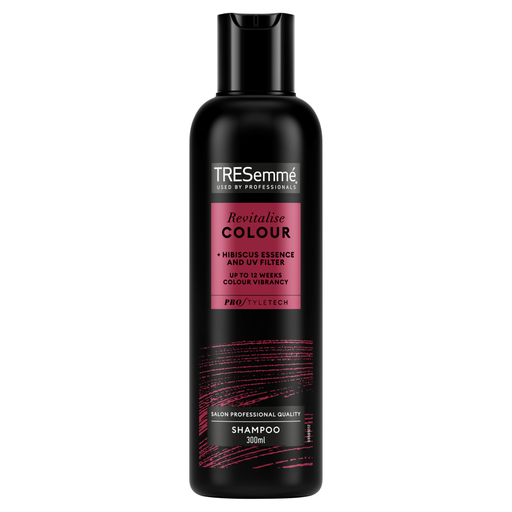
Why This Fits Their Persona: A straightforward everyday option for shoppers wanting a colour-protect shampoo without choosing a specialist toning formula.
It is positioned for colour-treated hair care rather than promising to correct every unwanted tone. This helps separate daily cleansing from weekly brassiness control.
Includes a UV filter, hibiscus essence, amino acids and ceramides; supplied in a 300ml bottle.
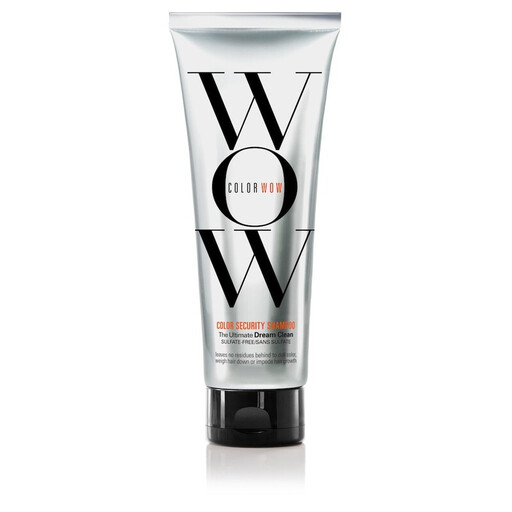
Why This Fits Their Persona: Suitable for shoppers who prioritise a sulphate-free cleanser and want a single shampoo for colour-treated or chemically treated hair.
The formula is explicitly sulphate-free and residue-free, so shoppers can assess those specifications rather than relying on vague “colour protection” wording.
Uses several mild cleansing agents and includes glycerin, sodium PCA, hydrolysed wheat protein and hydrolysed keratin.
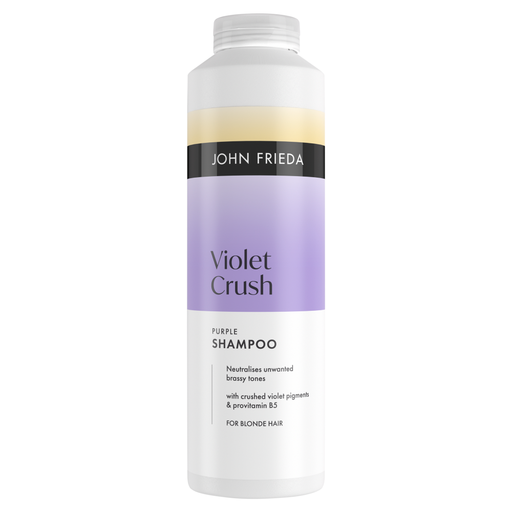
Why This Fits Their Persona: A practical match for natural or colour-treated blondes who wash frequently and want a larger bottle for ongoing brassiness maintenance.
The instructions specify a one-minute contact time and alternating with regular shampoo as needed, helping prevent unnecessary over-toning.
Contains crushed violet pigments and Pro-Vitamin B5; the 500ml size is suited to repeated use.
For stubborn yellow tones, a weekly intensive formula may be more appropriate than a daily purple shampoo. The John Frieda Violet Crush Intensive Purple Shampoo 250ml is specified for weekly use or use as needed, with a one-minute application time. It contains crushed violet pigments and Pro-Vitamin B5.
Those with bleached, highlighted or grey hair may also consider Aussie SOS Blonde & Hydrate Purple Shampoo 300ml, which recommends leaving the product on for three to five minutes depending on the desired toning level. Always rinse thoroughly and protect pale shower surfaces from purple pigment.
For highlighted brunette, blonde, grey or silver hair, L'Oréal Elvive Colour Protect Anti-Brassiness Purple Shampoo 200ml is intended for weekly use, with instructions varying by shade and contact time. The product advises suitable gloves and careful eye-avoidance during application.
We have compiled a complete, real-time list of products that fully satisfy these strict selection criteria and UK safety regulations.
Use a regular colour-protect shampoo as directed for your washing routine. Purple or toning shampoo is usually used weekly or as needed, depending on the product instructions and how quickly brassiness appears. Follow with conditioner, particularly if your hair is bleached or dry.
It can support a colour-care routine by cleansing the hair and helping maintain shine and manageability. However, no shampoo can prevent all fading. Washing frequency, hot water, UV exposure, heat styling and the type of colour service also affect longevity.
Purple shampoo can be suitable for highlighted brunette, blonde, grey or silver hair when unwanted yellow tones are the concern. It may be less suitable if your brunette hair has orange tones, as a violet pigment may not address the same colour balance. Check the product’s stated shade suitability before buying.