
24/7 全天候客户支持

免费退货

当日/次日达

品质保障

开启新人专享福利: 全场免邮 | 低至 2 折 | 免费试用 30 天 JoyPlus 会员
下载 Joybuy
Buying coloured marker pens can seem straightforward until the ink bleeds through your paper, the tips become unusable after a few projects or the colour range does not suit your work. For UK households, schools, offices and craft rooms, the right choice depends less on the number of shades in the pack and more on tip design, ink type, surface compatibility and storage needs.
This guide explains the main buying pitfalls and compares suitable options for different users, from children and beginners to artists, teachers and DIY users.
A stationery pen set may contain dozens of colours but still be unsuitable for your intended work. A 0.4 mm fineliner pen is useful for notes, outlines and detailed patterns, but it will be slow for filling large areas. Conversely, a broad fibre tip may produce rich colour quickly but lack the precision needed for small lettering.
Before buying, match the nib to the task:
Ink descriptions can be misleading if the surface is not considered. Washable markers are generally more appropriate for supervised children’s activities and temporary paper projects, but “washable” does not mean every mark will disappear from furniture, walls or unfinished materials.
Permanent markers and acrylic paint pens are designed for more durable marks. Wet-erase chalk markers, meanwhile, can be wiped from suitable non-porous surfaces with a damp cloth, but may be difficult to remove from porous materials. Always check the product instructions and test an inconspicuous area first.
A large assortment of colour pens may offer variety, but a smaller set can be more practical if you mainly need black, blue, red and green for office marking or school organisation. Consider the cost per usable pen, not simply the total number in the pack. Also check whether duplicate shades are included and whether the set has useful neutrals, pastels, metallic pens or fluorescent colours.
Tip dimensions affect line control, coverage and comfort. The STABILO Point 88 range, for example, uses a 0.4 mm metal-encased tip, which is suited to rulers, stencils, fine outlines and compact handwriting. A 1 mm fibre tip is more adaptable for colouring and bold writing, while a flexible brush tip can create different line widths according to pressure.
For practical markers, a chisel tip may offer a stated range such as 1.5–5 mm. The narrow edge creates finer marks, while the broad face covers larger areas.
Water-based ink is commonly used in colouring pens, art pens and journalling pens because it is suitable for many paper projects and can sometimes be blended with water. However, paper thickness still matters. Thin notebook pages may show bleed-through even with water-based ink.
Alcohol-based permanent markers tend to dry quickly and adhere to surfaces such as plastic, glass and metal. They can have a noticeable odour, so follow the packaging guidance and use them in a well-ventilated space.
For brush pens and calligraphy pens, check whether the ink is described as water-blendable. The WRITECH Arts Sign Brush Pen set uses water-based ink that can be diluted for blending and shading.
Do not assume that a pen designed for paper will work on wood, ceramics, fabric or glass. Acrylic paint markers are intended for a broader selection of craft surfaces, but the finish and durability can vary by material.
For children’s products, check the stated age guidance and warnings. The supplied product information for several sets highlights choking risks from small parts and recommends keeping pens away from young children. CE or UKCA markings, where provided in the product information, should be considered alongside the full packaging instructions rather than treated as a substitute for supervision.
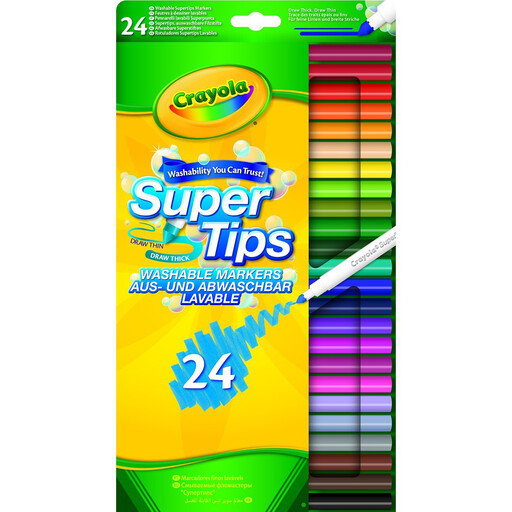
Why This Fits Their Persona: A practical option for children, families and beginners who want assorted colour pens for school projects, colouring books and simple lettering.
The conical tip supports both thick and thin lines, reducing the need to buy separate marker styles at the beginning.
24 colours, fine conical points and washable ink. The product information states that it is suitable for children aged three and above.
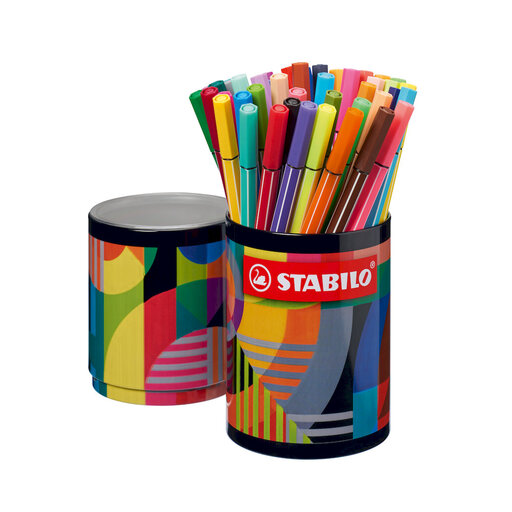
Why This Fits Their Persona: Suitable for artists, teachers and stationery enthusiasts who want a broad selection for colouring, hatching and large-area work.
Its approximately 1 mm M-tip is more appropriate for broad colouring than a fine liner, while the tin provides clearer storage than loose pens.
45 assorted colours, water-based ink and the option to create watercolour-style effects on suitable paper with water.
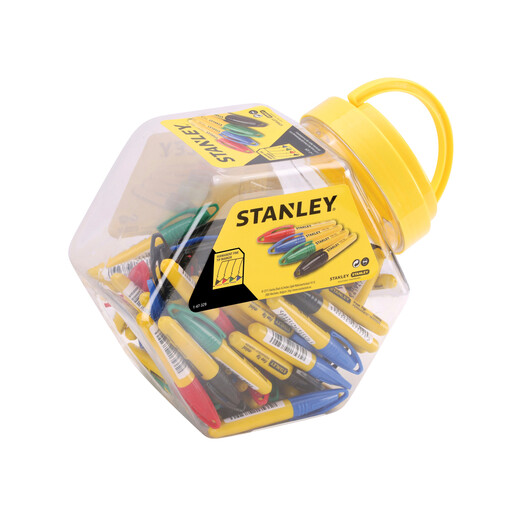
Why This Fits Their Persona: Designed for offices, classrooms, warehouses and users who need a substantial supply of compact fine-tip markers.
The pack focuses on four commonly used colours rather than filling the set with shades that may not be needed for labelling or routine marking.
72 markers, mini fine tips and quick-drying, smudge-resistant ink according to the supplied product description.
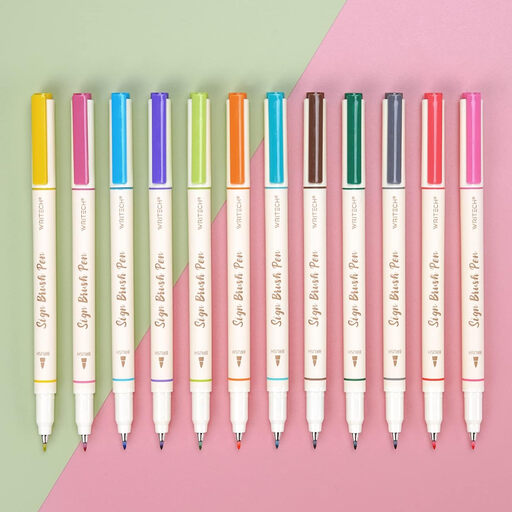
Why This Fits Their Persona: A focused set for hand lettering, beginner calligraphy, doodling, adult colouring and creative journals.
The pressure-sensitive brush tip provides line variation, so beginners can practise lettering without buying separate broad and fine pens immediately.
12 water-based colours, flexible brush tips and water-blendable ink for shading and lettering effects.
Correct storage can help preserve felt-tip pens, fineliners and markers:
We have compiled a complete, real-time list of products that fully satisfy these strict selection criteria and UK safety regulations.
Yes, but choose fine-tip markers or fineliner pens for small text, borders and habit trackers. Test the ink on spare paper first, as paper weight and coating affect bleed-through. Brush pens are useful for headings, while metallic pens can add accents to darker paper.
Lifespan depends on use, cap placement, storage and ink volume. Pens used daily or for large areas will run out sooner than occasional journalling pens. Dry-out protection can help if a pen is briefly left uncapped, but replacing the cap after every use remains the most reliable habit.
Permanent markers are intended to leave more durable marks and may work on materials such as plastic, metal, glass or wood, depending on the product. Washable markers are designed to clean more readily from certain surfaces and fabrics, but results are not guaranteed on every material. Always follow the label and test first.