
24/7 Customer Support

Free returns

Same-day & Next-day Delivery

Quality Guaranteed

Unlock Your Welcome Offers: FREE Delivery | Up to 80% OFF | Free 30-day JoyPlus trial
Download the APP
Whether you are stocking up on school art supplies, diving into the world of adult colouring books or refining your artistic skills, finding the right set of coloured pencils can feel overwhelming. With so many options available, it is easy to get lost in technical terms and marketing claims. This guide is designed to help you understand the key features to look for, so you can choose a set that truly fits your needs and budget.
We will walk through what makes a good pencil, from the core to the casing and present some carefully selected options for different users.
Before looking at specific products, it helps to know what features matter most. Focusing on these three areas will help you make a more informed decision.
The "lead" inside a coloured pencil is typically made from a mix of pigment and a binder. The binder is usually either wax or oil, and this affects how the pencil performs.
There is little more frustrating than a pencil lead that constantly snaps when you are sharpening it or applying pressure. Look for pencils described as having break-resistant pencils cores. Some manufacturers use special bonding processes that secure the lead to the wood casing along its entire length, significantly improving its strength. This is a particularly important feature for kids coloured pencils or for artists with a heavier hand.
Pencils are generally categorised as either student or artist grade, which indicates their quality and intended purpose.
Based on their features, materials and suitability for different users, here are a few standout options to consider.

Why It Stands Out: This set strikes an excellent balance between quality and practicality. The pencils feature a special secural bonding (SV) process, which makes the leads highly break-resistant. The wood is sourced from certified sustainable forestry, and the hexagonal shape provides a comfortable, secure grip for long drawing sessions.
Pros:
Who is it for? This is a versatile choice for students, hobbyists and families. Its durability makes it a reliable option for school projects, while the quality of the colours will satisfy those engaging in colouring pencils for adults as a pastime.
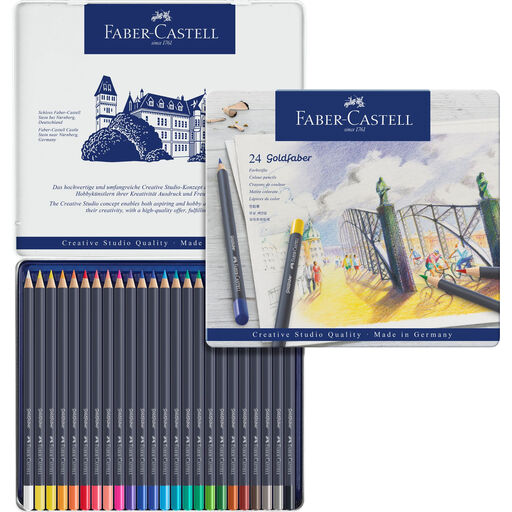
Why It Stands Out: The Goldfaber pencils are a step up for those taking their art more seriously. The 3.3 mm lead is highly pigmented, delivering outstanding colour brilliance with minimal pressure. The formulation also provides good lightfastness, helping to preserve artwork over time. They are both smudge-resistant and water-resistant, allowing for clean, precise work.
Pros:
Who is it for? This set of coloured pencils is aimed at art students, amateur artists and dedicated hobbyists who require a higher level of performance for techniques like layering, blending and detailed illustration.
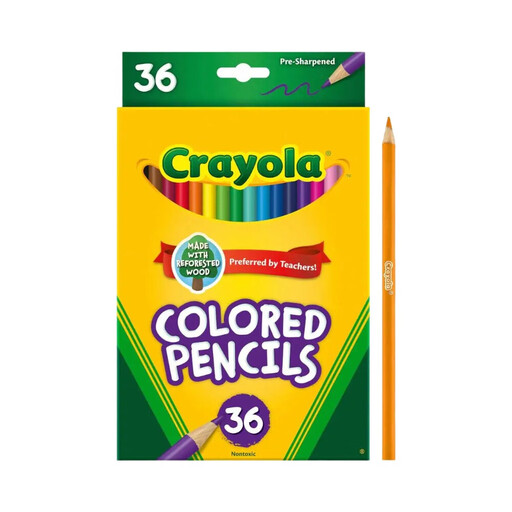
Why It Stands Out: This set offers great value with a generous selection of 36 colours. A key feature is its commitment to sustainability, with the pencils made from reforested wood. The thick cores are designed to resist breaking under pressure, and the smooth-grained wood makes them easy to sharpen, making them a practical choice for younger users.
Pros:
Who is it for? An excellent choice for parents and teachers looking for reliable kids coloured pencils. It is also a great starter set for anyone on a budget who wants a wide palette of colours for casual drawing and colouring.
If our recommendations are not quite what you are looking for or if you would like to explore a wider variety, there are many other sets available. From larger collections to specialised pencils, you can find something to suit every artistic endeavour.
Browse our full selection of beautiful colour pencil drawing supplies to find the ideal set for your next project.
The main differences are in the quality of materials. Artist grade pencils use a higher concentration of lightfast pigments, resulting in richer colours that resist fading. Their binders are often formulated for superior blending. Student grade pencils are designed for durability and affordability, making them ideal for practice and general use, but their colours may not be as vibrant or permanent.
First, choose pencils with break-resistant cores, often highlighted by manufacturers. Second, use a sharp, high-quality pencil sharpener designed for coloured pencils, as a dull blade can put stress on the wood and lead. Finally, try to avoid dropping your pencils, as the impact can fracture the core internally even if the wood casing remains intact.