
24/7 Customer Support

Free returns

Same-day & Next-day Delivery

Quality Guaranteed

Unlock Your Welcome Offers: FREE Delivery | Up to 80% OFF | Free 30-day JoyPlus trial
Download the APP
Choosing coloured pencils can look straightforward until you compare lead types, colour counts, barrel shapes and specialist finishes. A large tin is not automatically the right choice, while a low-priced set may lack the grip, pigment or storage needed for regular use.
This guide from the Joybuy Product Recommendation Officer explains what to check before buying, highlights common purchasing traps and matches several coloured pencil sets to different UK users.
A set with dozens of shades may sound appealing, but colour quantity is only useful if the pencils suit your projects. Children may not need a large artist’s palette, whereas adult colouring enthusiasts and illustrators may benefit from more shades for layering and blending.
Check whether you need:
Coloured pencils can have wax-based, pigment-based, water-soluble or chalk-pastel cores. These behave differently on paper. A hard, fine lead may suit detailed drawing, while a soft or jumbo core can cover large areas more quickly.
Marketing terms such as “smooth” or “vibrant” should be considered alongside measurable details, including lead diameter, intended surface and whether the core is water-soluble.
A slim round barrel may be familiar, but it is not always comfortable during long colouring sessions. Children may find triangular or jumbo coloured pencils easier to control. Artists should also consider whether the pencil can be sharpened to a fine point and whether the included case protects the set.
A suitable pencil sharpener matters too. Standard sharpeners may not fit jumbo or pastel pencils, and a blunt or damaged blade can cause unnecessary lead breakage.
Traditional coloured pencils are suitable for drawing, shading, hatching and layering. Watercolour pencils contain water-soluble pigment, allowing dry pencil marks to be softened with a damp brush. They still require suitable paper, particularly if you intend to add substantial water.
Pastel pencils have a dry, dusty stroke and can be blended on paper. They are useful for detailed pastel artwork but may produce dust, so follow the product’s handling guidance and work in a well-ventilated area.
Some multi-purpose pencils combine coloured pencil, wax crayon and watercolour functions. These can be practical for children, craft projects and work on surfaces such as dark paper or glass, but they may not provide the fine control expected from artist coloured pencils.
Lead size affects both handling and coverage:
Look for construction details such as a break-resistant bonding process or a protective wooden casing. These features can reduce the likelihood of snapping during ordinary sharpening, although all pencils should still be sharpened with controlled pressure.
For children, students and users who colour for extended periods, an ergonomic triangular barrel or moulded grip zone can make the pencil easier to position. Left-handed and right-handed versions may also be available, which is useful when selecting children’s colouring pencils for handwriting practice and creative activities.
For adult colouring and detailed drawing, comfort remains important. A set with a balanced barrel, smooth casing and reliable point can be more practical than one chosen solely for its packaging.
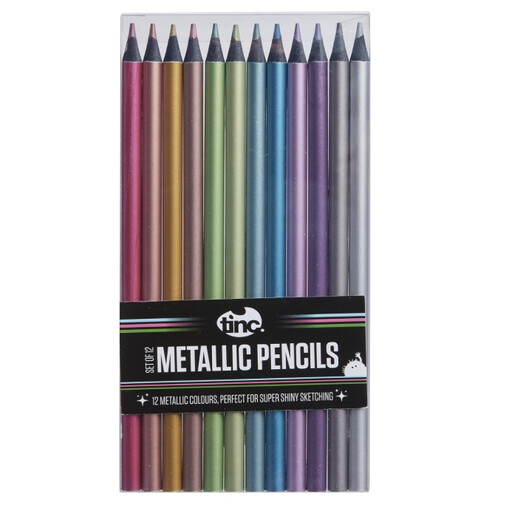
Why This Fits Their Persona: A compact option for children, school pencil cases and casual creative projects where a decorative finish is more important than a large colour range.
The 12-pencil format makes the colour count clear, while the metallic finish provides a specific creative function rather than implying it is an all-purpose artist’s palette.
12 bright metallic colours; compact dimensions and a stated weight of 79g for easy carrying.
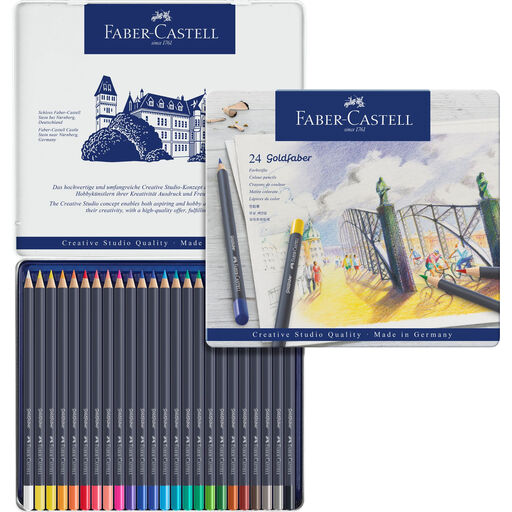
Why This Fits Their Persona: A practical choice for hobbyists, students and artists wanting a general-purpose set for sketching, layering and finished drawings.
Its 3.3mm lead, water-resistant and smudge-resistant specification gives more useful information than colour-count marketing alone.
24-pencil tin; suitable for layering, hatching and blending across a wide range of rough surfaces.
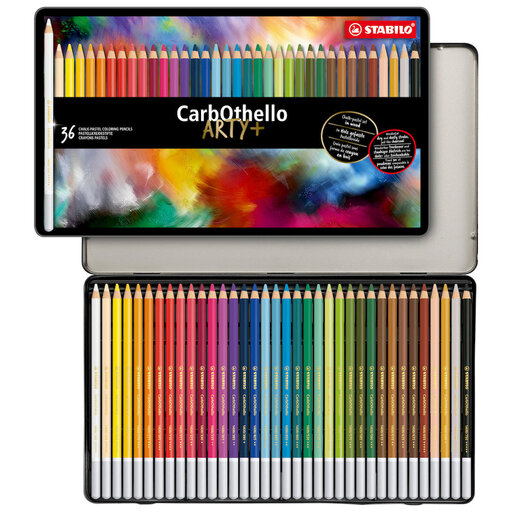
Why This Fits Their Persona: Designed for hobby artists and illustrators who specifically want dry pastel effects, fine points and blendable colour in pencil form.
The product is clearly positioned as a chalk-pastel pencil, so buyers can choose it for a dry, dusty stroke rather than expecting conventional wax-pencil behaviour.
36 highly pigmented colours; sharpenable fine point and partially water-soluble, blendable core.
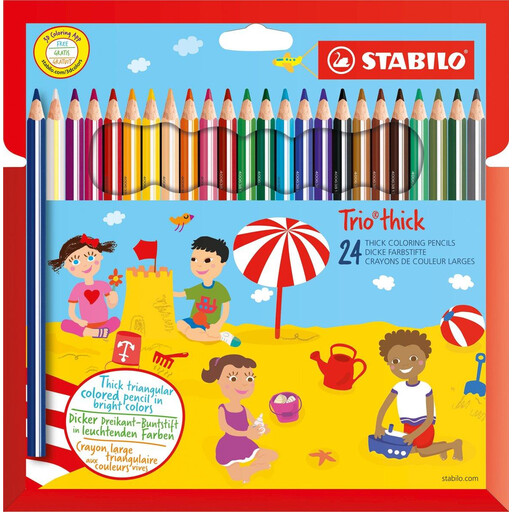
Why This Fits Their Persona: The thick triangular barrel is intended for young children who need a larger surface to hold while drawing at home or school.
The 4.2mm lead and triangular design address handling and control directly, rather than relying on decorative packaging to attract attention.
24 assorted colours; thick lead and triangular casing designed for bold, smooth colouring.
We have compiled a complete, real-time list of products that fully satisfy these strict selection criteria and UK safety regulations.
A suitable pencil case protects finished points and keeps colours organised. A canvas case with a zip can work for school or travel, while a metal tin is more suitable for keeping a larger artist’s set together.
For sharpening, check the hole size before purchase. A dual-hole sharpener with a shavings container can be useful for standard and polygonal pencils, but pastel and jumbo coloured pencils may require a dedicated sharpener. Empty the container regularly and replace worn blades where possible.
Yes. Standard coloured pencils can create outlines, layered shading and blended areas on suitable colouring-book paper. Sets with a wider colour range, smooth pigment laydown and comfortable barrels may be more suitable for long sessions.
Lifespan depends on how often they are used, how much pressure is applied and how frequently they are sharpened. Store them in a cool, dry place, avoid dropping them and use a sharpener with an appropriate hole size to reduce waste.
They can be used dry on ordinary drawing paper, but water-based techniques work more reliably on paper designed to tolerate moisture. Apply small amounts of water first and allow the page to dry before adding further layers.