
24/7 Customer Support

Free returns

Same-day & Next-day Delivery

Quality Guaranteed

Unlock Your Welcome Offers: FREE Delivery | Up to 80% OFF | Free 30-day JoyPlus trial
Download the APP
Choosing coloured pencils can seem straightforward until you compare lead types, colour counts, grip shapes and specialist finishes. A low-priced pack may be unsuitable for detailed artwork, while a large set can contain colours you rarely use. Parents, pupils, teachers, hobbyists and artists all need to match the pencil to the way it will be used.
This guide explains the practical details worth checking before buying, helping you avoid common purchasing mistakes and narrow down suitable colouring pencil sets.
A 72-colour pencil set offers more shades for blending and fine colour matching, but it may be unnecessary for a child’s first drawing set or occasional colouring. A 12-colour pencil set is easier to organise and can cover basic school and home activities. A 24-colour pencil set or 36-colour pencil set provides a wider palette without taking up as much storage space as a larger artist set.
Check whether the box includes useful variations such as skin tones, greys and earth colours, rather than focusing only on the total number of pencils.
Not every coloured pencil is designed for the same technique.
Buying a specialist pencil for ordinary school colouring can add cost without improving the result. Conversely, using standard pencils when you want watercolour or pastel effects may lead to disappointment.
A slim round barrel may suit detailed work, but it can be difficult for younger children or anyone who prefers a more substantial grip. Triangular coloured pencils, ergonomic coloured pencils and jumbo coloured pencils can provide a more structured hold.
Also check whether the pack includes a sharpener. Pencils with sharpener accessories are convenient for school bags and travel, but the sharpener must fit the pencil diameter. A pastel or jumbo pencil may require a compatible sharpener rather than a standard single-hole model.
For early drawing and school use, 12 to 24 colours may be sufficient. A 36-colour set gives more flexibility for landscapes, illustrations and mixed-media activities. A 72-colour set is more suitable when you regularly blend, layer or need subtle changes between tones.
For adult colouring, illustration and portfolio work, look for clear information about pigmentation, blendability and lightfastness. Lightfastness indicates how well colour may resist fading when exposed to light, but the exact rating should be confirmed in the product specifications rather than assumed from promotional wording.
A thicker lead can apply colour over larger areas and may be more forgiving for children. For example, the STABILO Trio design has a 4.2 mm lead, while the Goldfaber pencil listed below has a 3.3 mm lead for controlled drawing and layering.
Soft leads generally create stronger colour with less pressure, but they may use more quickly and require careful sharpening. Harder or more precise cores can be preferable for outlines and detailed work. Water-soluble and pastel cores need suitable paper if you intend to add water or blend dusty pigment.
A triangular barrel can help position fingers consistently, while moulded or non-slip grip zones may be useful for younger users and longer colouring sessions. Look for age guidance, choking warnings and safe storage instructions. Sharpened pencils have pointed ends, and sharpeners contain blades, so children should use them with appropriate adult supervision.
Some products specify wood from PEFC-certified or certified sustainable forestry sources. This is a material-sourcing detail, not a guarantee of artistic performance. Store pencils in a dry place away from direct sunlight, and avoid applying excessive pressure, which can damage the core.
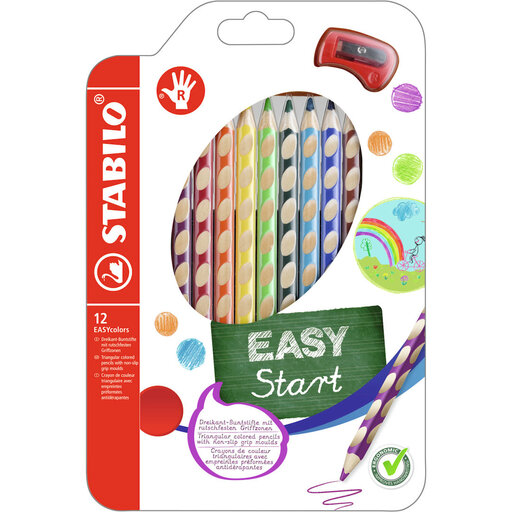
Why This Fits Their Persona: A practical choice for a right-handed child starting school drawing, handwriting practice or home colouring, with a compact 12-colour selection and sharpener included.
The triangular barrel and moulded grip zones address the problem of an uncomfortable, slippery slim pencil. The grip zones extend along the shaft and are designed to remain available after sharpening.
Triangular ergonomic shape, name panel, 100% PEFC-certified wood and an included sharpener.
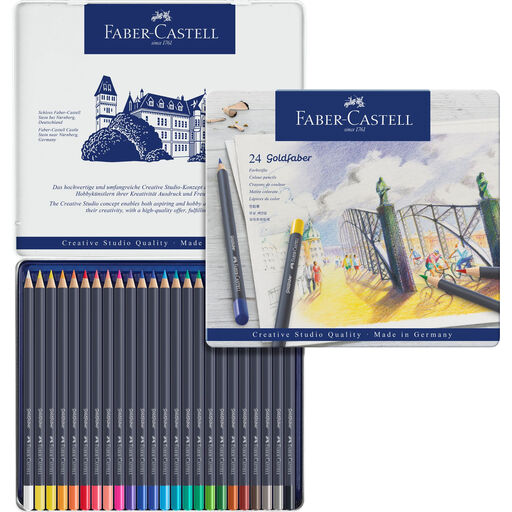
Why This Fits Their Persona: Suitable for students, hobbyists and artists who want a manageable palette for sketching, layering and finished artwork without moving directly to a very large set.
The product information specifies a 3.3 mm lead, break resistance, water resistance and smudge resistance, giving buyers clearer performance details than colour-count marketing alone.
Designed for layering, hatching and blending; the product description also identifies lightfastness as a feature for display or portfolio work.
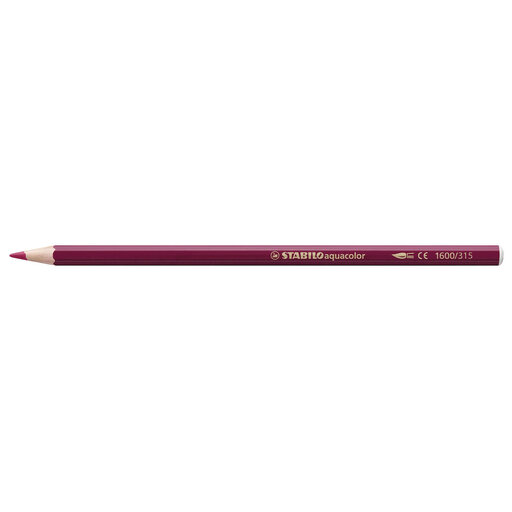
Why This Fits Their Persona: A 36-colour option for mixed-media users who want to switch between dry pencil marks and watercolour effects for illustration, craft projects or creative study.
The water-soluble design is clearly identified, so buyers are not relying on vague descriptions of “creative effects”. It can be used dry or with water on dry or damp paper.
Includes 36 assorted colours, a 2.8 mm lead and the option to lift colour directly from the lead with a brush.
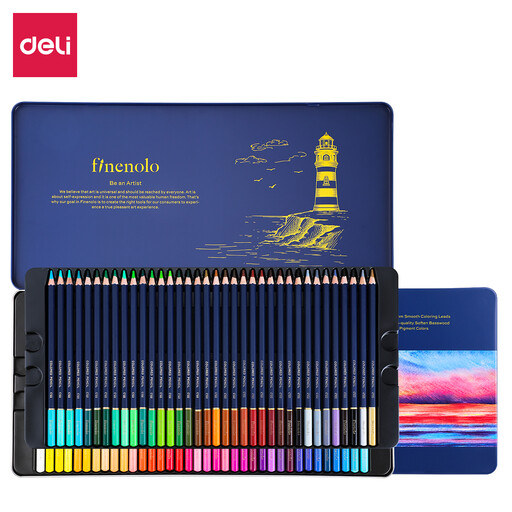
Why This Fits Their Persona: Designed for adult colouring books, student projects, illustration and hobby drawing where a broad selection of shades can reduce the need to buy multiple smaller sets.
The 72-colour format is paired with a metal tin, giving a defined storage solution instead of leaving a large collection loose in a drawer or pencil case.
Pigment-based cores, wood casing, smooth colouring performance and a portable metal tin.
We have compiled a complete, real-time list of products that fully satisfy these strict selection criteria and UK safety regulations.
Yes, standard coloured pencils are commonly used for drawing, labelling and classroom creative tasks. For younger pupils, consider a thicker barrel, triangular shape and clear safety guidance. A name panel can also help identify pencils in a shared classroom or busy school bag.
Lifespan depends on core softness, sharpening frequency, pressure and how often the pencils are used. Soft or jumbo leads can cover large areas quickly, while careful layering uses less material. Sharpen with a suitable, clean blade and avoid excessive pressure to reduce breakage.
Choose watercolour pencils if you want to add water with a brush and create blended washes. Choose pastel pencils for a dry, powdery mark that can be blended on suitable paper. If you mainly fill colouring books or create controlled outlines, standard coloured pencils may be more practical.