
24/7 Customer Support

Free returns

Same-day & Next-day Delivery

Quality Guaranteed

Unlock Your Welcome Offers: FREE Delivery | Up to 80% OFF | Free 30-day JoyPlus trial
Download the APP
As a Joybuy Product Recommendation Officer, my role is to help you navigate the crowded market of art supplies. When it comes to coloured pencils, the choice can be overwhelming, and it's easy to end up with a set that causes more frustration than creative joy. Before you add a set to your basket, let's look at a few common purchasing pitfalls that can lead to wasted money and disappointing results.
To avoid these issues, focus on a few core features rather than marketing buzzwords. Understanding these will help you select a colouring set that truly meets your needs, whether it's for a child's first scribbles or for detailed illustration work.
The heart of any coloured pencil is its lead. The quality of the core determines colour vibrancy, smoothness and durability.
A pencil's shape and size are crucial for comfort and control, especially for specific users.
The quality of the wood casing affects how well a pencil sharpens. Soft, poor-quality wood tends to splinter, breaking the lead in the process. Look for pencils made from high-quality wood that sharpens to a clean, even point. For those who prioritise environmental impact, many reputable brands now offer sustainable pencils made from wood sourced from PEFC or FSC certified forests.
Based on these practical criteria, here are a few recommendations matched to different user needs.
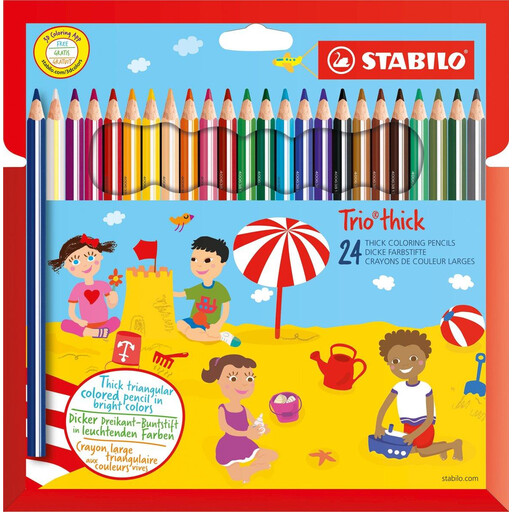
Why This Fits Their Persona: This set is designed specifically for young artists in the UK. The chunky, triangular shape is ideal for small hands learning to grip a pencil correctly, making it a popular choice for home and early years education settings.
It directly counters the breakage pitfall with a very thick 4.2mm lead that can withstand the heavy pressure often applied by young children, reducing frustration from constant snapping.
The truly ergonomic triangular design promotes a proper tripod grip, which is fundamental for developing handwriting skills. The rich colour laydown inspires creativity.
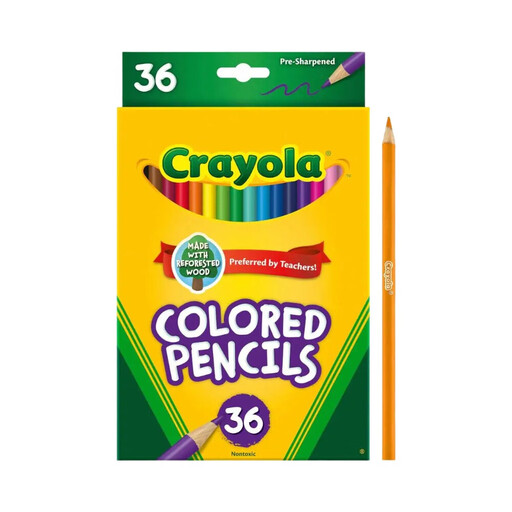
Why This Fits Their Persona: For those in the UK exploring adult colouring or starting a new creative hobby, this set provides a great balance of colour variety and performance without the high cost of professional-grade materials.
It sidesteps the "misleading artist grade" trap by being an honest, high-quality consumer product. It delivers smooth, blendable colour as promised for its price point and is made from reforested wood.
A generous palette of 36 colours provides ample choice for layering and mixing. The thick cores are designed to resist breaking under pressure, making them reliable for everyday use.
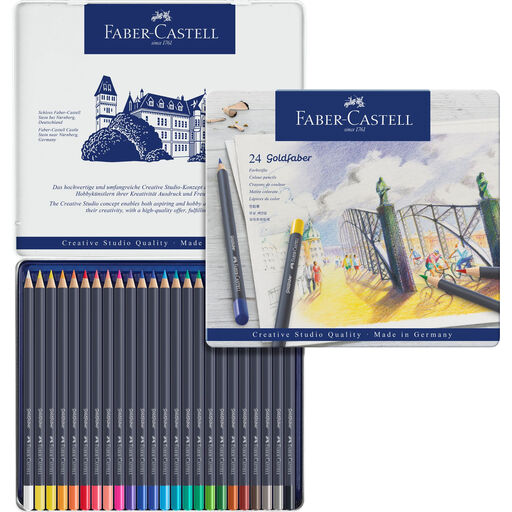
Why This Fits Their Persona: For art students or serious hobbyists ready to upgrade, the Goldfaber range offers a significant step up in quality, providing features needed for creating more refined, lasting artwork.
This set provides verifiable quality markers that justify its "artist" positioning. It features a highly pigmented 3.3mm lead with excellent lightfastness and is manufactured with SV bonding to ensure break resistance.
The lead offers outstanding colour brilliance and is both smudge-resistant and water-resistant, ensuring clean, crisp lines and layers. This makes them suitable for a wide range of drawing techniques.
We have compiled a complete, real-time list of products that fully satisfy these strict selection criteria and UK safety regulations.
The most common cause is a dull sharpener or poor-quality pencil construction. Always use a sharpener with a fresh, high-quality blade. When sharpening, turn the pencil slowly and gently rather than forcing it. Choosing pencils with a bonded lead core, such as those using SV bonding technology, will also significantly reduce the likelihood of internal breakage.
Wax-based pencils are the most common type. They are typically softer, which allows for rich colour laydown and easy blending. However, with heavy layering, they can sometimes produce a "wax bloom," a faint white film that can be wiped away. Oil-based pencils are generally harder, hold a fine point for longer and do not create wax bloom, making them excellent for intricate details and line work.
Yes, they are an excellent choice for beginners. They offer great versatility, acting as two mediums in one. You can use them dry just like standard artist colouring pencils, and then experiment by adding a wet brush to blend colours and create transparent, watercolour-like effects. This allows you to explore different techniques without needing to buy two separate sets of materials.