
24/7 Customer Support

Free returns

Same-day & Next-day Delivery

Quality Guaranteed

Unlock Your Welcome Offers: FREE Delivery | Up to 80% OFF | Free 30-day JoyPlus trial
Download the APP
Choosing coloured pencils can seem straightforward until a child struggles with an oversized barrel, an adult finds the colour range too limited or a promising set produces weak marks on paper. The right choice depends on how the pencils will be used, who will use them and which effects you want to create.
This guide explains the main buying pitfalls, the specifications worth checking and a selection of coloured pencil sets suited to different creative needs.
A large box of coloured pencils may look good value, but more colours do not automatically mean a better drawing experience. A beginner may use only a small selection, while a child may find a 72-colour set difficult to organise. Check whether the case is practical, whether pencils can be replaced and whether the colours suit the intended project.
For school or basic colouring, 12 to 24 colours may be sufficient. Adult colouring, illustration and detailed drawing often benefit from a broader palette.
Standard coloured pencils are designed for dry application. Watercolour pencils contain water-soluble pigment, allowing marks to be softened with a damp brush. Pastel pencils create a dry, powdery stroke and are used for blending and tonal artwork. Metallic coloured pencils add a reflective finish but are generally chosen for accents rather than realistic shading.
Buying a water-soluble or pastel formula when you need clean, dry layering can lead to disappointing results. Always check the pencil type before purchasing.
Slim, round pencils may suit detailed work, but they can be less comfortable for younger children or long colouring sessions. Thick triangular and jumbo designs can be easier for small hands to control. Lead thickness also matters: thicker cores are useful for covering broad areas, while a fine point is more suitable for intricate details.
For children, look for age guidance, a secure grip and appropriate supervision. Pencil sharpeners, small parts and broken leads can present risks for very young users.
Consider the type of work you expect to do:
A thicker lead can provide broader coverage and may be more suitable for children. The STABILO Trio, for example, uses a 4.2mm lead, while the Faber-Castell Goldfaber has a 3.3mm lead designed for controlled application.
Look for a well-bonded core or a casing designed to reduce breakage. This can help limit waste during sharpening, although no wooden pencil is unbreakable. Use a sharpener suitable for the pencil’s diameter, particularly with jumbo, pastel or chunky pencils.
An ergonomic triangular barrel or moulded grip zone may help users maintain a more controlled hold. This is particularly relevant for children learning to write, left-handed users and anyone colouring for extended periods.
Storage also affects value. A metal tin protects a large collection and is convenient for studio or travel use, while a compact box may work better in a school pencil case. A set with a name panel can help prevent pencils being misplaced in classrooms.
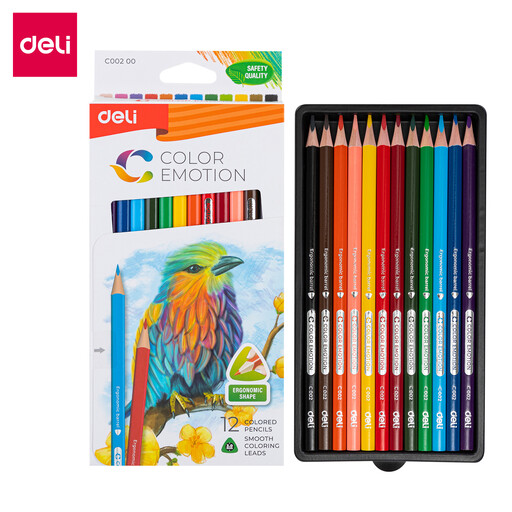
Why This Fits Their Persona: A compact 12-colour format is practical for first-time buyers, school projects and occasional colouring at home without committing to a large collection.
The smaller set avoids paying for a colour range that a beginner may not use and keeps storage straightforward.
12 assorted wooden coloured pencils in a simple format for drawing, sketching and everyday colouring.
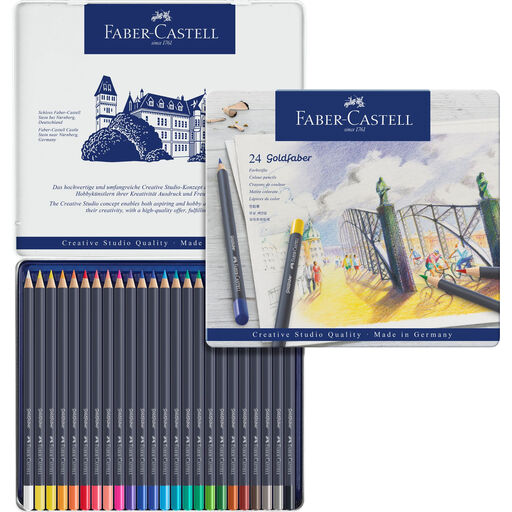
Why This Fits Their Persona: Suitable for hobbyists, students and creatives who want a more controlled set for finished drawings, illustration and regular sketching.
Its stated 3.3mm lead, water-resistant and smudge-resistant characteristics provide more information than colour count alone.
24 colours in a tin, with a lead designed for layering, hatching, blending and detailed work.
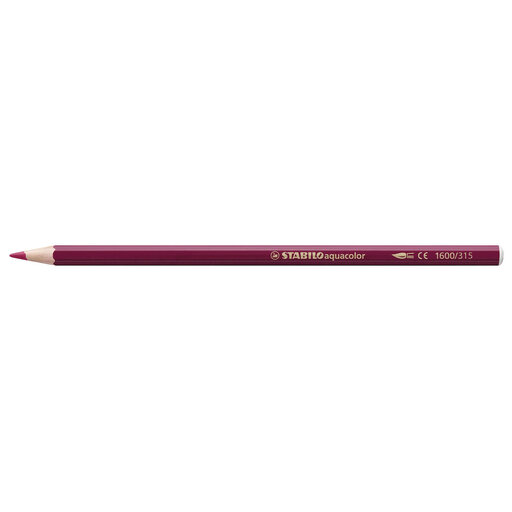
Why This Fits Their Persona: A useful option for artists, adult colouring enthusiasts and students who want dry coloured-pencil marks alongside watercolour-style washes.
The water-soluble format is clearly suited to wet techniques, so it is less likely to be mistaken for a conventional dry-only pencil.
36 colours, a 2.8mm lead and the option to apply colour dry, wet on paper or directly from the lead with a brush.
We have compiled a complete, real-time list of products that fully satisfy these strict selection criteria and UK safety regulations.
Coloured pencils work well with a few practical accessories. A pencil sharpener with a shavings container helps keep desks and pencil cases tidy. For water-soluble pencils, choose a small round brush and paper designed to handle moisture. Pastel pencils are easier to blend with suitable pastel paper, tissue or a blending tool.
If you are moving from drawing into painting, an acrylic painting starter set can provide paints, brushes, a palette and painting boards in one purchase. For sketching outdoors or travelling between classes, a watercolour travel kit with pans, a water brush and mixing palette is easier to carry than separate supplies.
Yes, standard coloured pencils are commonly used for drawing, colouring and classroom projects. For younger children, choose an appropriately sized barrel, check the product warnings and supervise use where recommended. A name panel can also help identify pencils in a busy classroom.
Lifespan depends on use, pressure, sharpening frequency and lead construction. A well-made wooden pencil can last through many projects, but frequent heavy pressure will use the core more quickly. Sharpen gently with a compatible sharpener and store pencils in a dry place to reduce casing and lead damage.
Standard paper is suitable for basic colouring, but textured drawing paper can hold more layers and blendable pigment. Watercolour pencils require paper that can tolerate moisture, while pastel pencils generally perform more predictably on paper designed for dry media. Choosing the surface alongside the pencil type can make a noticeable difference to the final result.