
24/7 Customer Support

Free returns

Same-day & Next-day Delivery

Quality Guaranteed

Unlock Your Welcome Offers: FREE Delivery | Up to 80% OFF | Free 30-day JoyPlus trial
Download the APP
Navigating the world of art supplies can be a colourful but confusing journey. Whether you're buying a first pencil set for a child's school project, indulging in a new hobby with colouring pencils for adults or sourcing artist quality pencils for your next masterpiece, the choices are vast. From lead hardness to colour vibrancy, finding the right tool for the job is key.
This guide is designed to help you understand the different types of coloured pencils available. We'll break down the essential features to look for and present a selection of our top recommendations to help you make a confident choice for your creative needs.
Before diving into specific products, let's cover a few key considerations. Keeping these points in mind will help you narrow down the options and find the perfect pencils for your projects.
The "lead" of a coloured pencil, known as the core, is typically made from a mixture of pigment and a binder. The type of binder dramatically affects how the pencil performs.
soft core pencils, these are very common and known for their smooth application and excellent blending capabilities. They can lay down rich, vibrant colour quickly but may be more prone to breakage if handled roughly.drawing pencils. They can be layered beautifully, often without the waxy build-up that can occur with wax-based pencils.Watercolour Pencils): These versatile pencils can be used dry, just like a standard coloured pencil. However, when you add water with a brush, the pigment dissolves, creating a watercolour paint effect. This allows for beautiful washes, gradients and mixed-media techniques.There's nothing more frustrating than a pencil that constantly breaks. Look for features that indicate durability. Many brands use a special bonding process to secure the lead to the wooden casing, creating break-resistant pencils. The shape of the barrel—be it hexagonal or triangular—can also affect grip and comfort during long drawing sessions.
Coloured pencil sets can range from a basic 12-pack to collections with over 100 unique shades. For children or beginners, a set of 12 to 24 colours is often sufficient. For adult colouring enthusiasts and artists, a larger pencil set of 36, 48 or more provides a much wider palette for shading, blending and achieving nuanced tones.
Here are four carefully selected options that cater to a range of needs, from budding artists to seasoned creators.

watercolour pencils.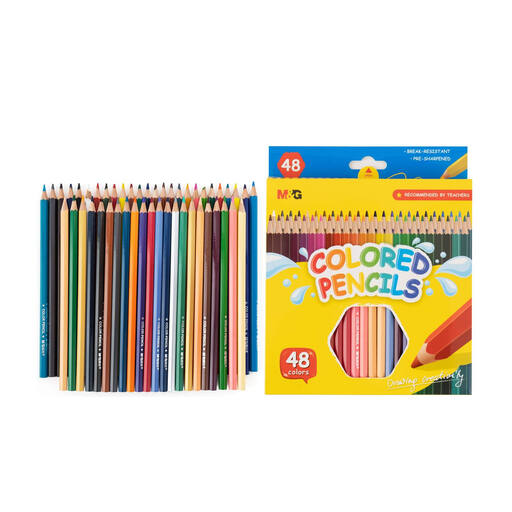
pencil set provides an impressive range of 48 distinct colours, offering fantastic creative coverage for detailed work. The soft core pencils are designed for smooth, even application and good layering performance.

drawing pencils. It combines vivid colour with exceptional durability, thanks to the brand's secural bonding process (SV), making it a reliable workhorse for all kinds of creative tasks.coloured pencils for general drawing and art projects.The world of pencils is vast and varied. If you haven't found the perfect match here or want to explore other set sizes and types, there are many more to discover.
Explore Our Full Range of Pencils
1. What is the difference between wax-based and oil-based coloured pencils? Wax-based pencils, often described as soft core pencils, are generally softer, creamier and great for blending large areas of colour. Oil-based pencils are typically harder, hold a point longer for fine details and are less prone to a waxy build-up, allowing for more layers.
2. How can I stop my coloured pencils from breaking when I sharpen them? To minimise breakage, use a sharp, high-quality pencil sharpener. Avoid dropping your pencils, as impacts can fracture the core internally even if the wood remains intact. Choosing pencils with bonded leads, often advertised as break-resistant pencils, also significantly improves durability.
3. Can you use watercolour pencils without water? Yes, absolutely. Watercolour pencils function just like regular coloured pencils when used dry. You can draw, shade and layer with them as you normally would. The option to add water is an additional feature that allows you to create washes and painterly effects.