
24/7 Customer Support

Free returns

Same-day & Next-day Delivery

Quality Guaranteed

Unlock Your Welcome Offers: FREE Delivery | Up to 80% OFF | Free 30-day JoyPlus trial
Download the APP
By Joybuy Product Recommendation Officer
Choosing coloured pencils and art supplies can seem straightforward until you compare lead types, colour counts, pencil shapes and complete kits. A low-priced box may lack the shades you need, while a large art set can include tools that remain unused. The right choice depends on how and where you plan to create.
This guide highlights common buying traps, explains the specifications worth checking and matches several products to different creative needs, from children’s colouring pencils to professional art supplies.
A 72-colour set offers more shades than a 12-colour box, but colour count alone does not determine suitability. A beginner may need a practical selection of primary, secondary and neutral colours rather than numerous similar tones. Artists working on portraits, manga or landscapes may value specific colour families for layering and shading.
Before buying, check whether the set includes the colours required for your usual projects. If the product description does not provide a colour list, consider whether you are comfortable accepting a surprise selection.
Standard colouring pencils are generally intended for paper. Watercolour pencils need watercolour paper or another surface that can handle moisture, while pastel pencils work more effectively on textured paper that can hold dry pigment. Metallic pencils may show more clearly on darker or coloured paper than on bright white sheets.
Using the wrong surface can make a suitable pencil appear disappointing. Check the recommended media before purchasing extra paper or art supplies.
A very soft core can create rich colour but may require more frequent sharpening. A harder core can support fine lines but may need greater pressure for dense coverage. For children, students and adult colouring enthusiasts, barrel shape and grip comfort also matter during longer sessions.
Storage is another overlooked issue. Loose pencils are easily damaged in a school bag, whereas a tin or wallet can protect the points and keep colours organised.
Look for the lead type rather than relying on phrases such as “professional quality”. Wax or pigment-based coloured pencils are suitable for layering, hatching, blending and everyday drawing. A thick lead can cover larger areas efficiently, while a fine sharpened point is more useful for outlines and detail.
Water-soluble leads can be used dry or activated with a damp brush. They are useful for artists who want colouring pencils with a watercolour effect without carrying a full paint set. Pastel cores create a dry, dusty mark and can often be blended or partly dissolved with water.
Lead diameter affects both coverage and durability. For example, the STABILO Trio uses a 4.2 mm lead, while the Goldfaber Colour Pencil uses a 3.3 mm lead. Thicker leads are often useful for broad colouring, while a smaller core can offer more controlled detail.
Check whether the product description mentions a break-resistant construction. Features such as SV or secural bonding may reduce the likelihood of the core separating from the wood during sharpening, although no pencil is unbreakable. Use a suitable sharpener and avoid applying excessive pressure.
Triangular barrels and moulded grip areas can make it easier to maintain a stable hold. This is particularly relevant when choosing ergonomic colouring pencils for young children or people who find narrow round pencils uncomfortable.
For products with small parts, sharp points or paint materials, always follow the stated age guidance and supervision instructions. Children under three should not use products carrying a small-parts choking warning.
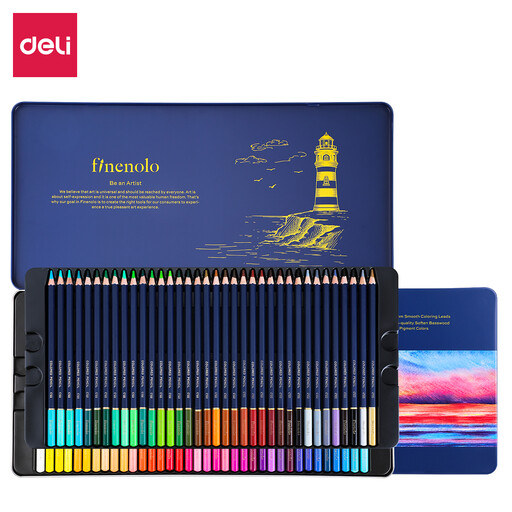
Why This Fits Their Persona: A broad palette suits beginners, students and adult colouring fans who want to explore shading without buying several smaller sets.
The 72-colour format provides more tonal choices than a small starter pack, while the metal tin helps keep the pencils organised and portable.
72 pigment-based cores; metal tin case; suitable for drawing, colouring, sketching and illustration.
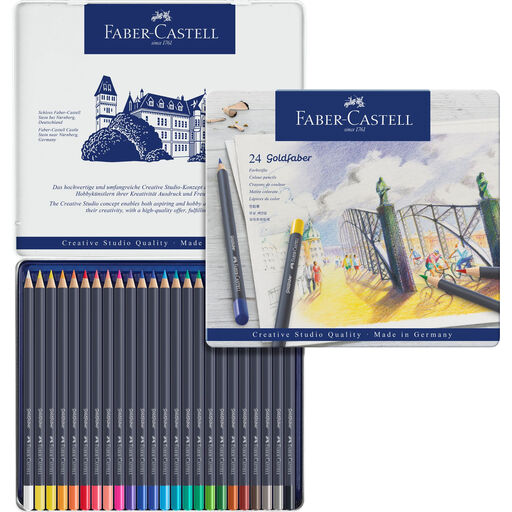
Why This Fits Their Persona: Suitable for illustrators, hobby artists and students who value controlled layering and a compact tin for regular studio use.
Its stated 3.3 mm lead, break-resistant construction and resistance to smudging and water help buyers assess the pencil beyond colour count.
24 pencils in a tin; designed for layering, hatching, blending and sketching; compatible with a range of rough surfaces.
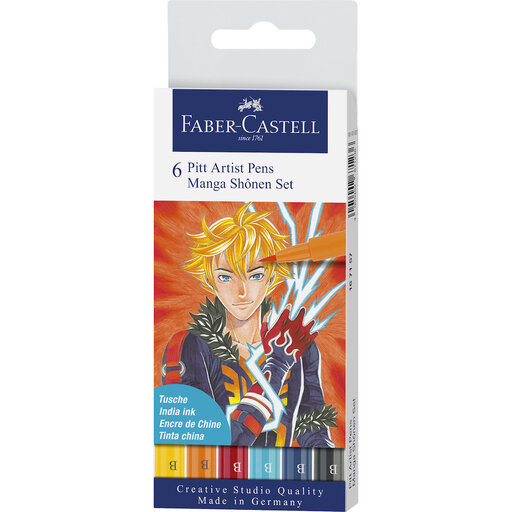
Why This Fits Their Persona: The six-nib selection is suited to manga artists and illustrators who need varied line weights for outlines, details and expressive marks.
The product specifies six nib varieties and waterproof ink, giving buyers practical information instead of relying only on broad creative claims.
Six nib types; pigmented, waterproof and acid-free ink; designed for Manga Shônen projects.
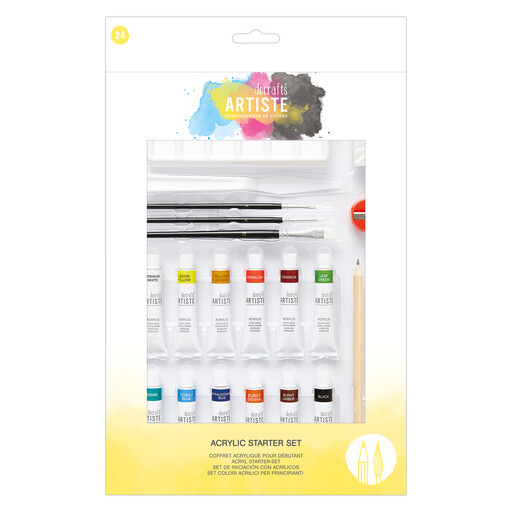
Why This Fits Their Persona: A practical option for beginners, crafters and students who want to move beyond colouring pencils into painting and mixed-media projects.
The contents are clearly listed, so buyers can check that the kit includes paints, brushes, boards, palette and drawing tools before ordering.
12 x 12 ml acrylic paint tubes; three brushes; three A4 painting boards; palette, palette knife, pencils and eraser included.
We have compiled a complete, real-time list of products that fully satisfy these strict selection criteria and UK safety regulations.
Yes. Coloured pencils are relatively simple to set up and do not require water, palettes or drying time. Beginners should prioritise a comfortable grip, a manageable colour range and a core that supports light layering. A 12- or 24-colour set may be easier to learn with than a very large collection.
Keep pencils in their original tin, wallet or case, with points protected from impact. Store them in a cool, dry place away from direct sunlight and moisture. Watercolour and acrylic products should be sealed after use, and acrylic brushes should be cleaned promptly before paint dries.