
24/7 全天候客户支持

免费退货

当日/次日达

品质保障

开启新人专享福利: 全场免邮 | 低至 2 折 | 免费试用 30 天 JoyPlus 会员
下载 Joybuy
Choosing coloured pens can seem straightforward until the ink smears across your notes, the tips wear down quickly or the colours look very different from the product image. Whether you need pens for note-taking, journalling, drawing, teaching or office work, the right choice depends on more than the number of colours in the pack.
This guide explains the main buying pitfalls, the specifications worth checking and suitable options for different UK users.
Large packs can look appealing, but a set with dozens of near-identical shades may not be practical for school notes or everyday writing. Check whether the palette includes useful colours for your purpose, such as black and blue for standard notes, bright shades for colour-coding or softer tones for planners.
For creative work, a broader selection can be worthwhile. For office or classroom use, a smaller assorted colour stationery set may offer better value and easier storage.
A fine tip does not automatically mean a smoother writing experience. Very narrow tips can feel scratchy on rough paper, while broad tips may bleed through thinner notebook pages. Look for the stated line width and tip construction, then match it to your task.
For example, 0.4mm to 0.5mm tips suit detailed writing and small planner boxes. 0.8mm to 1.0mm ballpoint tips create more visible everyday notes, while brush tips are designed for variable-width lettering rather than uniform lines.
Water-based ink, gel ink, pigment ink and chalk-style ink behave differently. A quick-drying formula can be useful for left-handed writers, but no pen should be assumed to work on every type of paper or surface.
Whiteboard markers and chalk markers are particularly surface-specific. Chalk markers are generally intended for non-porous surfaces, such as glass, slate or sealed boards. They may be difficult to remove from porous materials. Always check the product directions before using them on a display, window or painted surface.
Gel pens can provide saturated colour but may need longer to dry than ballpoint pens. If you are left-handed or turn pages quickly, look for product information describing quick-drying or smear-resistant ink, while remembering that drying performance varies with paper type.
For journalling and planners, softer water-based colours can be easier on thin paper. For adult colouring and drawing, blendable water-based markers may be more useful than standard writing pens.
A ribbed, triangular or rubberised grip can make a noticeable difference during long study or writing sessions. Retractable pens avoid loose caps, while capped fine liners and brush pens need to be closed securely after use to reduce drying.
Pens with small caps are not suitable for children under three because of the choking risk. Follow the manufacturer’s age guidance and store ink products away from heat and direct sunlight.
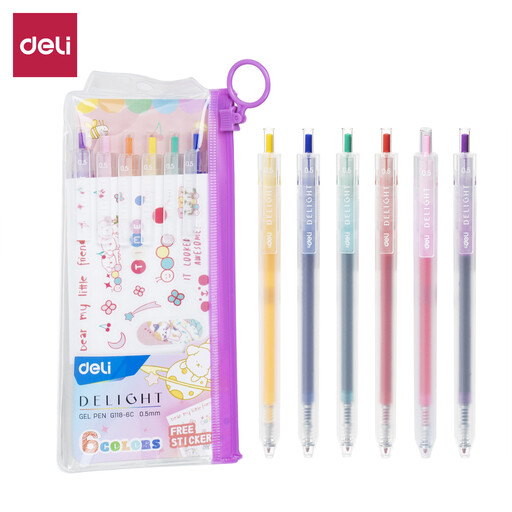
Why This Fits Their Persona: The six-piece red, blue and yellow assortment gives students and first-time stationery buyers a compact set for notes, colour-coding and simple creative work.
The 0.5mm point is clearly specified, helping avoid an oversized tip when precise writing is required.
Six pens, 0.5mm tips and water-based gel ink are suitable for everyday school and office annotation.
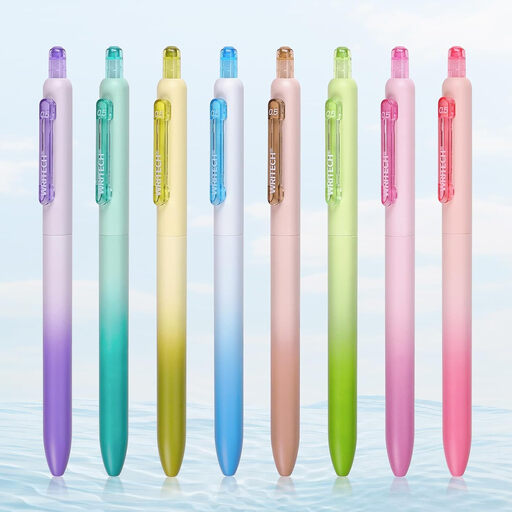
Why This Fits Their Persona: Journal users, office workers and students who prefer coordinated colours, retractable barrels and a quieter writing mechanism may appreciate this eight-pen set.
The listed 0.5mm fine point and retractable design make the intended use clearer than a generic mixed-tip pack.
Eight assorted colours, a ribbed ombre matte barrel and a silent click mechanism support organised, comfortable note-taking.
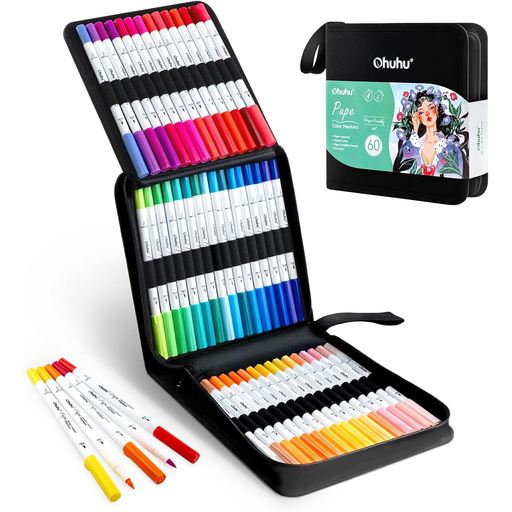
Why This Fits Their Persona: Adult colouring hobbyists, illustrators and calligraphy beginners needing broad colour coverage may benefit from the dual-tip format and storage case.
The two stated nibs—a 0.4mm fineliner and 1–5mm flexible brush tip—define the different jobs each end can handle.
The set contains 59 colours plus a colourless blender, with water-based ink intended for blending and paper-based creative work.
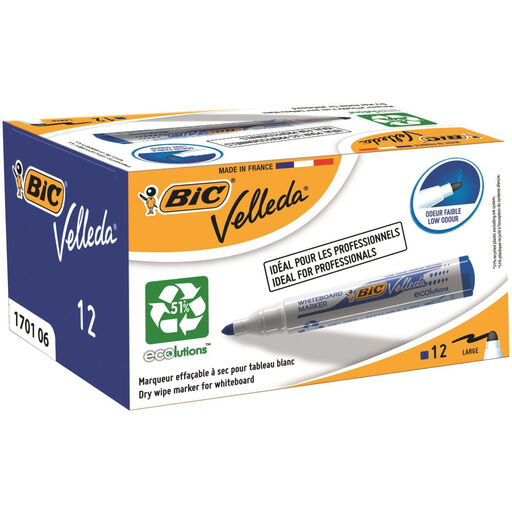
Why This Fits Their Persona: A pack of 12 is suited to classrooms, meeting rooms and shared office boards where markers are used frequently.
The product is specifically identified as a dry-wipe whiteboard marker, avoiding confusion with permanent or chalk-based ink.
It has a 1.5mm blocked acrylic tip, low-odour dry-wipe ink and a barrel made from 51% recycled materials.
We have compiled a complete, real-time list of products that fully satisfy these strict selection criteria and UK safety regulations.
Yes. Fine gel pens, ballpoint pens and fine liners can all work for note-taking. Choose a 0.5mm tip for compact writing, or around 0.8–1.0mm for more visible lines. Quick-drying ink is worth considering if you write with your left hand.
Journalling pens with fine tips, pastel highlighters, brush pens and dual-tip markers are commonly useful. A set combining precise and flexible tips can support headings, underlining, lettering and small illustrations without requiring several separate packs.
Lifespan depends on tip pressure, writing frequency, paper texture and whether the pens are capped correctly. High-use classroom and office pens may need replacing sooner than occasional journalling pens. Buying refills or larger packs can reduce interruptions, but only if the tip and ink type match your regular work.