
24/7 Customer Support

Free returns

Same-day & Next-day Delivery

Quality Guaranteed

Unlock Your Welcome Offers: FREE Delivery | Up to 80% OFF | Free 30-day JoyPlus trial
Download the APP
Choosing coloured pens can seem straightforward until the ink skips, the tips dry out or the colours bleed through your notebook. Whether you are preparing a pencil case, organising office notes or building a creative stationery collection, the right set depends on how and where you plan to use it.
The following buying guide from the Joybuy Product Recommendation Officer focuses on practical specifications rather than colourful packaging claims.
A set with dozens of shades may look appealing, but unused colours can make the purchase less economical. A student may need a compact selection for revision, while an artist or crafter may benefit from a broader palette. Check whether the set includes useful everyday colours, rather than judging value by the number printed on the box.
Fineliner pens and fine-tip writing pens are useful for outlines, annotations and detailed patterns, but they can be slow for colouring larger sections. Conversely, a broad fibre-tip pen may cover pages quickly but lack the control needed for small lettering.
The tip measurement is therefore more useful than a vague description such as “precision” or “bold colour”.
Water-based felt-tip pens may perform differently from gel pens or acrylic paint markers. Some inks can show through thin notebook paper, while metallic and acrylic inks may work better on absorbent or non-porous surfaces. Check the intended surface and replace caps promptly, even when a product has stated dry-out protection.
Tip shape also matters. A bullet tip creates a consistent line, while a fibre tip may offer a more expressive feel. For children, an ergonomic triangular or soft-grip barrel can make longer drawing sessions more comfortable.
Water-based ink is common in fineliner pens and fibre-tip pens. It is generally suitable for paper-based writing, drawing and colouring, but the result depends on the paper thickness.
Gel ink typically offers smooth writing and strong colour, making it useful for journalling, planners and office notes. Look for details such as a retractable mechanism, quick-drying formula or stated water resistance if these features matter to your routine.
Acrylic paint ink is designed for projects involving surfaces such as wood, glass, ceramics, canvas and stones. These marker pens require different handling: shake them as directed, prime the nib if required and close the cap securely after use.
Cap design, barrel construction and storage instructions affect everyday convenience. Metal-cased tips can help support precise use with rulers and stencils, while retractable gel pens remove the need to manage loose caps.
If pens are regularly carried between home, school and work, consider compact sets, cap rings or a storage box. Always follow the product warnings, particularly around small parts, ink contact and use by younger children.
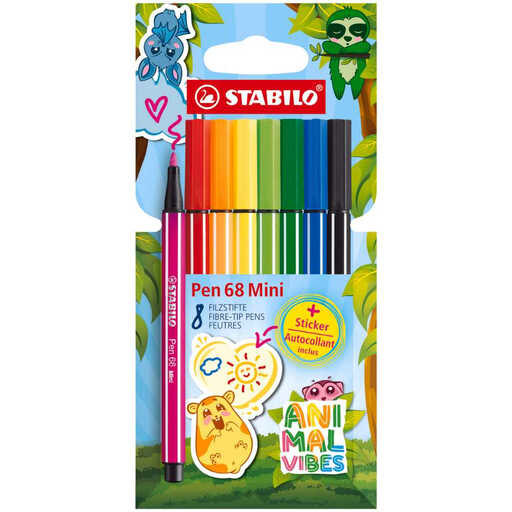
Why This Fits Their Persona: The compact eight-colour set suits first stationery purchases, pencil cases and creative activities at home or school. Its smaller format is convenient for carrying in a bag.
It provides a defined, manageable colour range rather than a large set with potentially unused shades. The stated 24-hour dry-out protection can also help during longer drawing sessions.
Eight vibrant colours, a 1mm fibre tip, compact dimensions and an included animal-themed sticker.
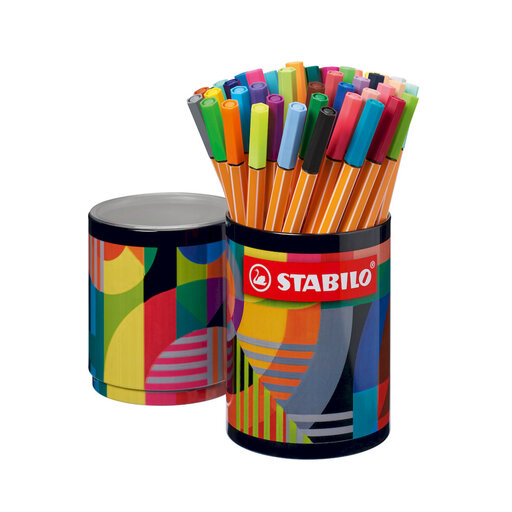
Why This Fits Their Persona: This set is suited to journal users, illustrators, teachers and organised note-takers who value a fine, controlled line across detailed projects.
The 0.4mm line width clearly defines its purpose, avoiding the mismatch between a fine drawing tool and a broad colouring pen. The metal-cased tip is specified for use with rulers and stencils.
A 45-colour assortment, water-based ink and a metal-cased 0.4mm tip for detailed writing and drawing.
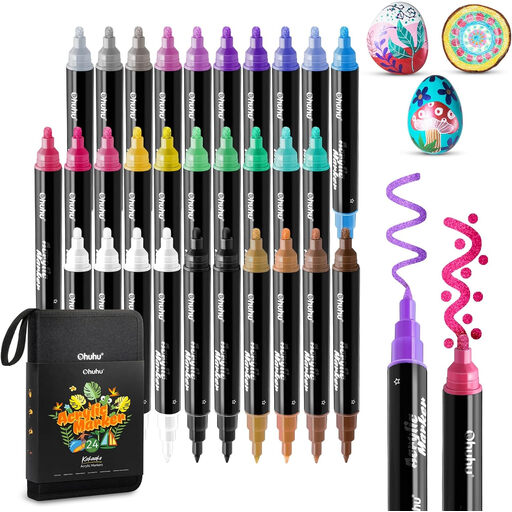
Why This Fits Their Persona: Crafters and artists working across paper, wood, glass, ceramics, fabric or canvas may prefer a multi-surface acrylic marker set with two tip styles.
Its stated surface range makes the intended use clearer than a standard writing pen. Replaceable nibs and a supplied case also address storage and continued-use concerns.
Thirty markers, dual fine and round tips, 24 metallic shades plus white and black and eight replacement nibs.
We have compiled a complete, real-time list of products that fully satisfy these strict selection criteria and UK safety regulations.
Yes, but fine-tip gel pens, fineliners and compact fibre-tip pens are generally more practical for everyday writing. Check whether the ink dries quickly enough for your writing speed and whether it shows through the paper used in your notebooks.
For journalling, planners and decorative note-taking, consider 0.4mm fineliner pens, 0.5mm gel pens or medium felt-tip pens. Fineliners are useful for outlines and small lettering, while gel pens can provide smooth, vivid lines. Always check the paper thickness before filling large areas.
Lifespan varies according to tip pressure, frequency of use, storage and the amount of writing or colouring. Pens used heavily for broad areas will generally consume ink faster than pens used for occasional annotations. Secure cap closure and suitable storage can help prevent premature drying.