
24/7 Customer Support

Free returns

Same-day & Next-day Delivery

Quality Guaranteed

Unlock Your Welcome Offers: FREE Delivery | Up to 80% OFF | Free 30-day JoyPlus trial
Download the APP
Choosing coloured pens and highlighters can seem straightforward until ink smears across your notes, tips dry out in a pencil case or a large stationery set contains shades you rarely use. Whether you are preparing for a new school term, organising office notes or building a journalling collection, the right choice depends on the pen’s tip, ink and intended surface—not simply the number of colours in the pack.
This guide from the Joybuy Product Recommendation Officer highlights common buying traps, explains the specifications worth checking and matches different products to practical user profiles.
A 24- or 40-piece stationery set may look economical, but unused shades can make the set less practical than a smaller assorted colour pen pack. Consider the task first:
A compact set with colours you will regularly use can provide better practical value than a larger collection with limited application.
A narrow writing line does not automatically indicate long-term precision. Check whether the tip is fibre, felt or metal-encased, and look for the stated line width. A 0.4 mm fineliner, for example, is suited to detailed writing, rulers, stencils and small illustrations. A 1.0 mm fibre tip produces a broader mark for colouring and bold lettering.
Fine tips can also be damaged by excessive pressure. For schoolchildren or users who press firmly, a reinforced or metal-cased tip may be more suitable than a very delicate drawing pen.
Water-based ink is common in highlighters, felt-tip pens and journalling pens. It can work neatly on ordinary notebook paper, but results vary on thin pages. Gel ink may offer a smooth, vivid line, while some formulas need longer to dry.
Left-handed writers should look for quick-drying or smear-resistant specifications, but it is still sensible to test a pen on the paper used most often. Wet-erase chalk markers require particular care: they are intended for non-porous surfaces such as glass, mirrors, slate or some boards, not ordinary paper or porous walls.
Match the tip to the job:
Check whether the ink is water-based, gel, ballpoint or pigment-based. Water-based coloured pens are commonly used for writing, drawing and schoolwork, while gel pens may be preferable for vivid, smooth lines. For displays, wet-erase chalk markers are designed to be wiped from suitable non-porous surfaces with a damp cloth.
Always recap capped pens after use. Retractable designs can be convenient for busy desks because the nib is protected when retracted.
A stationery set should fit your storage space and daily routine. Mini highlighters and fineliners can be practical for pencil cases, handbags and desk organisers. Larger wallets are more suitable for art drawers or shared classrooms.
For products containing small parts, follow the age guidance on the packaging. Keep ink away from eyes and do not use wet-erase markers on unsuitable porous surfaces. Store pens in a cool, dry place and check whether the manufacturer recommends horizontal storage.
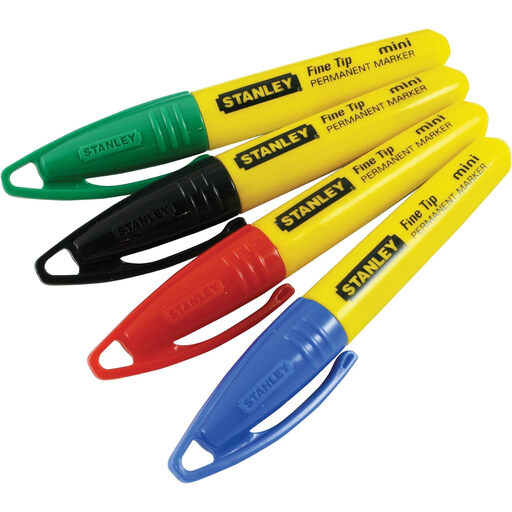
Why This Fits Their Persona: The four-colour pack covers everyday school, home and office needs without adding a large collection to your pencil case.
It uses a stated fine tip and a focused black, red, green and blue palette rather than relying on an oversized colour count.
Fine tip for detailed writing or drawing; lightweight ergonomic design and four practical ink colours.
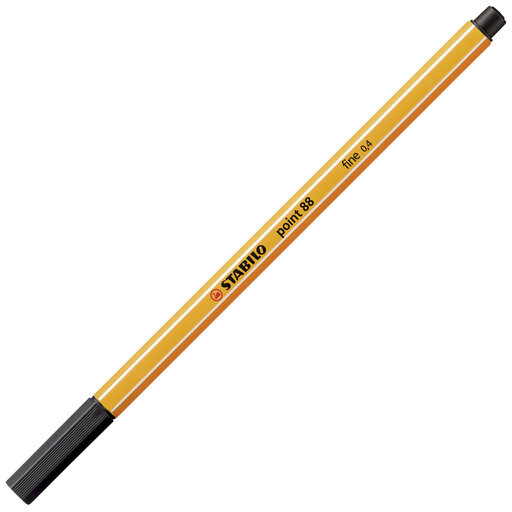
Why This Fits Their Persona: A 24-colour wallet suits journalers, artists and planners who need more choice for detailed layouts and colour-coded work.
The stated 0.4 mm line width and metal-cased tip clarify what the set is designed to do: precise lines rather than broad colouring.
24 assorted colours; suitable for rulers and stencils, with a metal-framed tip.
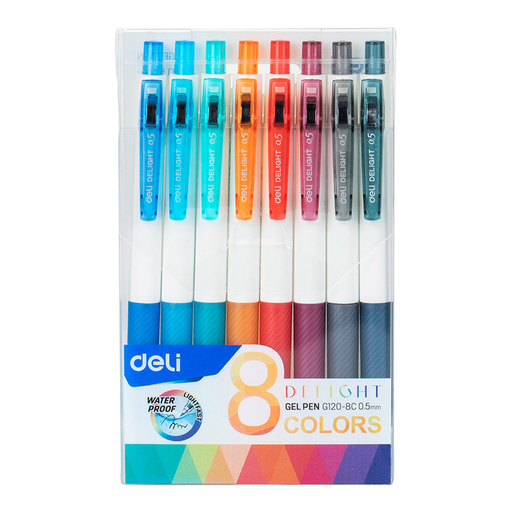
Why This Fits Their Persona: Students, teachers and office workers can use eight colours for revision notes, marking, journalling and everyday organisation.
The retractable format protects the tips between uses, reducing dependence on remembering separate caps.
0.5 mm bullet tips; eight vibrant colours and soft ergonomic grips.
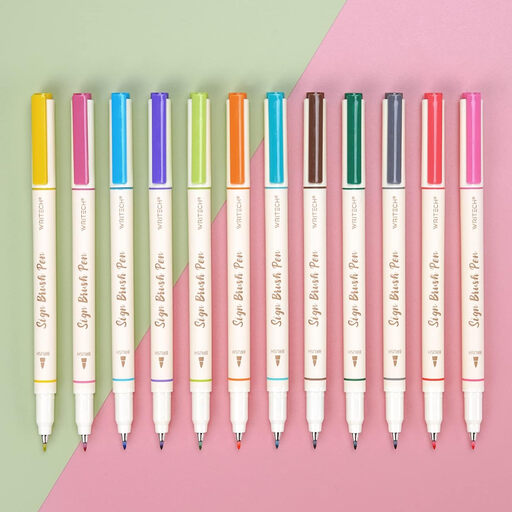
Why This Fits Their Persona: Journalers, beginners practising calligraphy and creators making headings can explore pressure-sensitive strokes in 12 colours.
The flexible felt brush tip is clearly intended for variable line widths, rather than being presented as a standard fine writing pen.
Pressure-sensitive brush tip; water-based ink described as blendable with water and compatible inks.
We have compiled a complete, real-time list of products that fully satisfy these strict selection criteria and UK safety regulations.
Yes, provided the ink dries suitably on your paper and the colours are easy to distinguish. Fineliner pens and 0.5 mm gel pens work well for compact annotations, while highlighters are useful for marking key passages. Test darker shades first, as some colours may reduce readability when used over printed text.
Lifespan depends on frequency of use, storage and whether the cap is replaced securely. A pen used daily will run out sooner than one used occasionally. Some products list dry-out protection, but this does not remove the need to recap them. Store capped pens away from heat and direct sunlight.
Many are designed for non-porous surfaces including glass and mirrors, but always check the product instructions first. Shake and prime the marker as directed, test a small area and remove the ink with a damp cloth. Avoid porous materials, where the ink may be more difficult to remove.