
24/7 Customer Support

Free returns

Same-day & Next-day Delivery

Quality Guaranteed

Unlock Your Welcome Offers: FREE Delivery | Up to 80% OFF | Free 30-day JoyPlus trial
Download the APP
Colour can make revision notes easier to scan, meeting notes more organised and creative projects more expressive. However, buying coloured pens and highlighters based only on an attractive colour palette can lead to dried-out tips, smeared pages or a pencil case full of duplicates.
This guide from the Joybuy Product Recommendation Officer explains which specifications matter, which marketing details deserve closer inspection and which products suit different everyday uses in the UK.
A large stationery set may contain many shades, but that does not mean every pen is suitable for your paper or writing style. Very wet ink can show through thin notebook pages, while pale colours may be difficult to read. Before buying, consider whether you need clear black and red ink pens for office work, soft pastel highlighters for planning or brighter colours for school stationery.
Fine point pens can range from delicate writing tools to moderately broad rollerball pens. A 0.5mm tip is generally suited to compact notes, calendars and detailed annotation, while a 0.7mm gel pen may produce a more noticeable line. If you write small or need to fit text into a planner, check the stated tip size rather than relying on the phrase “fine point”.
Capped felt-tip pens and brush pens can dry if left open during a long study or lettering session. Retractable gel pens reduce the need to remove and replace a cap, but their mechanism still needs to be clicked closed after use. Some highlighters specify anti-dry-out performance; this is a product feature, not a guarantee that ink will remain usable indefinitely. Store stationery away from heat and replace caps securely.
Your intended task should determine the tip:
Water-based ink is common in felt-tip pens and highlighters. It is convenient for everyday paper use, but the result depends on paper thickness and absorbency. Test a new set on a spare page if you are working in a planner or notebook where show-through would be distracting.
Gel ink often provides a smooth, saturated line. Quick-drying formulations can be more comfortable for left-handed writers, although drying time varies with paper, ink volume and writing speed. Waterproof or water-resistant descriptions should be checked against the product specification rather than assumed from the word “gel”.
Look for secure caps, sturdy tip construction and clear storage instructions. Refillable highlighters can reduce the need to replace the entire barrel, while compact designs save room in a school bag or desk drawer. Stationery containing small caps or detachable parts is not suitable for children under three years of age. Follow the product warning, avoid contact between ink and eyes or mouth and supervise younger children where specified.
The following selections match different shopping priorities rather than using one product for every type of writing.
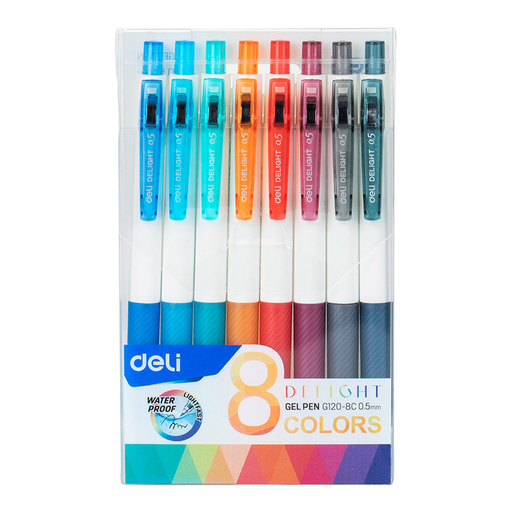
Why This Fits Their Persona: A practical starting set for students, parents and new journalers who want several everyday colours without carrying separate capped pens.
The stated 0.5mm bullet tip and retractable design make the writing format clear, while the included storage box helps keep the eight colours together.
Eight colours, soft ergonomic grip, retractable closure and waterproof gel ink are specified for note-taking, drawing and organising.
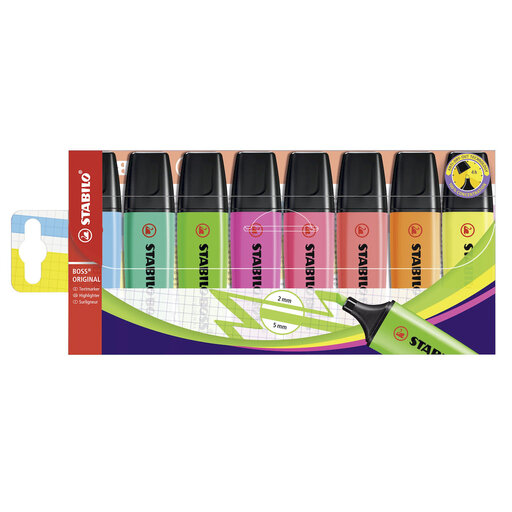
Why This Fits Their Persona: Suited to office workers, teachers and students who regularly mark printed documents, revision notes and reference books.
Its stated non-roll shape addresses a common desk nuisance, while the specified anti-dry-out feature helps during extended marking sessions when the cap is briefly left off.
The wedged tip provides stated 2mm and 5mm lines, and the neon shades are described as refillable.
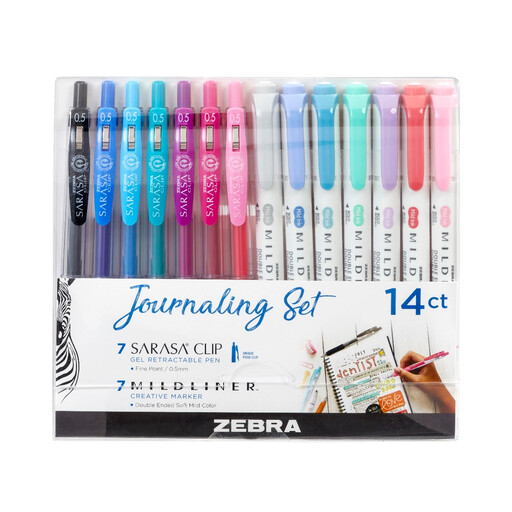
Why This Fits Their Persona: A coordinated option for planners, journalers and students who want writing pens and highlighters in one set.
The specification separates the two tools: 0.5mm gel pens for writing and dual-tip highlighters for detail or broad marks, reducing the need to buy mismatched items.
The set contains seven highlighters with 1.4mm bullet and 4.0mm chisel tips, plus seven retractable gel pens.
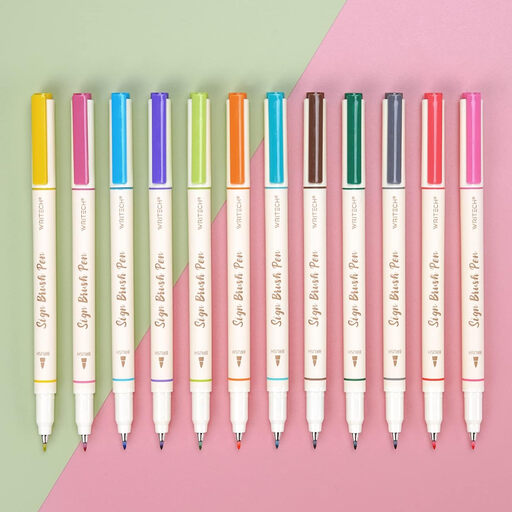
Why This Fits Their Persona: Designed for people exploring brush lettering, calligraphy, sketching, doodling and decorative journalling at home.
The product specification identifies a flexible felt brush tip and water-based ink, so buyers can distinguish it from a standard rigid felt-tip pen.
The pack includes 12 vibrant colours, with tips described as pressure-sensitive and suitable for water blending.
For school stationery, a balanced selection could include a 0.5mm blue or black gel pen, a red ink pen for corrections, two or three highlighter colours and a felt-tip pen for diagrams. Office users may prefer restrained shades, retractable gel pens and a chisel-tip highlighter for printed reports.
For journalling, pastel highlighters, dual-tip highlighters and journalling pens give more control over page layout. For calligraphy beginners, start with brush pens before moving to dedicated calligraphy pens; flexible tips are generally easier to handle for practising pressure changes.
We have compiled a complete, real-time list of products that fully satisfy these strict selection criteria and UK safety regulations.
Quick-drying gel ink can help reduce smearing, but performance depends on writing speed and paper type. Look for a stated quick-dry feature and test the pen on the notebook or printer paper you normally use.
Lifespan varies with use, storage and whether the cap is replaced. Frequent highlighting consumes ink faster than occasional underlining. Anti-dry-out features may help if a pen is briefly left uncapped, but secure recapping remains the most practical way to protect the tip.
Usually, but visibility varies by shade and paper quality. Pale grey, blue or pink may appear more subtle than fluorescent yellow or green. Test the colour on the actual paper before marking important notes, particularly when pages are thin or double-sided.