
24/7 Customer Support

Free returns

Same-day & Next-day Delivery

Quality Guaranteed

Unlock Your Welcome Offers: FREE Delivery | Up to 80% OFF | Free 30-day JoyPlus trial
Download the APP
Buying coloured pens and markers can seem straightforward until the ink skips, the tips fray, colours look different on paper or a supposedly versatile marker proves unsuitable for your chosen surface. Whether you are a student organising revision notes, a teacher preparing classroom displays, an artist building a palette or a parent buying creative supplies, the right choice depends on more than the number of colours in the box.
A large stationery set may contain many near-identical shades, while a smaller pack can offer a more practical selection. Before buying, check whether the colours suit your project:
A high number of colours is not automatically better value if you only use a few of them.
Felt-tip pens, fineliner pens and brush pens are generally intended for paper. Acrylic paint pens may work on materials such as wood, rocks, glass, ceramics, fabric and canvas, but the finish and durability can vary by surface. Chalk markers designed for wet erasing are usually intended for non-porous surfaces and may be difficult to remove from porous materials.
Always check the product instructions and test an inconspicuous area first. “Water-based” describes the ink base; it does not necessarily mean the finished mark is washable from clothing or furniture.
A fine tip can be excellent for detail but frustrating for filling larger areas. Conversely, a broad tip may be unsuitable for small handwriting. Retractable gel pens reduce the need for separate caps, while capped markers require secure closure to reduce drying.
Storage also matters. Many pens perform more consistently when kept capped and stored as directed. Paint markers may require shaking and pressing the nib to prime the ink, so they need slightly more preparation than ordinary colouring pens.
Choose the tip according to the work you actually do:
A metal-encased fineliner tip can be useful when working against a ruler or stencil because the edge is less exposed to direct rubbing.
Water-based inks are commonly used in journalling pens, highlighters and felt-tip pens. They can be comfortable for everyday paper use, but heavier application may show through thin pages. Test on the actual notebook or paper stock if you are concerned about bleed-through.
Gel ink is often chosen for smooth writing and decorative colour. Look for a fine point if you need compact notes, and allow ink time to dry when writing on glossy paper.
Acrylic paint pens typically provide more opaque coverage than standard colouring pens. Follow the care instructions carefully: the marker may need shaking, nib priming and thorough recapping after use.
For children, check the stated age guidance, small-parts warnings and supervision advice. Some stationery sets are intended for children aged six and above, while markers containing small components should be kept away from younger children.
For longer use:
Look for practical features such as replaceable nibs, refillable highlighters or dry-out protection if the pens will be used frequently.
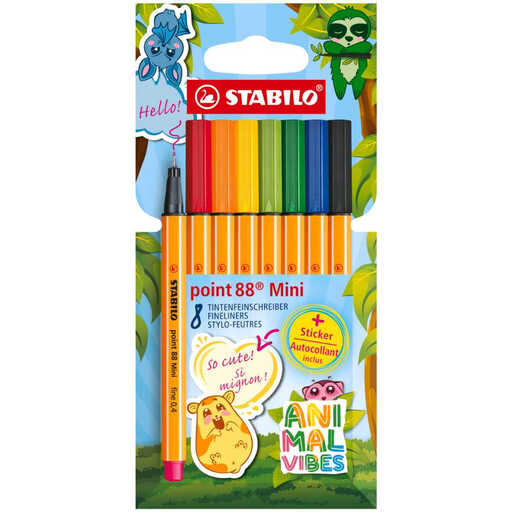
Why This Fits Their Persona: A compact eight-colour option for students, commuters and stationery users who need precise pens in a pencil case or handbag.
The 0.4 mm metal-encased tip gives a clear specification for detailed writing rather than relying only on colour count.
Water-based ink; compact format; suitable for writing, sketching, underlining, journalling and ruler work.
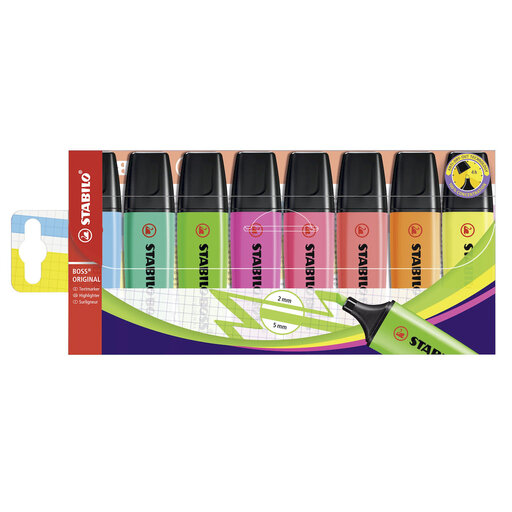
Why This Fits Their Persona: A practical desk and study choice for readers who value refillability, clear highlighting and a design that stays put on a busy workspace.
The product specifies refillable neon shades and anti-dry-out use for up to four hours uncapped, addressing common maintenance concerns.
Non-roll shape; wedged tip with 2 mm and 5 mm line widths; refillable neon shades.
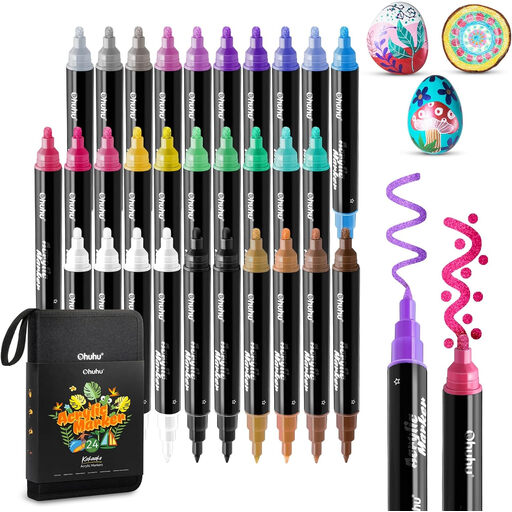
Why This Fits Their Persona: Designed for crafters and artists working across projects such as rocks, wood, ceramics, glass, plastic, fabric, paper and canvas.
The dual-tip format and listed surface compatibility provide more useful detail than a general claim of versatility.
30 markers; fine and medium round tips; eight replacement nibs; portable cloth case and swatch cards.
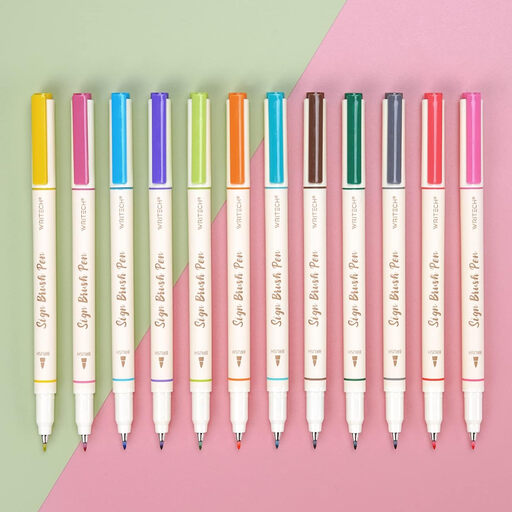
Why This Fits Their Persona: A focused set for hand lettering, calligraphy, sketching, doodling, adult colouring and decorative journalling.
The flexible brush tip is clearly specified, so users can assess whether variable line width suits their lettering technique.
12 water-based colours; pressure-sensitive felt brush tip; ink can be diluted with water for blending effects.
We have compiled a complete, real-time list of products that fully satisfy these strict selection criteria and UK safety regulations.
Check the age guidance and warnings on the packaging before buying. Some gel pens and stationery sets are designed for children aged six and above, while products with small parts may not be suitable for younger children. Supervise use where the manufacturer recommends it, and keep ink away from eyes and mouths.
Replace caps firmly after every use and avoid leaving capped pens exposed during long projects. For markers with stated anti-dry-out protection, follow the listed time limit rather than treating the feature as permanent. Paint markers may also need horizontal storage, shaking and nib priming.
For compact writing, choose 0.4–0.5 mm fineliner pens or gel pens. Highlighter pens help organise headings and key passages, while brush pens are useful for titles, lettering and decorative borders. Test ink on a spare page first, particularly when using thin notebook paper, to check for bleed-through.