
24/7 Customer Support

Free returns

Same-day & Next-day Delivery

Quality Guaranteed

Unlock Your Welcome Offers: FREE Delivery | Up to 80% OFF | Free 30-day JoyPlus trial
Download the APP
Buying coloured pens and markers can seem straightforward until a set arrives with scratchy tips, colours that barely show on paper or ink that bleeds through your notebook. Whether you are a student organising revision notes, a parent buying craft supplies or an artist choosing tools for lettering, the right product depends on how and where you plan to use it.
Marketing language can also make comparison difficult. “Vibrant”, “long-lasting” and “multi-purpose” do not always explain the details that affect everyday use. Before purchasing, check the tip, ink type, surface compatibility and storage requirements.
A large assorted colour pen set may look good value, but colour quantity is only helpful if the pens have suitable tips and consistent ink flow. A 60-colour set with dual tips can be practical for illustration, while a smaller set may be more suitable for school notes or basic journalling.
Also check whether the set includes genuinely distinct shades. Pastel, vintage and vibrant palettes serve different purposes, and a colourless blender is not an additional coloured pen.
Water-based felt tip pens, fineliners and journalling pens are generally designed for paper. They may not adhere properly to glass, metal or plastic. Conversely, permanent markers and paint markers may stain surfaces or show through thin paper.
For reusable displays, look for wet-erase chalk markers designed for non-porous surfaces. Always follow the product instructions and test an inconspicuous area first.
Open caps, loose lids and unsuitable storage can shorten the usable life of ink. Retractable pens reduce the risk of losing caps, while capped pens need to be closed securely after use. Some products should be stored horizontally, and brush pens may need protection from heat and direct sunlight.
Left-handed users should pay particular attention to quick-drying ink. Even a fine point can smear if the formula takes too long to set.
The nib controls both precision and the type of mark you can make.
A metal-framed or metal-encased tip can be useful when drawing against rulers and stencils, as it offers added structure around the nib.
Water-based ink is commonly chosen for notes, colouring and journalling because it is easy to use on paper and is available in blendable formulas. However, paper thickness still matters. Test a pen on the reverse side of a page before completing a project.
Gel pens use a gel-based formula that can produce smooth, opaque-looking lines. A 0.5 mm gel pen is useful for colour coding and detailed writing, but drying time varies by colour and paper.
Permanent markers and paint markers are more appropriate when marks need to adhere to materials such as plastic, wood, glass or metal. Paint markers generally require shaking and priming before use. Use solvent or oil-based products in a well-ventilated area and keep them away from children.
For displays, chalk markers are designed for non-porous surfaces such as glass, mirrors, slate and some boards. Wet-erase ink can usually be removed with a damp cloth, but it may be difficult to remove from porous materials.
For occasional use, a four- to twelve-colour set may cover the essentials without creating unnecessary storage. Larger assorted colour pen sets offer more tonal variety for art, adult colouring books and creative planning.
Grip shape is also important for long study or drawing sessions. Triangular barrels can encourage a stable writing position, while ribbed or matte barrels may offer additional control.
Check age warnings carefully. Many products contain small parts, including caps, and are not suitable for children under three. Ink can stain skin, clothing and furniture, so younger children should use stationery with suitable adult supervision.
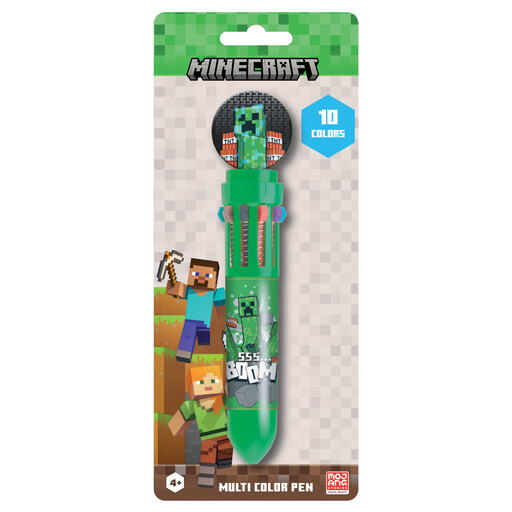
Why This Fits Their Persona: A compact option for children, Minecraft fans and anyone wanting several writing colours without carrying a full stationery case.
It provides 10 selectable ink colours in one barrel, avoiding the bulk of a larger set. It is intended for writing and drawing on paper rather than unsuitable hard surfaces.
10-colour switching design; Creeper-themed plastic casing; suitable for notes, doodles and simple colouring.
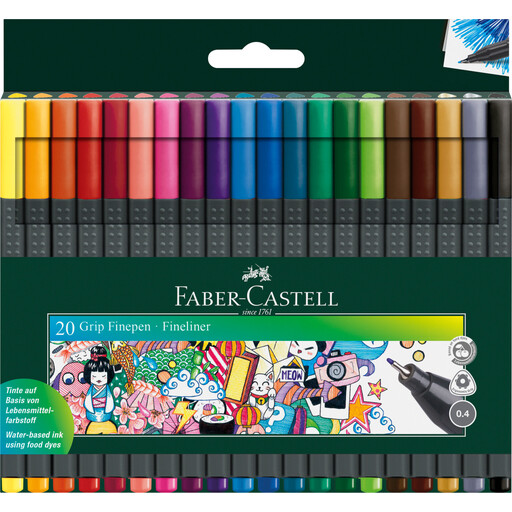
Why This Fits Their Persona: A practical match for students, planners, technical drawing and detailed illustration where a consistent narrow line is important.
The stated 0.4 mm line width makes the intended precision clear, while the long metal-framed tip is suited to rulers and templates.
20 assorted colours; 0.4 mm point; triangular barrel with grip zone; at least 56% recycled plastic in the plastic parts.
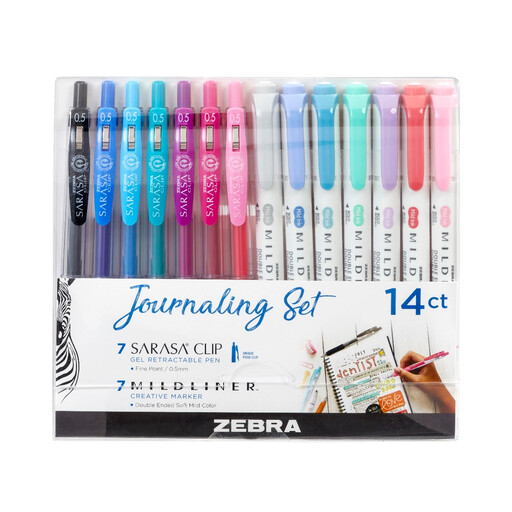
Why This Fits Their Persona: Suitable for revision notes, bullet journals, planners and colour coding where both highlighting and fine writing are needed.
The two tip widths are specified: 1.4 mm bullet and 4.0 mm chisel. The set also separates highlighters from 0.5 mm gel pens for clearer task matching.
Seven dual-tip highlighters and seven 0.5 mm gel pens; pastel shades; retractable gel pens with clips.
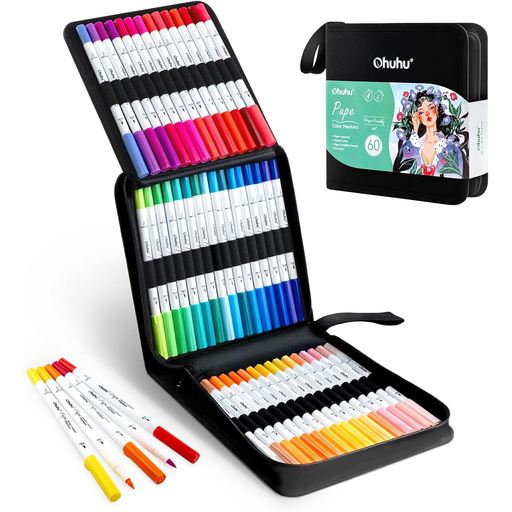
Why This Fits Their Persona: Designed for adult colouring, calligraphy, illustration and larger creative projects requiring multiple shades and two working points.
The specification identifies 59 colours plus one colourless blender, alongside a 0.4 mm fineliner and 1–5 mm brush tip. Paper testing is still advisable before detailed work.
60 pens in a case; dual tips; water-based, acid-free ink; colours described as blendable; 0.4 mm detail tip.
We have compiled a complete, real-time list of products that fully satisfy these strict selection criteria and UK safety regulations.
Lifespan depends on how often they are used, whether caps are replaced and how they are stored. Keep capped pens closed, retract retractable models after use and follow any horizontal-storage instructions. Heat, direct sunlight and very dry conditions may affect ink performance.
Yes, but choose paper-friendly ink and test for bleed-through first. Fine liners, gel pens, dual-tip brush pens and pastel highlighters are commonly useful for outlines, colour coding, lettering and page decoration.
Read the product warning and use instructions before starting. Some formulas require good ventilation and may stain skin, clothing or furniture. Keep all markers away from young children, and never use a permanent or paint marker on a surface where removal is required unless the product specifically allows it.