
24/7 Customer Support

Free returns

Same-day & Next-day Delivery

Quality Guaranteed

Unlock Your Welcome Offers: FREE Delivery | Up to 80% OFF | Free 30-day JoyPlus trial
Download the APP
Buying coloured pens and markers can seem straightforward until the ink dries out, the tip fails to match the task or the colours bleed through your notebook. Students, teachers, office workers, artists and journalers often end up paying for large stationery sets containing shades and formats they rarely use.
This guide focuses on the details that make a practical difference in UK homes, classrooms and workplaces, including tip design, ink behaviour, pack size and surface compatibility.
An assorted colour set may contain 20 or more pens, but quantity is not the same as versatility. A student may need a few reliable fine tip pens for revision, while a crafter may need brush pens or chalk markers. Check whether the set includes useful colours and suitable tip types rather than selecting by pack size alone.
Paper, glass, whiteboards and chalkboards require different ink formulations. A permanent or porous-surface marker may be difficult to remove from a window or board. Conversely, a wet-erase marker designed for non-porous surfaces may not perform as intended on ordinary paper.
Always check the manufacturer’s stated surface compatibility. For wet-erase products, use a damp cloth only on suitable non-porous surfaces and avoid porous materials if easy removal is important.
A broad felt tip can be useful for bold notes but awkward for small planner boxes. A 0.4 mm fineliner supports detailed writing, while a 0.5 mm gel pen offers a slightly fuller line for everyday notes. Highlighters with chisel tips can provide both narrow and broad strokes, but their ink may still show through thin paper depending on the notebook.
Caps and storage also matter. Replace caps promptly, keep markers away from heat and follow any horizontal-storage instructions to reduce drying or uneven ink flow.
Match the nib to the task:
Water-based ink is commonly used in felt-tip pens, fineliners and some brush pens. It can be suitable for paper-based work, but the result depends on paper thickness and absorbency. Gel ink may provide a smooth line, while quick-drying formulations can be more practical for left-handed writers.
For planning and journaling, look for product information relating to smudge resistance, bleed-through and drying time. These descriptions are product features rather than guarantees for every paper type, so testing on a spare page remains sensible.
Compare the number of usable colours rather than the headline count. A set of eight coordinated gel pens may be more useful than a larger set with repeated or very similar shades.
For households with children, check age warnings and small-part information. Pen caps can present a choking hazard. Store stationery in a cool, dry place and avoid contact between ink and eyes or clothing. Follow the product label for cleaning and storage instructions.
The following selections suit different shopping priorities, from basic colour coding to specialist display work.
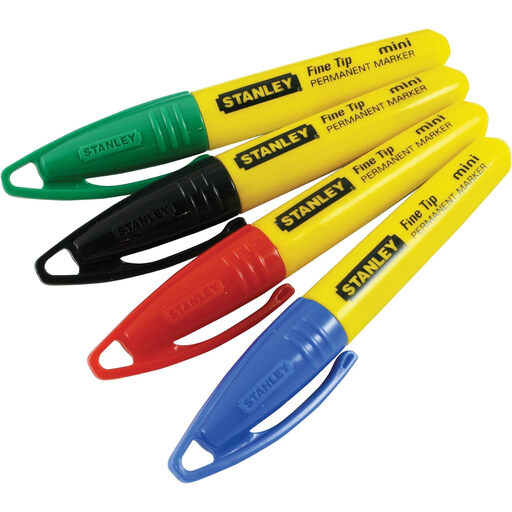
Why This Fits Their Persona: Four everyday colours—black, red, green and blue—cover school notes, office organisation and basic drawing without requiring a large stationery set.
The compact four-pack avoids paying for unused shades, while the fine tips are more practical for small writing than broad markers.
Fine tips, four practical ink colours and a lightweight ergonomic design for regular writing.
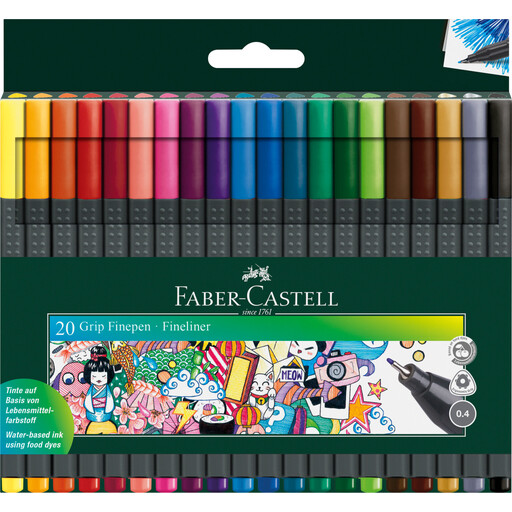
Why This Fits Their Persona: Students, teachers, artists and planners needing a broad colour palette with a consistent 0.4 mm line can use this wallet for detailed notes and illustrations.
The stated line width and long metal-framed tip make the intended precision clear, rather than leaving buyers to guess from photographs.
20 assorted colours, 0.4 mm line width and a triangular grip zone; plastic parts contain at least 56% recycled plastic according to the product description.
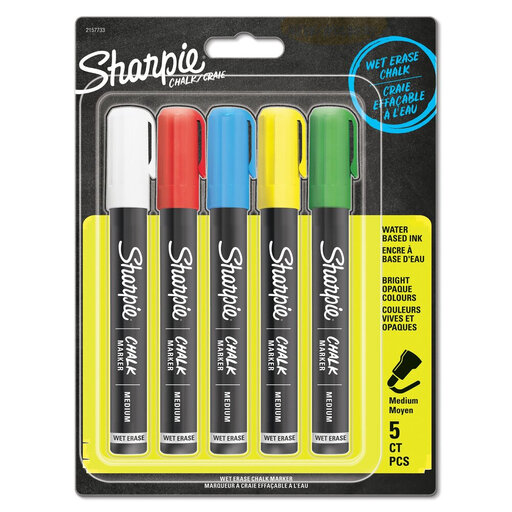
Why This Fits Their Persona: Teachers, small businesses, households and crafters creating temporary displays on windows, glass, whiteboards or suitable boards can use these markers for visible colour.
The product is identified as wet-erase and includes damp-cloth removal instructions, helping avoid using a permanent marker for temporary signage.
Pack of five assorted colours; designed for blackboards, light boards, whiteboards, windows and glass, subject to surface suitability.
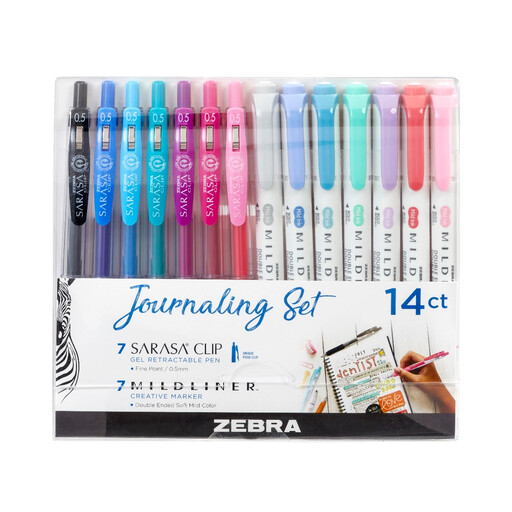
Why This Fits Their Persona: Journalers, planners and students receive coordinated highlighters and gel pens for colour coding, underlining and everyday note-taking.
The set states both highlighter and gel-pen tip sizes, so it offers distinct functions rather than several similar writing pens.
Seven dual-tip highlighters with 1.4 mm and 4.0 mm tips, plus seven 0.5 mm retractable gel pens.
We have compiled a complete, real-time list of products that fully satisfy these strict selection criteria and UK safety regulations.
Lifespan depends on ink volume, frequency of use, cap security, storage and tip pressure. Replace caps immediately after writing, avoid high temperatures and follow any stated storage guidance. Highlighters with anti-dry features may tolerate limited uncapped use, but they should still be capped between tasks.
Some quick-drying gel pens may reduce smearing for left-handed users, but drying time varies with ink, paper and writing speed. Look for a stated rapid-drying or smear-resistant feature, then test the pen on the paper you use regularly.
No. Use them only on surfaces identified as suitable by the product information, generally non-porous materials. Test a small area first, particularly on painted or treated surfaces, and remove the ink with the recommended damp-cloth method.