
24/7 Customer Support

Free returns

Same-day & Next-day Delivery

Quality Guaranteed

Unlock Your Welcome Offers: FREE Delivery | Up to 80% OFF | Free 30-day JoyPlus trial
Download the APP
Buying coloured pens and markers can seem straightforward until ink dries out, colours look different on paper, or the tip is unsuitable for the task. UK shoppers may be choosing between gel pens, fine tip pens, highlighters, brush pens and fineliners for school stationery, office stationery, journaling or creative work.
The right choice depends less on the number of colours in a pack and more on the pen’s tip, ink type, surface compatibility and storage requirements.
A large pack may include shades you rarely use, while offering too few everyday colours such as black, blue or red. Before buying, consider whether the set supports your actual routine: colour-coding lecture notes, marking homework, planning appointments or creating artwork.
For regular writing, a smaller pack with practical colours may be more useful than a large art pen collection. For journaling and crafts, a wider palette can be worthwhile if the pens have suitable tip control and consistent ink flow.
A 0.4mm or 0.5mm pen is designed for controlled, relatively fine lines, but this does not automatically mean it will work well on every type of paper. Very smooth paper can make some inks take longer to dry, while absorbent notebook paper may cause feathering or show-through.
A medium 1.0mm ballpoint pen can be more comfortable for fast notes, whereas a fine tip pen or fineliner is better suited to small writing, diagrams and templates.
Standard writing pens are made for paper. Whiteboard markers are designed for non-porous dry-wipe boards, while chalk markers and liquid glass markers are generally intended for surfaces such as glass, mirrors, ceramic and blackboards.
Using wet-erase ink on an unsuitable porous surface can make removal difficult. Always check the product instructions before writing on windows, painted walls, signs or furniture.
Tip measurements provide a useful starting point:
A metal-encased or metal-framed tip can be helpful when using a fineliner with a ruler or stencil, as it helps keep the nib away from direct rubbing against the edge.
Gel ink often provides bright colour and smooth movement, but drying time varies. Quick-drying formulations can be more suitable for left-handed writers or people who turn pages immediately after writing. Water-based inks are common in highlighters, felt-tip pens and brush pens, while ballpoint ink is typically chosen for everyday documents.
Look for practical information such as smudge resistance, water-based ink, low-odour ink and whether the product is designed to avoid bleed-through. These descriptions should be treated as usage guidance rather than a guarantee for every paper type.
A 12-pack may reduce the need for frequent replacement when one colour is used heavily, such as red pens for marking or blue pens for schoolwork. However, larger packs need sensible storage to prevent caps being lost.
To extend the usable life of coloured stationery:
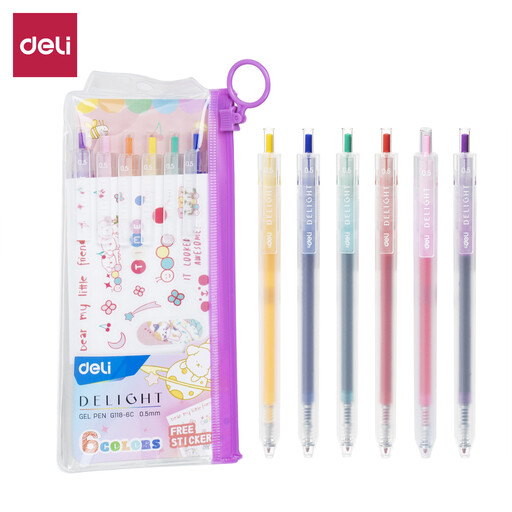
Why This Fits Their Persona: A compact six-pack provides a practical starting point for school notes, household planning and basic office stationery without committing to a large colour collection.
The 0.5mm point gives more control than a broad marker, while the stated colour selection focuses on commonly used writing shades.
0.5mm tip; six pens; red, blue and yellow ink options for colour-coding.
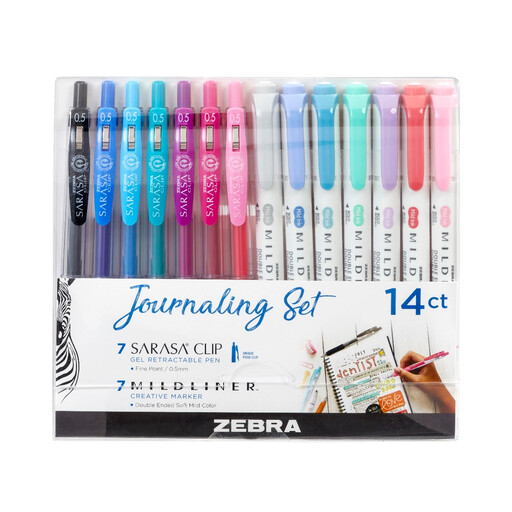
Why This Fits Their Persona: Students, planners and journalers can combine pastel highlighters and gel pens in one coordinated set for organising notes and creative layouts.
The dual-tip design provides a 1.4mm bullet tip and 4.0mm chisel tip, offering two highlighting approaches instead of requiring separate tools.
14-piece set; seven highlighters and seven 0.5mm gel pens; pastel colours for softer page marking.
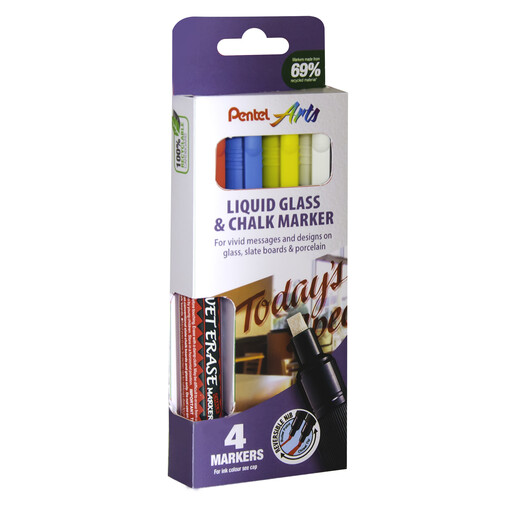
Why This Fits Their Persona: Useful for café-style menus, classroom displays, shop signage and home projects involving non-porous surfaces such as glass, slate, ceramic and metal.
The product is specified for non-porous surfaces and can be wiped with a damp cloth, helping avoid the mistake of using ordinary pens for display work.
Four colours; reversible bullet and chisel nibs; wet-erase ink for glass and chalkboard applications.
We have compiled a complete, real-time list of products that fully satisfy these strict selection criteria and UK safety regulations.
Look for quick-drying or smear-resistant ink, particularly with gel pens and journaling pens. Paper type also matters: coated pages may leave ink wet for longer than standard notebook paper. Testing a small mark on a spare page can help before starting important notes.
Lifespan depends on frequency of use, cap design, tip pressure and storage. Pens used every day will naturally run out sooner than occasional craft markers. Recapping promptly, storing products as directed and avoiding heat can help maintain ink flow.
Erasable pens are useful for drafts, school practice, planning and temporary notes, but they may not be appropriate for forms, contracts or records that need permanent writing. Check the requirements of the organisation or document before using erasable ink.