
24/7 全天候客户支持

免费退货

当日/次日达

品质保障

开启新人专享福利: 全场免邮 | 低至 2 折 | 免费试用 30 天 JoyPlus 会员
下载 Joybuy
Choosing coloured pens and markers can seem straightforward until ink bleeds through your notebook, tips dry out or a large set contains shades you rarely use. Whether you are organising lecture notes, preparing a classroom display, decorating a planner or creating artwork, the right stationery should match the surface, line width and level of control you need.
This guide explains the common buying traps, the specifications worth checking and a selection of products for different users.
An assorted colour pen set may contain 20, 30 or more shades, but quantity does not guarantee usefulness. Some sets prioritise near-identical colours while omitting practical shades such as black, dark blue or grey. Before buying, check the actual colour list and consider whether you need pastel highlighters, vivid colouring pens, muted journalling pens or paint markers.
Ink behaviour depends on the surface. Water-based felt tip pens and highlighters may work neatly on standard notebook paper but can show through thin pages. Gel pens can offer a smooth finish, yet some formulas take longer to dry. Acrylic paint pens are designed for non-paper surfaces and may be unsuitable for ordinary note-taking.
If you are left-handed, quick-drying ink is particularly useful because it can reduce smearing across the page. Always check product information rather than assuming that “smooth” means fast-drying.
A broad marker tip is useful for filling areas and writing large headings, but it is less suitable for small planner boxes. Conversely, a 0.4 mm fineliner can produce controlled detail but will take longer to colour a large area. Brush pens require pressure control, while dual-tip markers offer flexibility but may cost more than a single-purpose pen.
Match the tip to the task:
Water-based ink is common in highlighters, fineliners and journalling pens. It is generally suited to paper, but bleed-through varies by paper weight and saturation. Pigment ink can provide defined lines, while gel ink offers a fluid writing feel.
For classroom displays, shop signage or home projects, check whether the marker is wet-erase or dry-erase. Wet-erase chalk markers are usually designed to stay in place until wiped with a damp cloth, while whiteboard markers are intended for dry-wipe boards.
Do not assume a pen works on every material. Paint pens may be suitable for wood, rocks, glass, ceramics, fabric or canvas, but follow the product instructions and test a small area first. Chalk markers are generally recommended for non-porous surfaces and may be difficult to remove from porous materials.
Replace caps securely, retract capless pens fully and store markers as instructed. Some products perform more consistently when kept horizontally. These simple habits can help reduce drying and uneven ink flow.
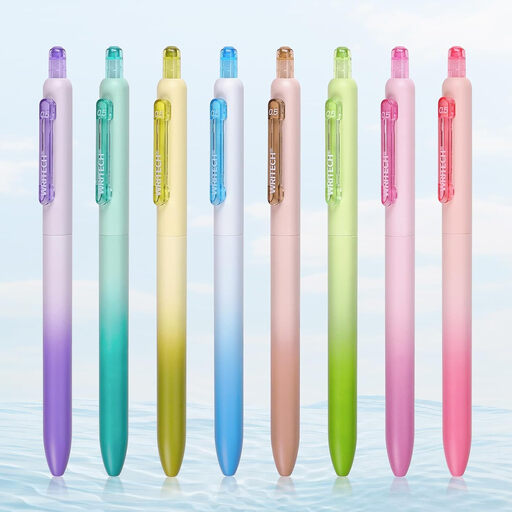
Why This Fits Their Persona: An eight-colour retractable set suits students and first-time journal users who want practical colours for notes, planners and everyday writing without carrying separate caps.
The 0.5 mm fine point and retractable design provide more control than broad markers and reduce the risk of misplaced caps.
Eight assorted colours, 0.5 mm tips, silent click mechanism and quick-dry ink are specified for the set.
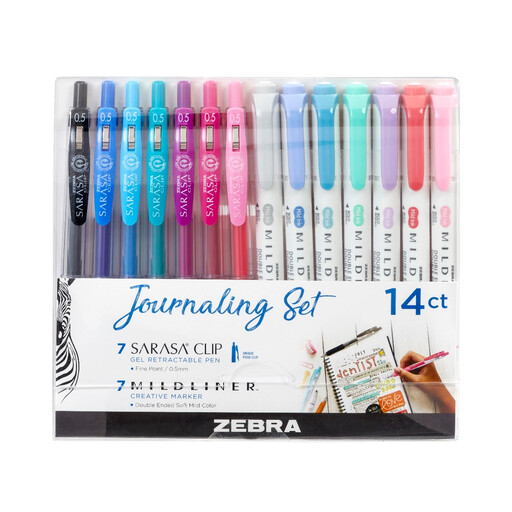
Why This Fits Their Persona: This coordinated set is suitable for planners, organised study notes and bullet journalling, particularly when you want matching highlighters and writing pens in one collection.
The listed dual-tip highlighters offer 1.4 mm and 4.0 mm options, while the set description identifies rapid-drying gel ink for writing.
Fourteen pieces include seven pastel highlighters and seven 0.5 mm gel pens, with a minimum 70% recycled content stated for the gel pen components.
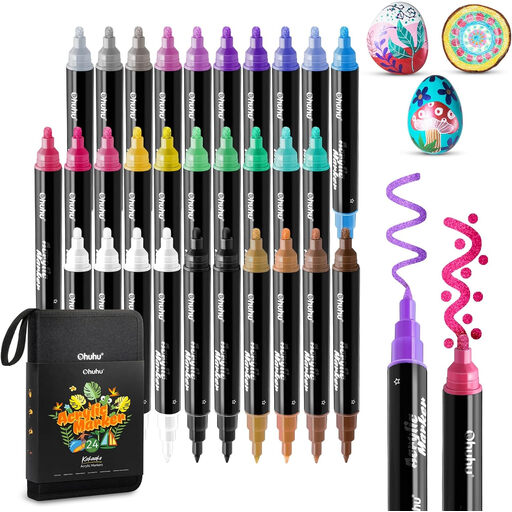
Why This Fits Their Persona: Crafters and illustrators working across wood, rocks, ceramics, glass, fabric, canvas or paper may value a broader colour range and two tip styles.
The product information specifies multiple surfaces, dual tips and replacement nibs, helping address the limitations of single-purpose colouring pens.
The 30-piece set includes fine and medium round tips, 24 metallic colours plus white and black, and eight replacement nibs.
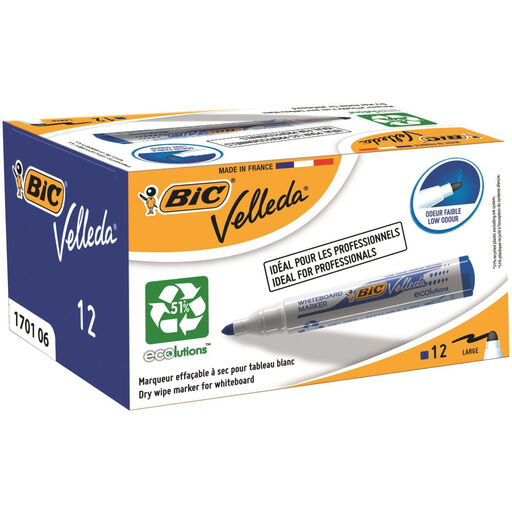
Why This Fits Their Persona: A bulk pack of whiteboard markers can suit classrooms, meeting rooms and offices where blue markers are used regularly for lessons, planning or presentations.
It is specifically described as a dry-wipe board marker, avoiding the mistake of using wet-erase or permanent paint pens on a standard whiteboard.
The marker has a 1.5 mm line width, low-odour ink, a blocked acrylic tip and a barrel made with 51% recycled materials.
We have compiled a complete, real-time list of products that fully satisfy these strict selection criteria and UK safety regulations.
Yes, but select the tip and ink according to your notebook paper. Finepoint gel pens and fineliners suit small layouts, while pastel highlighters and brush pens work for headings, colour-coding and lettering. Test a new pen on a spare page to check for bleed-through.
Replace caps immediately after use and store pens according to the manufacturer’s guidance. Retractable felt tip pens should be fully closed. For brush pens, avoid pressing the tip unnecessarily when writing and keep the ink reservoir protected from heat and direct sunlight.
Wet-erase chalk markers are generally intended for non-porous surfaces and are usually removed with a damp cloth. Check the product instructions first, especially before using them on painted walls, porous boards or unsealed wood. For a dry-wipe whiteboard, use markers specifically labelled for whiteboards.