
24/7 Customer Support

Free returns

Same-day & Next-day Delivery

Quality Guaranteed

Unlock Your Welcome Offers: FREE Delivery | Up to 80% OFF | Free 30-day JoyPlus trial
Download the APP
Colourful pens can make revision notes, planners and drawings more engaging, but appearance alone does not tell you whether a set will suit everyday use. A bright barrel may hide ink that smears, a novelty topper may make a pen awkward to store, and a large colour selection may include shades you rarely use.
For UK shoppers, the right choice depends on where and how the pens will be used. Before buying gel pens, coloured pens or novelty pens, check the writing tip, ink behaviour, storage design and age guidance.
A set with many shades may look appealing, but colour count is not the only useful measure. Some pens are intended for decoration rather than continuous writing, while others may have a thicker line that is unsuitable for small notebook pages.
For schoolwork, note-taking and journaling, look for a clearly stated tip size and ink type. A 0.4mm or 0.5mm tip generally offers more control for fine notes, whereas a 1.0mm ballpoint creates a bolder line that may be easier to read on worksheets.
Ink can behave differently on ordinary printer paper, coated notebooks and glossy craft card. Gel pens often provide vivid colour, but their wetter ink may need more drying time. This matters particularly for left-handed writers, who may drag their hand across newly written text.
If neat pages are important, prioritise pens that state quick-drying or smear-resistant features, then use them with suitable paper. Keep a scrap sheet nearby when testing a new set rather than writing directly in a finished journal.
Novelty pens with pom-poms, spinning features, lights or character heads can be enjoyable gifts, but decorative parts may add bulk and may not be suitable for younger children. Caps can also be misplaced, allowing fibre or gel tips to dry out.
Always check the product warning and recommended age. Products containing small parts should be kept away from children below the stated age, and pens should be stored with caps secured or tips retracted where applicable.
A metal-cased tip can be useful when drawing alongside a ruler or stencil. For children’s stationery, a comfortable grip and a barrel that is easy to control may matter more than an especially fine point.
Gel pens are often selected for saturated colour and smooth writing. They work well for headings, planners and creative stationery, but should be allowed to dry before pages are closed.
Fineliners usually offer a precise line for drawing pens, diagrams and detailed journaling. Water-based ink may show through thin paper, so check both sides of a page before committing to a colour scheme.
Ballpoint pens are practical for school pens and everyday writing. Retractable designs protect the tip and remove the need for a separate cap.
Erasable pens use heat-sensitive ink that can be removed through friction. They are useful for planning and corrections, but erased writing may not be suitable for formal records or documents where permanence matters.
For longer writing sessions, look for a rubberised or textured grip, a balanced barrel and a clip or retractable mechanism. If the pens are for pencil cases, consider the overall pack size and whether the caps are easy to replace.
For children aged six and over, follow the manufacturer’s age information and supervision guidance. Avoid chewing or biting pen tips, and protect clothing and work surfaces when using glitter or scented inks.
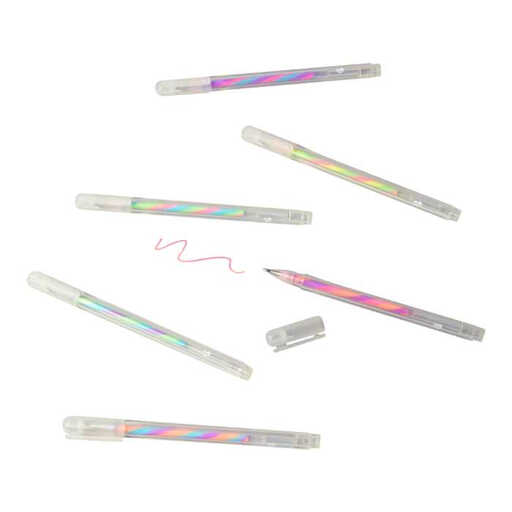
Why This Fits Their Persona: A six-piece set is a manageable starting point for pupils, journalers and anyone building a colourful pencil case without buying a large collection.
The set focuses on six bright gel ink colours rather than an oversized selection, making the contents easier to use and store.
Six bright shades; suitable for writing, doodling, schoolwork, planners and greeting cards.
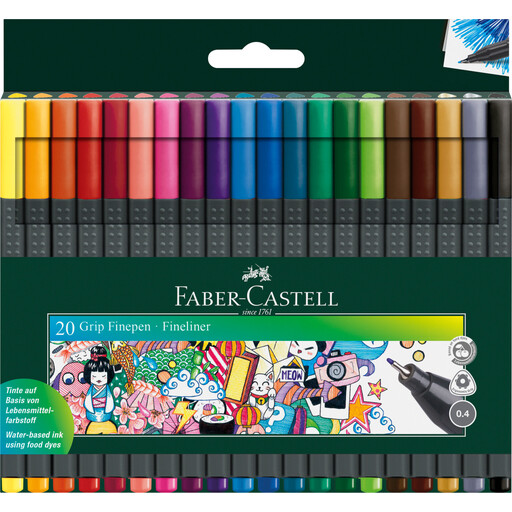
Why This Fits Their Persona: The 20-colour wallet suits illustrators, students and stationery enthusiasts who need fine control for detailed notes, diagrams and creative work.
The stated 0.4mm line width gives buyers a clear precision measure, while the cap reminder helps reduce drying between uses.
0.4mm tips; triangular grip zone; metal-framed tip; plastic parts made with at least 56% recycled plastic.
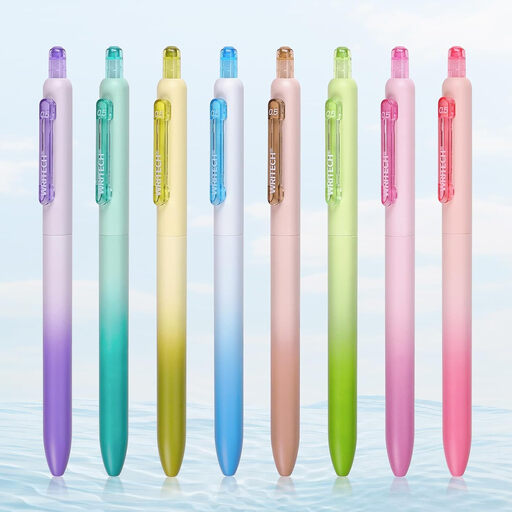
Why This Fits Their Persona: Designed for frequent note-taking, colour-coding and journaling, this retractable set is practical for desks, study spaces and pencil cases.
The specification identifies the 0.5mm point, eight ink colours and retractable mechanism, rather than relying only on decorative styling.
Eight assorted colours; fine 0.5mm point; retractable silent-click mechanism; quick-dry ink is specified by the product description.
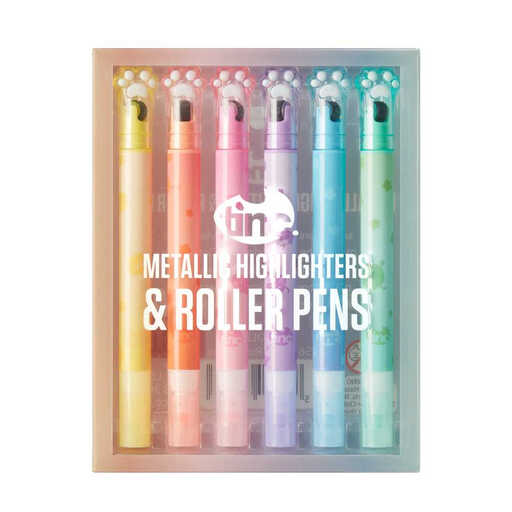
Why This Fits Their Persona: This dual-purpose set works for children, card makers and journalers who want decorative marks as well as highlighting functions.
Its purpose is clear: one end stamps patterns and the other provides a chisel-tip pastel metallic highlighter, rather than presenting decoration as writing performance.
Six colours; roller stamps; dual-tip format; useful for cards, invitations, notebooks and craft projects.
We have compiled a complete, real-time list of products that fully satisfy these strict selection criteria and UK safety regulations.
Yes, gel pens can work well for headings, colour-coding and creative notes. Check school policies before using them in formal work, and allow the ink to dry to reduce smearing. For fast writing, a ballpoint may be more practical.
Replace caps firmly after use and store capped fineliners horizontally where the product instructions allow. Retract ballpoint and gel pens after writing. Avoid leaving stationery in direct sunlight, near radiators or in hot cars.
Usually not. Heat-sensitive erasable ink is designed for flexible notes and corrections, but erased marks may not be permanent. Use a conventional ballpoint or suitable permanent ink for forms, official records and documents that need to remain unchanged.