
24/7 全天候客户支持

免费退货

当日/次日达

品质保障

开启新人专享福利: 全场免邮 | 低至 2 折 | 免费试用 30 天 JoyPlus 会员
下载 Joybuy
Choosing colourful pens and markers can seem straightforward until the ink dries out, the nib frays or the colours look noticeably different on paper. Parents, students, journal users and artists often pay for large sets that contain shades they rarely use, while attractive novelty features may matter less than tip quality and storage.
This guide from the Joybuy Product Recommendation Officer focuses on the specifications that affect everyday use, helping you compare gel pens, brush pens, felt-tip pens, colouring pens and other creative stationery with fewer surprises.
A 60-colour set may look economical, but it is only good value if the palette suits your projects. For school stationery, a smaller set with clear, recognisable colours may be more practical. For adult colouring, journalling or illustration, look for complementary tones, pale shades and a blender rather than simply counting the pens.
A flexible brush nib is useful for lettering but may be difficult for small school notes. A fine-liner pen creates controlled details but will be slow for filling larger areas. Similarly, broad highlighters can obscure small text. Match the nib to the activity rather than relying on packaging descriptions such as ‘multi-purpose’.
Water-based inks can be comfortable for paper projects, but they may feather or show through thin pages. Gel ink can offer smooth writing, although some formulas take longer to dry. Paint markers are more suitable for non-porous materials but require ventilation and careful storage. Always check whether a pen needs its cap replaced immediately, stored horizontally or kept away from heat.
Check both the advertised tip size and the likely line width. A 2mm bullet tip, for example, may create a finer written line depending on its construction.
Water-based ink is commonly used in colouring pens and felt-tip pens. It can be blendable and easy to clean, but test it on the paper you use most. Thin exercise books and notebook pages may show ink through more readily than specialist marker paper.
Gel ink is often chosen for smooth note-taking and colour coding. Quick-drying formulas can be more convenient for left-handed writers, but drying time varies with paper, pressure and ink colour.
Heat-sensitive erasable ink can be useful for drafts and planners. However, erased writing may be affected by heat, so it should not be used where permanent records are required.
Paint marker ink is designed for surfaces such as card, glass, metal, plastic and rubber. Follow the product instructions, shake and prime the nib as directed, and use in a well-ventilated area.
For children, check the stated age range and warnings about small parts. Some novelty pens include toppers, caps or accessories that are not suitable for under-threes. Washable ink can be helpful for younger users, but it does not remove the need to protect clothing and work surfaces.
For longer service life, replace caps securely, retract retractable tips after use and store markers as instructed. Fine nibs can be damaged by excessive pressure, while brush tips need a controlled grip to retain their shape.
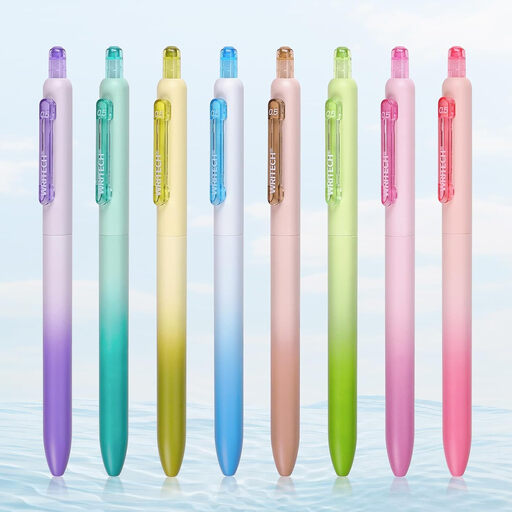
Why This Fits Their Persona: An eight-colour set suits pupils, students and new journal users who want practical colour coding without a large collection.
The 0.5mm fine point gives more control than a broad marker, while the retractable design avoids a loose cap during school or commuting.
Eight assorted colours, a silent click mechanism, ribbed matte barrel and quick-dry ink are listed features.
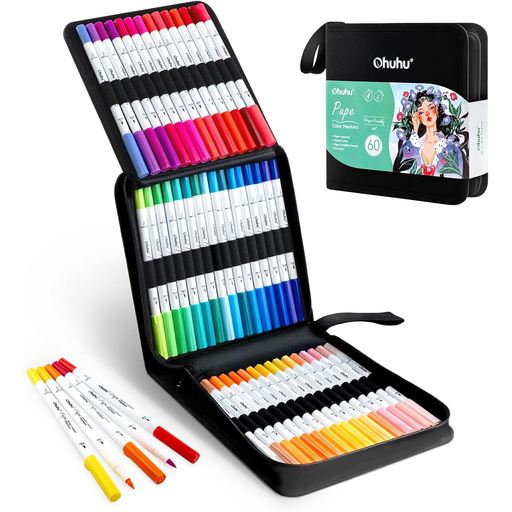
Why This Fits Their Persona: Adult colouring enthusiasts, artists and journal users may value a broad palette with two nib styles for varied projects.
The set states its ink is paper-friendly and includes a colourless blender, helping buyers assess functionality beyond the colour count.
Includes 59 colours plus one blender, with a 0.4mm fineliner and 1–5mm flexible brush tip.
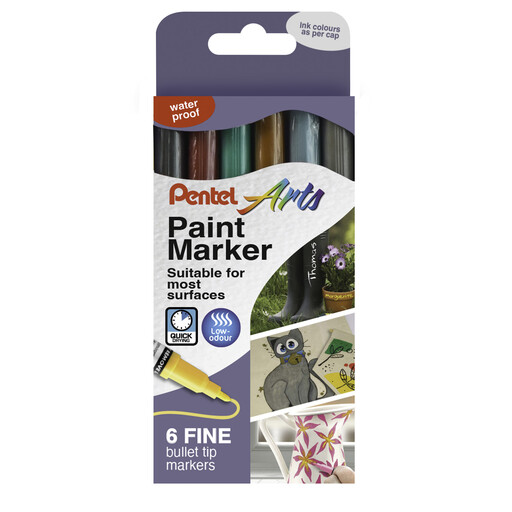
Why This Fits Their Persona: Crafters working across card, glass, metal, plastic or rubber need a marker designed for surfaces beyond ordinary paper.
Its listed permanent pigment-based ink is more appropriate for craft surfaces than standard felt-tip or journalling pens.
Six metallic colours, a 2.9mm fine bullet tip, aluminium barrel and low-odour formulation are specified.
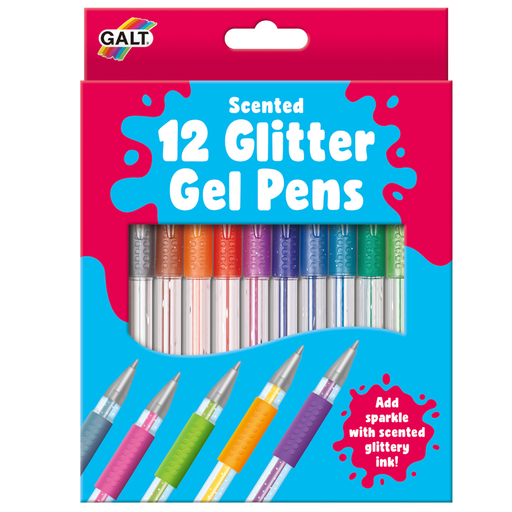
Why This Fits Their Persona: Children aged six and above can use the lightweight set for colourful drawing, cards and supervised creative activities.
The stated age guidance and small-parts warning make suitability clearer than novelty stationery with no visible age information.
Twelve scented glitter gel pens, easy-grip barrels and bright ink are designed for writing, colouring and drawing.
We have compiled a complete, real-time list of products that fully satisfy these strict selection criteria and UK safety regulations.
Fine-point gel pens, fine-liner pens and dual-tip brush pens are commonly useful. Choose a tip around 0.4mm–0.7mm for compact writing and check whether the ink is quick drying or likely to show through your journal paper.
Replace caps firmly, retract capless designs after use and follow the storage guidance on the packaging. Many water-based markers perform more consistently when kept away from direct sunlight and excessive heat. Brush pens should not be stored with their nibs pressed against a hard surface.
They can be convenient for drafts, planners and corrections, but heat-sensitive erasable ink is not suitable for permanent records. For formal schoolwork, check the teacher’s requirements and use permanent blue or black ink where required.