
24/7 Customer Support

Free returns

Same-day & Next-day Delivery

Quality Guaranteed

Unlock Your Welcome Offers: FREE Delivery | Up to 80% OFF | Free 30-day JoyPlus trial
Download the APP
Colourful pens and highlighters can make revision notes, planners and creative projects easier to organise, but attractive packaging does not always mean useful stationery. A set may look impressive online yet disappoint when the ink smears, the tip feels too broad or the novelty feature makes the pen uncomfortable for everyday writing.
The right choice depends on how the pens will be used. Students may need precise colour-coding, parents may prioritise age guidance and storage, while journalers and stationery enthusiasts may want glitter, pastel shades or character designs. The following guide explains what to check before buying, followed by our top recommendations for different users.
Glitter gel pens, scented gel pens and metallic inks can add visual interest, but decorative ink may take longer to dry or become less practical for small handwriting. If you are buying journalling pens or school stationery, check the tip size and ink behaviour rather than judging only by the colour range.
Fine liner pens and 0.5mm gel pens are generally more suitable for detailed notes, labels and neat lettering. Felt-tip pens with a 1mm fibre tip may be more appropriate for colouring, bold headings and creative activities.
Pastel highlighters are useful when you want softer colour on revision pages or planners, but a pale shade may be less visible on some paper. A chisel tip is also more versatile than a fixed-width tip because it can create a narrow underline or a wider highlighted band.
Look for the stated line widths and ink type. Water-based ink is a common choice for paper, although you should still check a small area first, particularly when using thin notebook pages.
Novelty pens with pom-poms, toppers, lights or moving parts can be appealing gifts, but they may not be appropriate for younger children. Always follow the manufacturer’s warning. Several character pens in this range state that they are not suitable for children under three because of small parts.
For children aged six and over, kids’ stationery sets should still be used with sensible supervision, especially during craft activities. Keep ink away from eyes, protect clothing and store pens with their caps or lids fitted.
The tip should match the job:
A retractable pen can be convenient for pencil cases because there is no separate cap to lose. Capped pens, however, may be preferable for protecting fine tips during storage.
Gel ink usually produces a smooth, vivid line, while water-based fibre-tip ink is commonly used for colouring and creative work. Quick-drying ink can help reduce smudging, particularly for left-handed writers, but paper quality still affects the result.
Erasable gel pens use heat-sensitive ink that can be removed with friction from the pen’s built-in eraser. This is convenient for planners and homework corrections, but erasability means the writing may not be suitable for permanent records or documents exposed to heat.
A ribbed or non-slip grip can make longer writing sessions more comfortable. Flat highlighters are less likely to roll across a desk and may fit more easily into a pencil case. Compact sets are useful for school bags and travel, and offer a small footprint, but check whether shorter pens are comfortable for the intended user.
Storage matters too. Fragranced and glitter pens should be kept capped and, where supplied, returned to their case. This helps keep the set organised and reduces the chance of marks inside a bag.
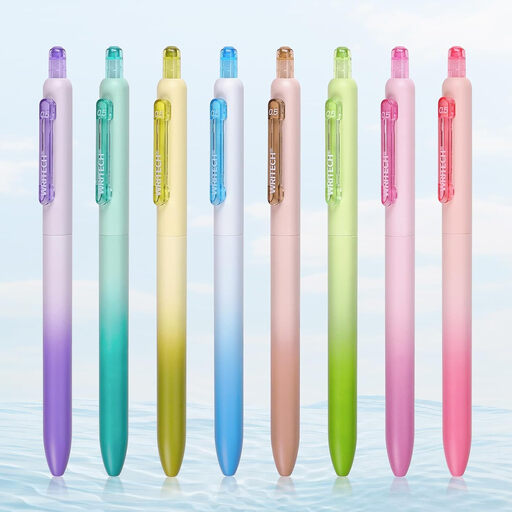
Why This Fits Their Persona: Eight retractable colours cover everyday note-taking, colour-coding and journalling without requiring several separate purchases. The 0.5mm point suits students, planners and home users.
The fine point prioritises controlled writing, while the product description specifies quick-drying ink and a silent click mechanism.
Eight assorted colours, retractable barrels and a ribbed ombre matte grip.
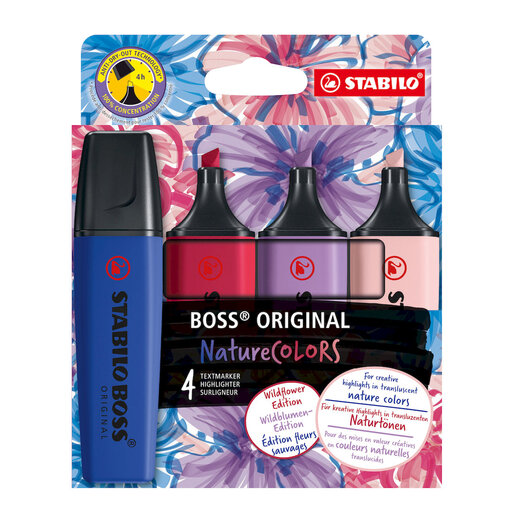
Why This Fits Their Persona: The four nature-inspired shades suit professional notes, university work, planning and creative layouts where a softer palette is preferred.
Its chisel tip offers stated 2mm and 5mm line widths, so it can handle both narrow marks and broader highlighting.
Four water-based ink colours and stated cap-off protection of up to four hours.
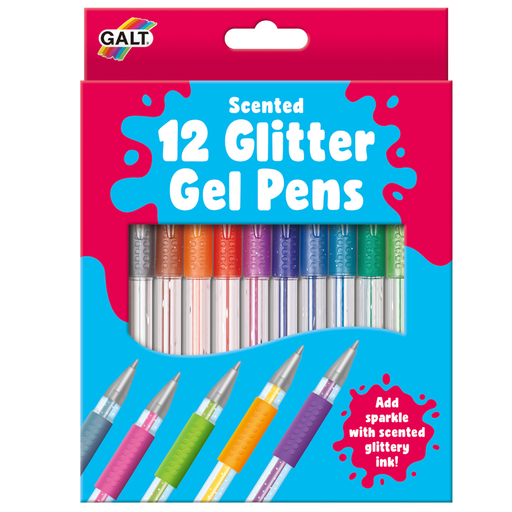
Why This Fits Their Persona: Children aged six and over, families and craft users get a larger colour selection for drawing, cards and creative activities at home.
The set states its intended age range and provides lightweight, easy-grip pens rather than relying only on decorative features.
Twelve scented glitter gel colours and a design intended for writing, drawing and colouring.
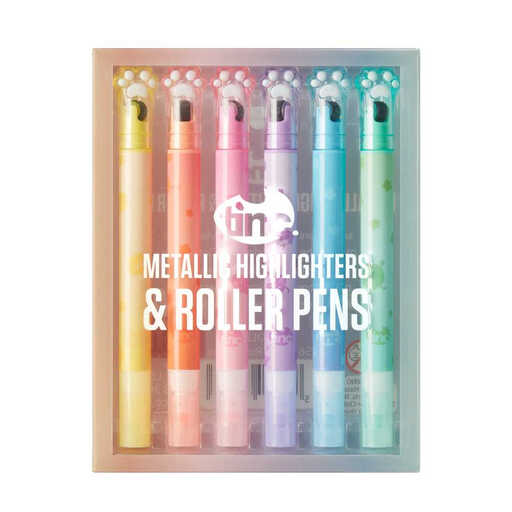
Why This Fits Their Persona: Suitable for card makers, journalers, teachers and children who want colouring pens with a decorative function as well as everyday highlighting.
It combines a roller stamp with a chisel-tip highlighter, giving the novelty feature a clear creative purpose.
Six designs, including stars and butterflies, plus six pastel metallic highlight colours.
We have compiled a complete, real-time list of products that fully satisfy these strict selection criteria and UK safety regulations.
Yes, provided the school allows them and the ink is appropriate for the paper. Fine liner pens, 0.5mm gel pens and restrained pastel highlighters are generally practical for notes and revision. Glitter or scented gel pens may be better reserved for headings, personal notebooks and creative work.
Replace caps promptly, store capped pens horizontally where practical and avoid leaving them in direct heat. Retractable pens should be clicked closed after use. For highlighters with stated anti-dry-out protection, follow the product instructions rather than treating the feature as unlimited protection.
They are useful for planners, homework and temporary notes, but heat-sensitive ink is not ideal for permanent records. Use a conventional black or blue pen when the writing must remain stable and cannot be altered.