
24/7 Customer Support

Free returns

Same-day & Next-day Delivery

Quality Guaranteed

Unlock Your Welcome Offers: FREE Delivery | Up to 80% OFF | Free 30-day JoyPlus trial
Download the APP
Buying colouring pens and markers can seem straightforward until ink dries out, colours bleed through paper or a marker designed for glass is mistakenly used on a porous surface. Parents, students, journalers and crafters often pay for features they do not need while overlooking the specifications that affect everyday use.
This guide explains the main buying pitfalls, the technical details worth checking and suitable options for different creative needs.
A set with 60 or 100 colours may look good value, but colour range is only useful when the nib suits your project. Fine tips support note-taking and detailed drawing, while brush tips are more suitable for lettering and variable-width strokes. Broad paint markers can cover large areas but may be unsuitable for small illustrations.
Felt tip pens, gel pens and water-based art markers are generally intended for paper. Acrylic paint pens, chalk markers and glass markers have different surface requirements. A wet-erase chalk marker may wipe from glass but become difficult to remove from a porous wall or untreated wood. Always check whether the ink is permanent, semi-permanent or erasable before starting a project.
Marketing descriptions often focus on bright colours, but daily usability depends on ink behaviour. Fine-point journalling pens should dry quickly enough for note-taking, particularly for left-handed users. Brush pens and paint markers need their caps secured tightly after use. Some products also recommend horizontal storage, which may not suit a crowded pencil case or desk drawer.
Match the point to the task:
For younger children, a chunky triangular or easy-grip barrel may be easier to control than a narrow pen.
Gel ink flows smoothly and is useful for coloured notes, decorative writing and journalling. Glitter gel pens add sparkle, but their ink may take longer to dry. Felt tip pens are convenient for paper, although heavily saturated colours can still show through thin notebook pages.
Water-based art markers can be blended with water on suitable heavyweight paper. Acrylic paint markers provide opaque coverage on surfaces such as wood, ceramic, glass, plastic, fabric and canvas, but the finished result and permanence can vary by surface. Test a small hidden area first.
For children, check the stated age guidance and warnings. Sets containing small components should be kept away from children below the specified age, and adult supervision may be appropriate. Ink can stain skin, clothing and furniture, so protect the work area.
For longer usable life:
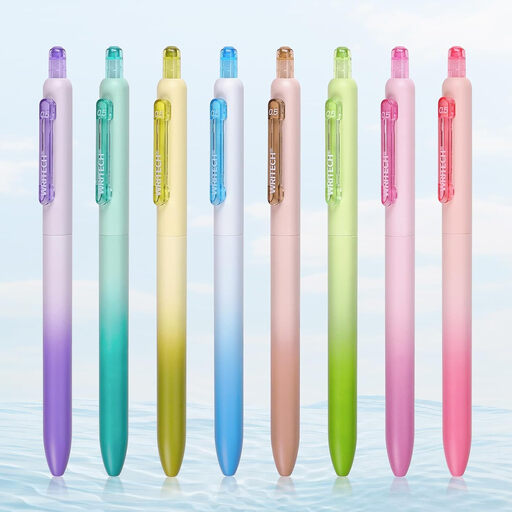
Why This Fits Their Persona: A practical starting set for pupils, students and journalers who need several colours for notes, planners and everyday writing.
The 0.5mm fine point and quick-dry ink description focus on usable writing performance rather than colour count alone.
Eight assorted colours, retractable silent-click barrels and a ribbed matte grip.
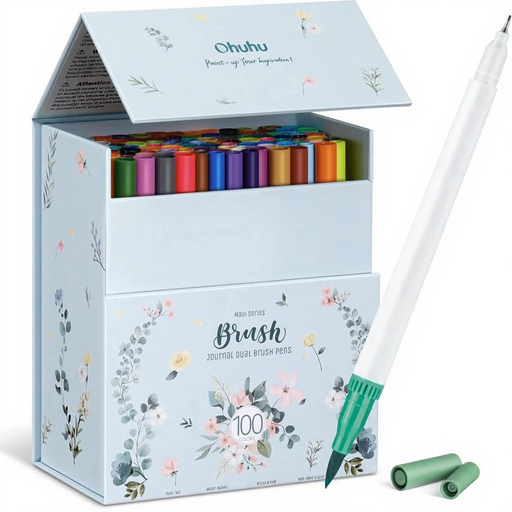
Why This Fits Their Persona: Suitable for adult colouring books, detailed illustration and users who want a broad palette in a storage case.
The dual-tip format adds a 0.4mm fineliner and 1–6mm brush, making the colour range more adaptable than a single-tip set.
100 numbered water-based colours, swatch card, replacement tips and storage case.
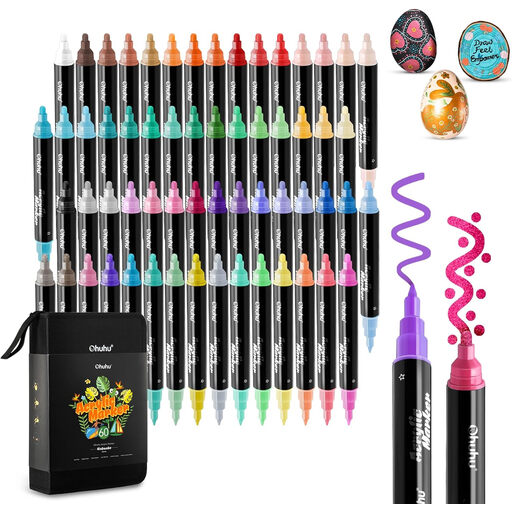
Why This Fits Their Persona: Designed for crafters and hobby artists working across rocks, wood, ceramics, glass, plastic, paper and canvas.
The product specifies surface compatibility, tip sizes and maintenance instructions, helping buyers avoid using ordinary paper pens for craft surfaces.
60 colours, fine and round dual tips, replacement nibs and a portable case.
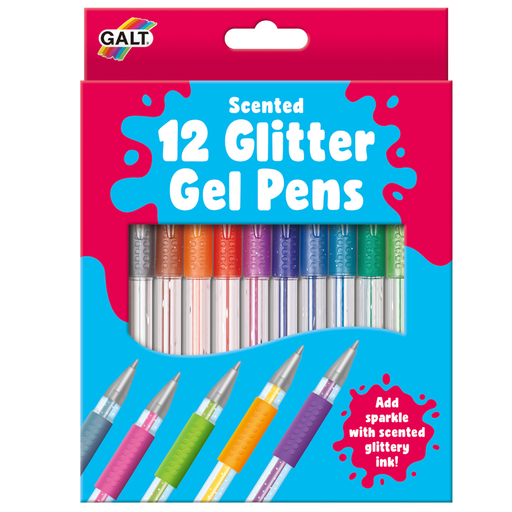
Why This Fits Their Persona: A child-focused stationery option for drawing, colouring and adding decorative detail to school or home projects.
The listing gives a clear age suitability of 6 years plus and warns about small parts, rather than leaving age guidance unclear.
12 scented glitter gel pens with lightweight barrels and bright, pigmented colours.
We have compiled a complete, real-time list of products that fully satisfy these strict selection criteria and UK safety regulations.
Fine-point gel pens, felt tip pens and fine drawing pens are practical for planners and notebooks. Look for a 0.5mm point, retractable design or quick-dry ink if you write frequently. Test strong colours on a spare page first, as paper thickness varies between notebooks.
Replace each cap firmly straight after use and avoid leaving pens uncapped while working. Store products according to the packaging guidance. Brush pens and acrylic paint pens may require particular care, including horizontal storage or shaking before use.
Many acrylic paint markers are listed for glass and ceramics, but surface preparation and drying instructions matter. Clean the surface, test a small area and allow the ink to dry fully. Do not assume that a water-based marker intended for paper will adhere in the same way. For temporary displays, choose wet-erase glass markers or chalk markers and confirm that the surface is non-porous.