Crisp-skin potato fans
You want the centre hot without settling for a soft jacket. Look for a microwave mode followed by a suitable grill, convection or air-fry finishing mode.


Choose a combination microwave with microwave, grill and convection modes if you want to reheat a baked potato and then brown its skin. Microwave-only reheating is simpler when a soft skin is acceptable; an air-fry mode offers another finishing option but is not essential. Check that your dish fits, that you can select the finishing mode you want and that the appliance fits its intended space.
You want the centre hot without settling for a soft jacket. Look for a microwave mode followed by a suitable grill, convection or air-fry finishing mode.
You mainly need straightforward microwave controls for reheating a cooked potato and checking that it is hot throughout. A crisping mode is a secondary consideration.
You want one appliance for reheating as well as some grilling or oven-style cooking. Dish fit, external dimensions and the intended installation matter alongside the cooking modes.
Start with the finish you want on the potato, then check reheating controls and whether your usual dish and the appliance fit their spaces. The percentages below describe consumers by their primary need, not how often a feature matters to everyone.
| Concern | What to check | Who this matters to |
|---|---|---|
| Crisp skin | Confirm separate microwave and grill or convection modes. If you want air frying, check that mode and its permitted accessories. | If I want a browned jacket rather than just a hot centre, I need a finishing mode after reheating; around 42% of consumers put a crisp finish first. |
| Thorough reheating | Look for selectable microwave settings and readable controls; follow the appliance instructions when checking the centre. | When I am warming a leftover potato, I want to use the right setting and check that it is hot throughout. Roughly 33% of consumers make straightforward, dependable reheating their main concern. |
| Dish and kitchen fit | Measure your dish and available space; compare external dimensions with the turntable, flatbed or turntable-disable layout. | If this appliance must handle other meals in a small kitchen, I need room for my usual cookware without crowding the worktop; about 25% of consumers prioritise that multi-function fit. |
A grill can brown food, but a grill-only model does not provide the circulating hot-air cooking of a convection mode. Smeg UK distinguishes the two appliance types in its combination-microwave guidance.
If you want oven-style finishing as well as reheating, confirm separate microwave, grill and convection functions on the exact model.
Microwave reheating does not provide the grill or convection browning function you may want for the skin.
Check that the potato is hot through, then use a finishing mode according to the appliance instructions if a crisper surface matters to you.
Capacity does not tell you whether a particular plate will turn freely or whether the appliance will fit its intended position.
Compare the dish with the usable cavity and turntable or flatbed layout, then check external dimensions and required clearances.
Electrical Safety First advises against powering a microwave through an extension lead. Cookware also needs to be suitable for the mode you select, particularly when changing from microwave reheating to a grill or convection finish.
Use a suitable wall socket and follow the model's instructions for containers and cooking modes.
These brands illustrate different combination-microwave formats; the functions and fit of an individual model still need checking.
Panasonic's UK combination-microwave range includes microwave, grill and convection models, with air-fry capability on some models.
Samsung's UK range includes combination microwaves with grill and convection functions, including models aimed at buyers using larger dishes.
Russell Hobbs lists freestanding and built-in combination microwaves in several capacities, including some air-fry combinations.
Smeg discusses combination microwaves for buyers who want reheating, grilling and convection cooking in one appliance.
These combination microwaves offer routes for reheating a baked potato and considering a separate finishing mode. The built-in CDA model calls for cabinet planning; compare each model's cooking modes and fit before choosing.
 No image available
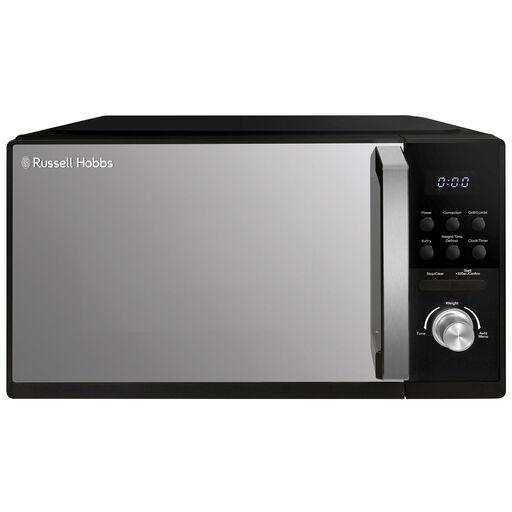
Consider this model if you want to reheat a potato and have a separate finishing option. The named variant is a 25 L, 4-in-1 digital combination microwave; check the manual for permitted mode sequences, cookware and countertop clearance.
 No image available
This model suits consideration if you want microwave reheating followed by an air-fry or grill finish. Its name specifies 26 L capacity and a 5-in-1 format; compare its external dimensions and usable dish space with your kitchen before buying.
 No image available
Consider this 23 L model if you want a choice of finishing modes after microwave reheating. Its name specifies 900 W microwave power and a 1000 W grill; measure the intended worktop space and check ventilation requirements.
 No image available
Consider this model if you want microwave reheating with grill or convection finishing and often use a square dish. Its name specifies 900 W microwave power, while Samsung lists a turntable-disable option for this model; check dish fit and external dimensions before buying.
 No image available
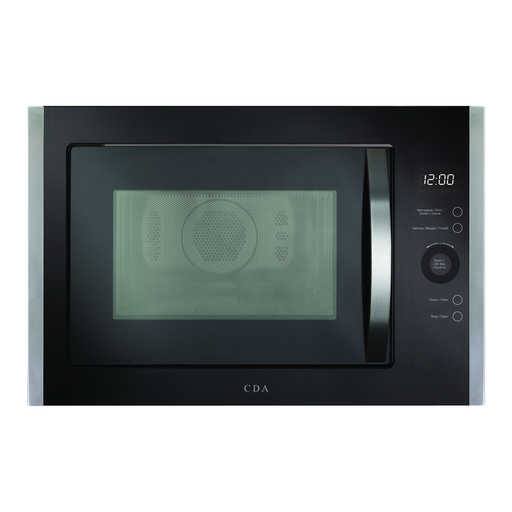
This built-in option is relevant if you want to reheat and finish a potato in an integrated kitchen appliance. Its name specifies 25 L capacity and 900 W microwave power; confirm the cabinet cut-out, ventilation instructions and fit of your usual dish.
Yes, if it offers a suitable grill, convection or air-fry finishing mode alongside microwave reheating. Check that the centre is hot through before using the finishing mode, and follow the model's instructions for cookware.
Turn it partway through microwave reheating where practicable, follow the appliance instructions for standing time and check the centre before eating. Guy's and St Thomas' NHS Foundation Trust advises turning food during microwave cooking to help it heat evenly.
Use a suitable wall socket instead. Electrical Safety First advises against powering a microwave through an extension lead because of the risk of overloading it.
Not necessarily: litre capacity does not establish the usable shape or width of the cavity. Compare your dish with the turntable or flatbed layout, and check the appliance's external dimensions against its intended space.