
24/7 Customer Support

Free returns

Same-day & Next-day Delivery

Quality Guaranteed

Unlock Your Welcome Offers: FREE Delivery | Up to 80% OFF | Free 30-day JoyPlus trial
Download the APP
As a Joybuy Product Recommendation Officer, I often see how the promise of an all-in-one appliance can lead to disappointment. The idea of a single machine that microwaves, grills, bakes and air fries is compelling, especially in UK homes where kitchen counter space is precious. However, navigating the market for a combination microwave with air fryer is filled with potential pitfalls that can leave you with an expensive gadget that does nothing particularly well.
This guide is designed to help you sidestep the common traps. We will break down the essential features to look for, ensuring you find a versatile appliance that genuinely saves space and enhances your cooking, rather than just adding to the clutter.
Many shoppers are drawn in by a long list of features, only to find the performance lacklustre. Here are the three most common issues to watch out for:
To ensure you get a high-performing appliance, focus on these key specifications. They are the difference between a gimmick and a genuine kitchen workhorse.
Look beyond the marketing terms. A worthwhile appliance will have distinct, powerful modes for each function.
convection microwave oven includes a fan and a heating element to circulate hot air, allowing you to bake and roast just as you would in a conventional oven.air fryer microwave should have a dedicated setting and enough power to make chips, chicken wings and vegetables genuinely crisp.These three factors determine the appliance's real-world performance and usability.
23l combination microwave offers a good balance of internal space and external footprint. However, always check the turntable diameter. A turntable of 28cm or more will comfortably fit most dinner plates.Modern appliances offer more than just manual dials.
digital microwave with clear controls and auto-cook menus takes the guesswork out of cooking. Presets for pizza, jacket potatoes or popcorn are calibrated to deliver consistent results.smart microwave oven allows you to start, stop and monitor cooking from your phone, which can be a useful convenience for busy households.Based on the criteria above, we've identified a model that successfully avoids the common pitfalls and delivers on its promises.
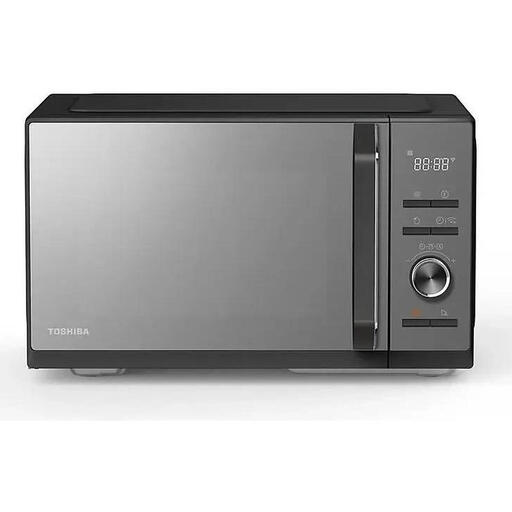
Why This Fits Their Persona: This model is ideal for UK households with limited kitchen space who refuse to compromise on cooking capability. It consolidates four key appliances into one sleek, compact unit, freeing up valuable worktop area while offering true cooking versatility for everything from quick reheats to full roast dinners.
It sidesteps the "Master of None" pitfall with powerful, distinct functions: a 900W microwave, a 1000W grill and a true convection oven with air fry capability. The 288mm turntable avoids the capacity illusion, easily fitting standard dinner plates.
Its standout features are the 4-in-1 functionality and the smart app control, which allows for remote operation. The 10 auto-cook menus provide excellent convenience for everyday meals.
We have compiled a complete, real-time list of products that fully satisfy these strict selection criteria and UK safety regulations.
Generally, a combination microwave can be more energy-efficient than a conventional oven. Because of its smaller internal cavity, it heats up much faster, reducing overall cooking time and energy consumption, especially for smaller meals. Using the microwave or air fry function is typically more economical than heating a large oven for the same task.
This is a critical point. You must never use metal cookware or foil when the appliance is in microwave-only or a combination mode that includes microwave power. However, when using it in pure convection oven or grill mode, you can usually use metal trays and racks, just as you would in a conventional oven. Always refer to the manufacturer's instruction manual for specific guidance on approved accessories.
The technologies are very similar, as both use a fan to circulate hot air. The main difference is the intensity. An air fryer function typically uses a more powerful fan and higher-velocity hot air to create a crispier, "deep-fried" texture. A standard convection function is gentler, designed for baking and roasting. Many modern appliances that offer a convection setting now brand the most intense version of it as "air frying".