Holiday-cottage hosts equipping a small kitchen
A countertop combination microwave can cover reheating and occasional grill or oven-style cooking, provided it fits the worktop with the clearances required by its instructions.


For warming custard, favour straightforward microwave controls and a power setting you can adjust, then check that the serving bowl or jug fits. Grill and convection functions make more sense if guests will also cook meals; choose the cavity layout and worktop size around the dishes and space the cottage actually has.
A countertop combination microwave can cover reheating and occasional grill or oven-style cooking, provided it fits the worktop with the clearances required by its instructions.
Clear controls and selectable microwave power matter more for a small portion of custard than a long list of cooking programmes. A microwave-safe bowl or jug still needs to fit inside.
Grill, convection and usable cavity space become more relevant when the appliance will handle dishes beyond small reheats. Check the intended cookware against the interior layout, not just the stated capacity.
Start with microwave control and space for the custard container. Then decide whether the cottage will use oven-style functions often enough to justify them.
| Concern | What to check | Who this matters to |
|---|---|---|
| Controlled reheating | Look for selectable microwave power and controls guests can understand; check that the intended microwave-safe bowl or jug fits. | I want to warm a small serving of custard without relying on full-power heating. Around 36% of consumers put control over reheating first. |
| Worktop fit | Compare external dimensions and required ventilation clearances with the available space, and plan for a suitable wall socket. | When counter space is tight, I need an appliance I can place and operate safely. Roughly 27% of consumers prioritise kitchen fit and uncomplicated operation. |
| Meal-cooking functions | Confirm that the model has the grill and convection modes you would use, rather than choosing by programme count alone. | If I will cook meals as well as reheat leftovers, I need functions that serve both jobs. Around 27% of consumers put wider cooking use first. |
| Dish fit | Measure the widest intended dish and compare it with the turntable or flatbed layout; litres alone do not establish whether it fits. | For square serving dishes or larger plates, I need usable interior space. Roughly 10% of consumers put dish fit ahead of the other concerns. |
Custard uses microwave heating; grill and convection modes serve different cooking tasks. More controls can make an unfamiliar appliance less straightforward for guests.
Choose the microwave controls and cavity fit first. Add oven-style functions if the cottage will use them for meals.
Electrical Safety First advises against powering a microwave from an extension lead because of the risk of overloading it.
Plan for a suitable wall socket and check the plug and socket for signs of heat damage.
Electrical Safety First warns that metal can spark and unsuitable packaging can melt during microwave use. Food left heating unattended can also create a fire risk.
Use a microwave-safe bowl or jug, follow the appliance instructions and remain nearby while custard heats.
A rotating turntable can restrict the shape of cookware even when the cavity has enough stated litres. Samsung lists a turntable-off option for the MC28A5125AK/EU, while the Panasonic NN-CF87LBBPQ has a flatbed cavity.
Measure the actual serving and cooking dishes before deciding whether a conventional turntable, turntable-off option or flatbed is useful.
These examples show different combinations of microwave control, cooking functions and cavity layout; suitability depends on the particular model.
The Sharp YC-PC254AU-S is a 25L countertop combination model for buyers who want selectable microwave power alongside grill and convection cooking.
The Panasonic NN-CT55JWBPQ offers microwave, grill and convection functions in a 27L slimline model.
The Samsung MC28A5125AK/EU is a 28L convection combination model for cottages that will also prepare larger dishes or more varied meals.
These countertop combination microwaves offer options for a cottage that will reheat food and occasionally use other cooking modes. Compare their controls, dish fit and installation space against the jobs guests will actually do.
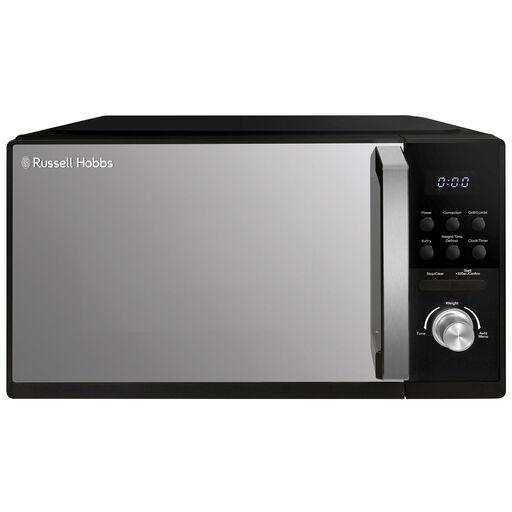 No image available
A 25L digital combination model to consider when the cottage needs reheating and occasional additional cooking functions.
Check the serving bowl against the usable cavity and confirm that the appliance fits the worktop with its required clearances.
 No image available
Consider this model if guests will use cooking modes beyond reheating; its name lists air-fry, grill and bake functions.
The product name also states 2400W, but that figure should not be treated as its microwave output. Check the microwave power controls, usable dish space and installation clearances for the cottage.
 No image available
A 23L combination model to assess when smaller dishes and occasional grill cooking are part of the cottage's plans.
Its name lists a 1000W grill, air-fry function and smart app control. Check whether the physical controls are convenient for guests and whether the intended bowl fits.
 No image available
This model is worth considering when meal cooking and larger, square dishes matter alongside reheating.
Samsung UK lists a moisture sensor, pre-programmed cooking and a turntable-off option for this model. Check its microwave power controls and the fit of the cottage's actual dishes before buying.
No. Use microwave mode and a microwave-safe container for warming custard; choose grill or convection functions if the cottage will also use the appliance for other cooking tasks.
Electrical Safety First advises against powering a microwave from an extension lead. Plan for a suitable wall socket and check the plug and socket for signs of scorching or heat damage.
Use a container marked as microwave-safe when heating custard in microwave mode. Electrical Safety First warns against metal and unsuitable plastics, foam trays or bags; follow the appliance instructions as well.
GOV.UK guidance for self-catering holiday homes in England directs operators to follow HSE electrical-safety guidance. Owners elsewhere in the UK should check the requirements that apply to their property rather than assuming England's guidance covers it.
Clean the cavity and turntable in line with the manufacturer's instructions so food splatters do not build up. Electrical Safety First also recommends registering the appliance to make recall information easier to receive.