Frequent shared-kitchen reheaters
If tortillas, wraps and plated leftovers are the main jobs between other household activities, prioritise controls for short microwave runs, a dish that fits and a cleaning routine users can follow after each turn.


For frequent tortilla warming, choose a combination microwave with straightforward controls and enough usable space for the plate or warmer everyone uses. A turntable model suits routine reheating when that dish fits; consider a flatbed if wider or rectangular dishes are the recurring problem. Grill, convection and air-fry functions matter only if the household will use them and manage the extra cleaning.
If tortillas, wraps and plated leftovers are the main jobs between other household activities, prioritise controls for short microwave runs, a dish that fits and a cleaning routine users can follow after each turn.
If communal counter space is limited but the household also wants grill and oven-style cooking, compare the appliance footprint with its required ventilation space before choosing extra functions.
If the usual plate, rectangular container or tortilla warmer is awkward on a rotating turntable, assess a flatbed model against the dish’s dimensions and the space needed to open its door.
Start with the dish and available worktop space, then decide how often anyone will use cooking modes beyond the microwave. A flatbed addresses a particular dish-fit problem; extra modes do not replace the need for practical controls and cleaning.
| Concern | What to check | Who this matters to |
|---|---|---|
| Simple tortilla warming | Look for clear controls for short timed microwave runs and power-level choices; check that the usual dish fits. | When tortillas need warming between other household activities, I want a repeatable task without setting up an oven mode. Around 36% of consumers may put straightforward reheating first. |
| Cleaning and safe shared use | Check how the cavity and removable parts are cleaned, and use containers clearly marked microwave-safe, as Electrical Safety First advises. | If several people use the appliance, I need spills cleared before the next person takes a turn. For around 29% of consumers, manageable cleaning may be the primary concern. |
| Worktop and dish fit | Measure the intended plate or warmer and compare internal dimensions, door clearance and required ventilation space; consider whether a turntable restricts its shape. | A rectangular warmer is little use to me if it cannot sit properly inside the appliance. Dish and worktop fit may come first for around 21% of consumers. |
| Cooking beyond reheating | Choose grill, convection or air-fry modes for recurring meals, and check the included accessories and their cleaning requirements. | If we regularly want to grill or cook small oven-style meals, those functions can influence my choice more than a reheating shortcut. Around 14% of consumers may prioritise the additional modes. |
Capacity in litres does not tell you whether a wide plate or rectangular tortilla warmer can be used comfortably, particularly with a turntable.
Measure the dish and available counter space, then check the exact model’s internal dimensions, door swing and ventilation requirements.
Air-fry or steam functions do not simplify basic tortilla warming, while their accessories can add cleaning and storage tasks for everyone sharing the kitchen.
Choose those modes for a recurring cooking use; otherwise concentrate on microwave controls, dish fit and the cleaning routine.
Unsuitable items can create a safety risk, and splashes or crumbs make the appliance less practical for the next user.
Electrical Safety First advises using items clearly marked microwave-safe. Follow the appliance instructions and clean food residue after use.
Rated microwave output is an appliance specification, not a fixed time for every tortilla, filled wrap or portion of leftovers.
Follow the food’s reheating instructions where supplied, account for the appliance’s stated output and check that food requiring reheating is thoroughly hot before eating.
These brands offer different combination-microwave layouts and functions. Compare the exact model rather than assuming every product in a range has the same cavity, accessories or controls.
Panasonic UK & Ireland lists turntable combination models, a flatbed model and variants with additional cooking modes.
Toshiba Lifestyle UK lists grill, convection and air-fry combination models with different cavity sizes.
Sage describes its Combi Wave 3 in 1 as combining microwave, convection-oven and air-fry functions.
These countertop combination microwaves are choices for households considering additional cooking functions alongside tortilla warming. Check the exact variant’s dish fit and controls before deciding whether its extra modes suit shared use.
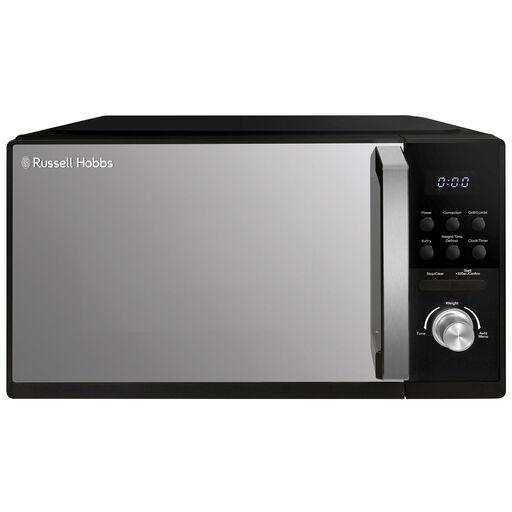 No image available
This is a choice for shared users who plan to use cooking modes beyond routine tortilla warming.
Check that the intended plate or warmer fits, and that everyone can manage the cleaning and storage of removable parts.
 No image available
This variant is worth considering if shared users want grill or oven-style cooking as well as microwave warming.
A 1000W grill and 10 cooking presets are listed. Confirm the exact cooking modes, included accessories and usable dish space for this variant.
 No image available
Consider this model if the household expects to use additional cooking modes, not just warm tortillas.
Check the usable dish space and worktop clearances, along with how any cooking accessories are cleaned and stored. Do not treat the 2400W figure in its longer product name as its microwave-output rating.
No. Ordinary tortilla warming calls for the microwave function and suitable microwave-safe cookware. Grill or convection modes matter if the household also plans to brown, crisp or cook other foods; follow the exact appliance instructions when choosing cookware for each mode.
Clean splashes and crumbs promptly, including the turntable where fitted, following the manufacturer’s instructions. Electrical Safety First advises regular cleaning to prevent build-up and using items clearly marked microwave-safe.
Follow the food producer’s reheating instructions, use microwave-safe cookware and ensure food that requires reheating is thoroughly hot before eating. The needed time varies with the food, portion, starting temperature and appliance output; do not assume the same setting works for every filling.
A flatbed is worth considering when a wide or rectangular dish is the recurring fit problem. If the household’s usual plate sits comfortably on a turntable, compare controls, cleaning and the cooking modes you will actually use rather than choosing by cavity layout alone.