What matters when choosing?
Start with a microwave setting you can control and a cavity that fits the vessel you will actually use. Then decide whether the extra cooking functions justify a freestanding combination model or whether a fitted installation is part of your kitchen plans.
Freestanding combination microwave
Choose when: You want to place the appliance on a worktop and use grill or convection functions alongside reheating.
Allow for: The appliance needs worktop space, and its stated capacity does not tell you whether your serving vessel will fit.
Built-in microwave-combination oven
Choose when: An integrated appliance is already part of a fitted-kitchen plan.
Allow for: Cabinet compatibility and installation need checking before purchase; this is not a movable worktop option.
| Concern | What to check | Who this matters to |
|---|
| Warming control |
Look for selectable microwave power and controls that let you use short intervals. Check the manual for reheating instructions. |
When custard is already cooked, I want to warm it without leaving one long cycle running, so I can stop, stir and check it. Around 40% of consumers put this control first. |
| Serving-vessel fit |
Measure your jug or bowl, including handles, against the internal space, turntable and door clearance; litres alone cannot establish fit. |
I need to bring a shared serving to the table without discovering that its dish will not go through the microwave door. Vessel fit is the primary concern for around 40% of consumers. |
| Other cooking uses |
Decide which grill or convection functions you will use, then check whether a worktop or built-in installation suits your kitchen. |
If one appliance also needs to cover some oven or grill duties, those functions and its place in the kitchen matter beyond tonight's custard. Around 20% of consumers prioritise that broader use and kitchen fit. |
Combination microwaves on Joybuy
These choices include freestanding models for worktop cooking and a built-in model for a planned fitted kitchen. For custard, compare the controls and the space available for your own serving vessel before considering the additional cooking functions.
 No image available
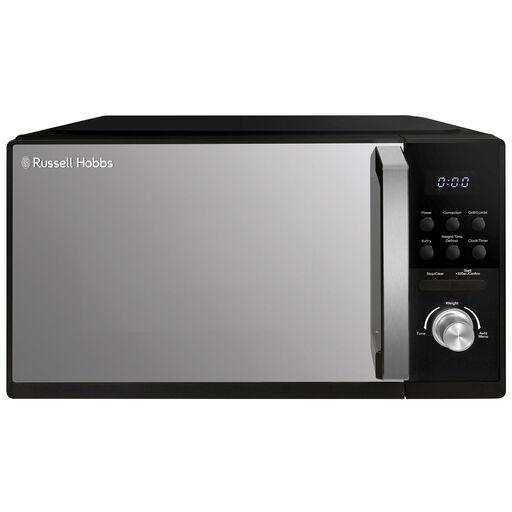
Russell Hobbs RHMAF2508B 25 L 4-in-1 combination microwave
Consider this freestanding model if you want combination cooking as well as a way to warm custard in a worktop appliance.
It is the 25 L digital variant in black. Check the internal clearance against your jug or bowl, and use short, interruptible intervals when reheating.
View on Joybuy
 No image available
DAEWOO SDA2618GE 26 L 5-in-1 combination microwave
Consider this worktop model if you also expect to use its air-fry, grill or bake functions.
The product name states 26 L and 2400 W, without identifying 2400 W as microwave output. Confirm the internal and door clearance for your serving vessel; capacity alone does not establish fit.
View on Joybuy
 No image available
Toshiba MW3-SAC23SF(MB) 23 L air-fry combination microwave
Consider this model if its additional cooking modes are useful to you and your custard vessel fits its worktop format.
The product name lists a 1000 W grill, smart-app control and 10 cooking presets. Check the cavity and door clearance before relying on the 23 L capacity for a shared serving.
View on Joybuy
 No image available
Samsung MC28A5125AK/EU 28 L combination microwave
Consider this freestanding model if a mid-size cavity and the option to disable the turntable are relevant to your dishes; neither feature guarantees that your custard vessel will fit.
The product name specifies convection cooking and a Smart Moisture Sensor. Check the manual for selectable microwave power and short manual intervals, and measure the vessel against the cavity and door clearance.
View on Joybuy
 No image available
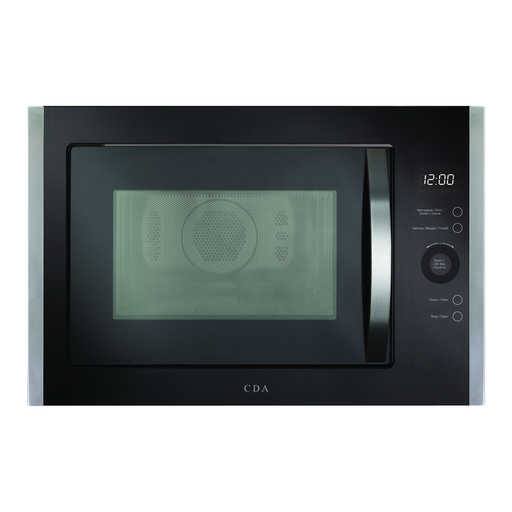
CDA VM452SS 25 L built-in microwave with grill and convection
Consider this model when a built-in appliance is already part of your kitchen plan, rather than when you need a movable worktop microwave.
The stainless-steel variant combines microwave, grill and convection functions. Check cabinet compatibility, the available reheating controls and the clearance for your custard vessel before purchase.
View on Joybuy
Common questions
How should I warm already-cooked custard in a combination microwave?
Use the microwave function in short intervals at a suitable lower power setting where available, stirring and checking between intervals. The Food Standards Agency advises stirring or turning food during reheating so it heats evenly and checking that reheated food is steaming hot throughout; follow any more specific custard recipe or pack instructions.
Can a sensor-reheat programme handle custard on its own?
No programme removes the need to pause and check custard. Panasonic describes steam-based sensor reheating on its NN-CD88QSBPQ, while Samsung describes a moisture sensor on its MC28A5125AK/EU; these are manufacturer descriptions of their features, not a guarantee for every custard quantity or container. Stir and check before serving.
Can I warm custard in its serving container?
Yes, if the container is clearly marked microwave-safe, fits with the door closed and is suitable for the heating time. Electrical Safety First advises using only items clearly stated to be microwave-safe; transfer the custard if you cannot establish that the serving container is suitable.
Do I need a built-in microwave for a dinner party?
No. Built-in installation is a kitchen-layout choice, not a requirement for warming a shared custard serving. A freestanding model offers placement flexibility; choose a built-in model only after checking the cabinetry and installation requirements of the exact appliance.
Is a combination microwave worthwhile if I only reheat food?
Compare a solo microwave if reheating is your only planned use. A combination model makes more sense when you will also use its grill or fan-assisted oven functions; Sage Appliances identifies those as functions that distinguish combination microwaves from basic reheating models.


