Family bakers who need another oven function
If you regularly make cakes, bread or browned family dishes while the main oven is in use, compare convection capability and the space available for your cookware, not just microwave power.


If softening butter is your only reason to buy, look for a basic microwave with selectable low power rather than paying for combination cooking functions. Choose a combination microwave when you also expect to bake or grill family meals; compare freestanding models for worktop flexibility and built-in models only if the cooking space justifies cabinetry checks and professional installation.
If you regularly make cakes, bread or browned family dishes while the main oven is in use, compare convection capability and the space available for your cookware, not just microwave power.
Look for manual low-power settings and controls that let you pause and inspect the butter. A high maximum wattage does not tell you how much control you will have over a delicate task.
A freestanding combi can add baking and grilling functions without fitting an appliance into cabinetry. Check its worktop footprint, ventilation clearances and available socket before choosing a model.
Decide whether you need oven-style cooking as well as microwave heating, then compare butter-softening controls, cookware fit and the space the appliance will occupy.
Choose it when: You mainly need controlled microwave heating and already have an oven for baking.
Trade-off: It does not add a second oven cavity when family-meal preparation overlaps.
Choose it when: You want microwave heating alongside baking or grilling without changing fitted cabinetry.
Trade-off: It occupies worktop space, and its usable cooking area still needs checking against your dishes.
Choose it when: You are planning a fitted kitchen and will regularly use the additional oven-style cooking space.
Trade-off: Exact cabinet fit and professional installation make it a more permanent kitchen decision.
| Concern | What to check | Who this matters to |
|---|---|---|
| Butter-softening control | Check the exact manual power settings and whether cooking is easy to pause for inspection. | If I need butter soft enough to mix but not melted, I want to interrupt heating before it goes too far. Around 37% of consumers put that control first. |
| Space for family baking | Compare your largest tin or dish with the model’s turntable, shelf layout and internal dimensions; litres alone cannot establish fit. | When I bake for the family, the dish must fit and, where required, rotate safely. For around 27% of consumers, cookware space is the primary concern. |
| Baking and browning functions | Confirm that the exact model offers the oven-style mode you intend to use, along with its temperature range and appropriate accessories. | If the main oven is occupied, I want another appliance that can bake or brown a dish rather than only reheat it. Roughly 27% of consumers prioritise those additional cooking functions. |
| Kitchen fit and installation | Check worktop clearance and ventilation for a freestanding model, or the specified niche and installation instructions for a built-in one. | I need an appliance that can be placed or fitted safely in my kitchen before its cooking functions matter. Around 9% of consumers put fit and installation first. |
Convection baking and grilling are the functions that distinguish a combination model from a basic microwave for this task. They offer little practical value if you will rarely use them.
If butter softening is your main aim, compare basic microwaves with selectable low power and straightforward pause controls before choosing a combi.
A capacity figure cannot show whether a particular cake tin or casserole will fit the interior or rotate on its turntable.
Measure your intended cookware and compare it with the exact model’s turntable, shelf arrangement and internal dimensions.
Built-in appliances have model-specific fitting requirements; a larger stated cavity is of no use if the surrounding kitchen space is unsuitable.
Check the installation manual, niche dimensions, ventilation and electrical provision before ordering.
Professional installation and changes to existing cabinetry may also be needed.
Electrical Safety First warns against extension leads, metal objects in microwave use and blocked vents because misuse can create fire or damage risks.
Use microwave-safe containers, keep vents clear and follow the instructions for the exact appliance and cooking mode.
Its cited freestanding inverter combi models combine microwave heating with oven-style cooking.
The cited MOE34CXIUK is a freestanding combi with microwave, grill and fan cooking.
Its cited TK6NK501B is a built-in CombiQuick oven for a kitchen planned around an integrated appliance.
The cited CM585AGS1B combines microwave heating and hot-air baking in a built-in format.
These combination microwaves offer different capacities and cooking functions for households considering baking alongside microwave use. Compare each model’s controls and cookware fit against your butter-softening and family-meal needs before choosing.
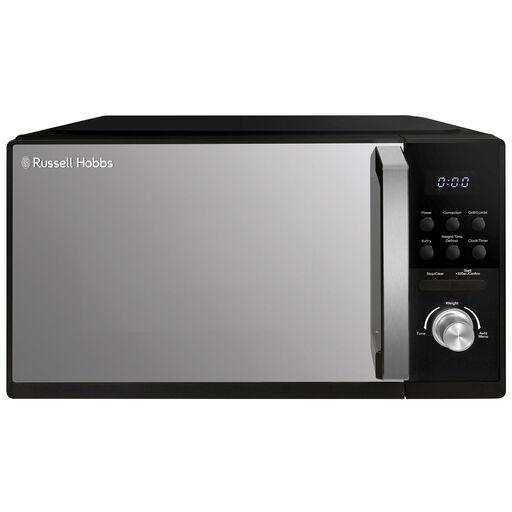 No image available
Consider this 25L model if you want a combination microwave for baking as well as everyday microwave tasks.
Check its manual low-power settings and pause controls for softening butter, and measure your baking dishes against its usable interior.
 No image available
This 23L model is an option if air-fry and combination cooking functions matter alongside microwave use.
Its title lists 900W microwave power, a 1000W grill, smart app control and 10 cooking presets. Check the manual power settings for butter and the interior measurements for your tins.
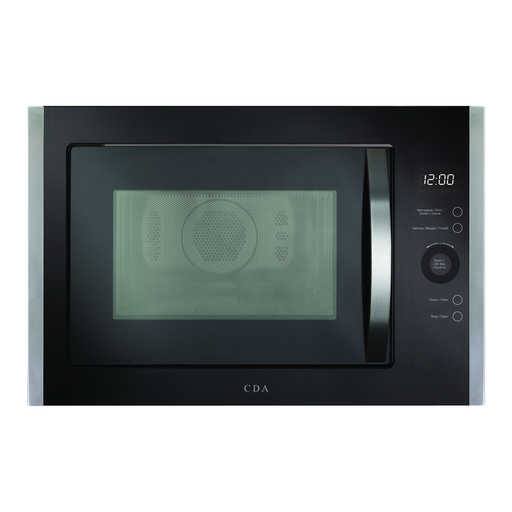 No image available
Consider this built-in model if your fitted-kitchen plan calls for microwave, grill and convection cooking in one appliance.
Its title states 25L capacity and 900W microwave power. Confirm the cabinet fit, cookware space and available low-power controls before ordering.
 No image available
This 26L model may suit a household looking for microwave, grill, air-fry and stated baking functions in one appliance.
The title also lists 2400W; do not treat that figure as a low microwave-power setting. Confirm how its bake function works, which manual microwave settings it offers and whether your cookware fits.
 No image available
Consider this model if convection cooking alongside microwave use is important for family meals.
Its title lists 28L capacity, 900W microwave power and a moisture sensor. Check its low-power controls for butter, usable cookware dimensions and installation requirements.
No: if softening butter is the only regular task, start by comparing basic microwaves with selectable low power and easy pause controls. A combination model becomes more relevant when you will also use its baking, browning or grilling functions.
Use a microwave-safe dish, select a low manual power setting if your model offers one, and pause to inspect the butter between brief runs. The appropriate timing varies with the amount and starting temperature of the butter and with the appliance; Smeg’s guide, for example, lists settings down to 110W for the MOE34CXIUK, not a universal timing for butter.
Choose by the dishes and batch sizes you actually use, with cavity litres as a starting point. Panasonic lists a 34cm turntable for its 27L NN-CT56RB and a 360mm turntable for its 34L NN-CD87KS; measure your own tins and check the exact model’s internal layout before deciding.
No: a built-in combi needs a compatible cabinet space and an installation plan rather than simply being placed on the worktop. Siemens advises professional installation for integrated ovens; check the chosen model’s fitting and electrical instructions before ordering.
Keep its ventilation unobstructed and follow the appliance instructions for placement, electrical connection and suitable containers. Electrical Safety First advises against powering a microwave through an extension lead or putting metal objects inside during microwave use.